

Choosing the right CRM systems is one of the most important decisions a solar company can make in 2026. With India’s solar market growing at a record pace, the difference between a specialized solar CRM and a general business CRM can mean thousands of rupees in lost deals, wasted hours, and missed follow-ups. This guide breaks down exactly what each type of CRM delivers, what it costs, and which one gives your solar business the best return on investment.

The CRM Systems Dilemma Every Solar Company Faces
Most solar companies start with a spreadsheet. Then they graduate to a general CRM like Zoho CRM or Salesforce. And then the frustration begins. The pipeline doesn’t match the solar sales cycle. Proposal templates don’t exist. WhatsApp integration is missing. And every time you want to customize something, you need a developer or a consultant.
This is the CRM systems dilemma that hundreds of Indian solar EPCs, installers, and sales teams face every year. You need a tool that works the way your business works, not the other way around. The wrong CRM doesn’t just slow you down. It costs you deals. A delayed proposal, a missed follow-up, or a disorganized pipeline can push a warm lead straight to your competitor.
In 2026, with solar adoption accelerating across residential and commercial segments in India, the stakes are higher than ever. This comparison will help you decide whether a solar-specific CRM system or a general business CRM is the right investment for your team.
What Are Solar CRM Systems? (And How They Differ)
Solar CRM systems are customer relationship management platforms built specifically for the solar industry. Unlike general CRM tools, they come pre-loaded with solar-specific workflows, proposal templates, and features that match the unique sales cycle of solar businesses.
A solar EPC or installer doesn’t sell the same way a software company does. Your sales process involves site surveys, system sizing, subsidy calculations, and sending detailed proposals to residential or commercial clients. A solar CRM is designed around these exact steps.
Key Features Unique to Solar CRM Systems
- Instant proposal generation: Create and send professional solar proposals in 60 seconds via WhatsApp or email, without starting from scratch every time.
- Solar-specific pipeline stages: Pre-built stages like Site Survey, Proposal Sent, Negotiation, and Installation Scheduled that match how solar deals actually move.
- Professional proposal templates: Ready-to-use templates with brand customization, so your proposals look polished from day one.
- WhatsApp and mobile-first design: Built for Indian solar sales teams who work in the field and communicate primarily through WhatsApp.
- Lead capture from Facebook Ads: Direct integration with Facebook lead forms, so no lead falls through the cracks.
Platforms like QuickEstimate are purpose-built for this use case. Over 1,000 solar businesses in India, including companies like Sunnovative, Heaven Solar, JJ Solar, and Tata Power, use QuickEstimate to manage their sales pipeline and generate proposals in seconds. Compare this to OpenSolar, which focuses more on solar design and engineering rather than CRM and sales automation.
General Business CRM Platforms: Strengths and Limitations
General CRM systems like Zoho CRM, Salesforce, and Pipedrive are powerful, flexible tools built for a wide range of industries. They have large user bases, extensive integration libraries, and strong brand recognition. For many businesses, they work very well.
But for solar companies, the flexibility that makes them powerful also creates friction. You get a blank canvas when you need a ready-made solar sales machine.
Strengths of General CRM Platforms
- Wide range of third-party integrations (accounting, marketing, HR tools)
- Highly customizable pipelines and fields
- Strong reporting and analytics for large enterprises
- Established support ecosystems and documentation
- Suitable for multi-industry businesses with diverse sales teams
Limitations for Solar Companies
- No solar proposal templates: You’ll spend hours building proposal documents from scratch or paying a developer to create them.
- No solar-specific workflows: Default pipelines are generic and require significant customization to match the solar sales cycle.
- Hidden customization costs: Every solar-specific feature you need has to be built, which means consultant fees, developer time, and ongoing maintenance.
- Steep learning curve: Salesforce, in particular, can take weeks or months to implement properly, pulling your team away from selling.
- WhatsApp integration gaps: Most general CRMs don’t natively support WhatsApp, which is the primary communication channel for solar sales in India.
The result? Solar companies using general CRM systems often end up with a tool that’s 80% configured but never quite right. They pay for features they don’t need and miss the features they do.
Head-to-Head: Solar CRM Systems vs General CRM — Feature Comparison
Let’s compare the two types of CRM systems across the features that matter most to solar companies in India.
Proposal Generation Speed
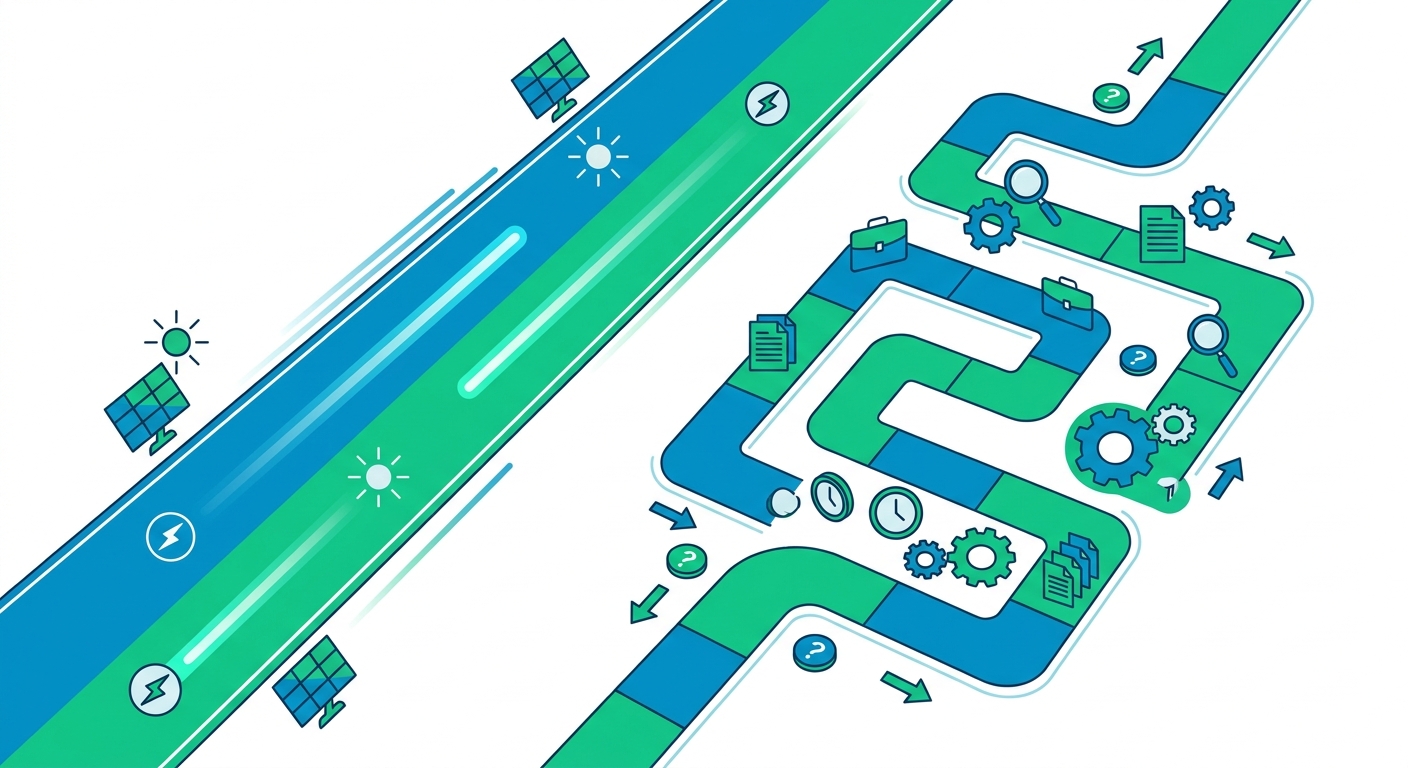
This is where the gap is most dramatic. With a solar CRM like QuickEstimate, your sales team can generate and send a professional proposal in under 60 seconds. With a general CRM, you’re typically working from a Word document, a PDF template, or a custom-built module that still requires manual data entry. For a busy solar sales team handling 20 to 50 leads per week, this time difference adds up to hours every single day.
Lead Management and Pipeline Tracking
Both types of CRM systems offer lead management, but solar CRMs come with pre-built stages that match the solar sales journey. General CRMs require you to define and build these stages yourself. QuickEstimate’s lead management system lets you capture, track, and nurture leads from multiple sources, including bulk import from Excel and direct capture from Facebook Ads, without any additional setup.
Follow-Up Automation
Missing follow-ups is one of the top reasons solar companies lose deals. Solar CRM systems like QuickEstimate include automated follow-up reminders and customizable email templates designed for solar sales conversations. General CRMs offer automation too, but setting it up for solar-specific scenarios requires workflow configuration that takes time and expertise. For a deeper look at how follow-up automation works in the Indian market, see our guide on Follow-Up Automation India: Complete Service Guide 2026.
Mobile Access and Field Team Support
Solar sales happen in the field. Your team needs a CRM that works on a phone, not just a desktop. QuickEstimate offers full iOS and Android mobile app access, so your field team can update leads, send proposals, and check their pipeline from anywhere. Most general CRMs have mobile apps, but they’re often stripped-down versions of the desktop experience.
WhatsApp and Indian Platform Integrations
In India, WhatsApp is not optional. It’s how solar sales teams communicate with clients. Solar CRM systems built for the Indian market, like QuickEstimate, support direct proposal sharing via WhatsApp. They also integrate with Facebook Ads, Phonebook, Pabbly Connect, and APIs and webhooks. General CRMs typically require third-party tools or custom development to achieve the same WhatsApp functionality.
Team Collaboration and Performance Tracking
Both types of CRM systems offer team management features, but solar CRMs present performance data in the context of solar sales metrics. QuickEstimate’s real-time analytics dashboard shows pipeline health, proposal conversion rates, and individual team member performance, all in one place without needing a data analyst to interpret the reports.
| Feature | Solar CRM (QuickEstimate) | General CRM (Zoho/Salesforce) |
|---|---|---|
| Proposal Generation | ✅ 60 seconds, ready-to-send | ⚠️ Manual or custom-built |
| Solar Pipeline Stages | ✅ Pre-built for solar | ⚠️ Requires customization |
| WhatsApp Integration | ✅ Native support | ❌ Third-party tool needed |
| Facebook Ads Lead Capture | ✅ Direct integration | ⚠️ Varies by platform |
| Follow-Up Automation | ✅ Solar-specific templates | ⚠️ Generic, needs setup |
| Mobile App (Field Use) | ✅ Full-featured iOS & Android | ⚠️ Limited mobile features |
| Implementation Time | ✅ Days | ❌ Weeks to months |
| India-Specific Support | ✅ Built for Indian market | ⚠️ Global platform, limited local focus |
CRM Pricing Comparison: True Cost of Ownership in India
CRM pricing is rarely just the subscription fee. When you factor in implementation, customization, training, and ongoing maintenance, the true cost of general CRM systems for solar companies can be significantly higher than the sticker price suggests.
Solar CRM Pricing (QuickEstimate)
QuickEstimate offers a Free Plan at ₹0, which gives solar companies access to core CRM and proposal features with no upfront investment. For teams that need advanced automation, analytics, and full feature access, the Pro Plan is priced at ₹6,999 per user per year. This is a transparent, all-inclusive price with no hidden customization fees. You can explore both options on the QuickEstimate pricing page.
General CRM Pricing (Zoho, Salesforce, Pipedrive)
General CRM platforms typically charge per user per month, with pricing that scales quickly as your team grows. But the subscription is just the beginning. To make a general CRM work for solar, you’ll likely need:
- CRM consultant or developer fees to build solar-specific workflows and proposal templates (often ₹50,000 to ₹2,00,000 or more for initial setup)
- Third-party integration costs for WhatsApp, Facebook Ads, and other tools your team uses
- Training time for your sales team to learn a complex, non-solar-specific interface
- Ongoing maintenance every time your sales process changes or you add new team members
For a detailed breakdown of what solar CRM software actually costs, read our guide on Solar CRM Software Costs: What You’re Really Paying For.
“The real cost of a CRM isn’t the subscription. It’s the time your team spends configuring it instead of closing deals.”
12-Month Total Cost of Ownership: A Realistic Estimate
For a solar company with a 5-person sales team in India, here’s a realistic comparison of what each type of CRM system might cost over 12 months:
- Solar CRM (QuickEstimate Pro): ₹6,999 × 5 users = ₹34,995/year, with minimal setup costs and no customization fees.
- General CRM (mid-tier plan): Subscription costs plus ₹50,000 to ₹1,50,000 in setup and customization, plus ongoing maintenance. Total first-year cost can easily reach ₹2,00,000 to ₹4,00,000 for the same team size.
When you look at CRM ROI through this lens, the value of a purpose-built solar CRM becomes very clear.
CRM Implementation in India: Setup Time and Complexity
Time is money in solar sales. Every day your team spends configuring a CRM instead of following up with leads is a day of lost revenue. CRM implementation in India varies dramatically between solar-specific and general platforms.
Solar CRM Implementation Timeline
With QuickEstimate, most solar companies are up and running within a few days. The platform comes pre-configured for solar sales workflows, so there’s no need to build pipelines from scratch. You import your leads from Excel, set up your proposal templates with your branding, connect your Facebook Ads account, and you’re ready to sell. The mobile app means your field team can start using it immediately, without any desktop setup required.
General CRM Implementation Complexity
Implementing a general CRM for a solar company is a project, not a setup. You’ll need to define your pipeline stages, build custom fields for solar-specific data, create proposal templates (often requiring a developer), configure automation rules, and train your team on a system that wasn’t designed for their workflow. For Salesforce, implementation projects for small to mid-sized companies can take 4 to 12 weeks and often require a certified consultant.
For a step-by-step guide to CRM implementation for Indian solar companies, see our detailed walkthrough: CRM Implementation India: Step-by-Step Setup Guide 2026.
Key Questions to Ask Before You Implement Any CRM
Before committing to any CRM system, ask these questions:
- How long will it take before my team can send their first proposal?
- What customization is needed before the CRM matches our solar sales process?
- Who will handle ongoing maintenance and updates?
- Does the CRM support the tools my team already uses (WhatsApp, Facebook Ads)?
- Can the CRM scale as my team grows without a major re-implementation?
For a deeper look at scalability considerations, our guide on CRM Scalability: 8 Critical Questions Before You Buy covers everything you need to evaluate before signing up.
ROI Analysis: Which CRM Systems Deliver More Value?
Return on investment from CRM systems comes from three main sources: time saved, deals won, and revenue per deal. Let’s look at each one through the lens of a typical Indian solar company.
Time Saved on Proposal Generation
If your sales team sends 10 proposals per day and each one takes 30 minutes to create manually, that’s 5 hours of proposal work every day. With a solar CRM that generates proposals in 60 seconds, you reclaim nearly all of that time. Over a month, that’s more than 100 hours your team can spend on follow-ups, site visits, and closing deals instead of formatting documents.
Conversion Rate Improvements from Faster Follow-Ups
Speed matters in solar sales. Research consistently shows that leads contacted within the first hour are significantly more likely to convert than those contacted later. Solar CRM systems with automated follow-up reminders ensure your team never lets a hot lead go cold. For proven strategies to improve your conversion rate, see our guide on 7 Proven Ways to Boost Sales Conversion in Solar 2026.
Revenue Impact of Better Lead Management
A disorganized lead pipeline is a leaky bucket. Leads fall through the cracks, follow-ups get missed, and deals that should close don’t. Solar CRM systems give you a real-time view of every lead, every stage, and every action needed. When your team knows exactly which leads to prioritize and when to follow up, close rates improve. Even a 5% improvement in close rate for a solar company doing ₹1 crore in annual revenue translates to ₹5 lakh in additional revenue per year.
Real-World Outcomes from Solar Companies Using QuickEstimate
Companies like Sunnovative, Heaven Solar, and JJ Solar use QuickEstimate to manage their entire sales pipeline. The common outcomes they report include faster proposal turnaround, fewer missed follow-ups, and better visibility into team performance. When your sales manager can see in real time which deals are stalling and which team members need support, the entire organization sells more effectively.
“The best CRM ROI comes not from the most features, but from the fastest adoption and the closest fit to your actual sales process.”
When to Choose a Solar CRM vs a General CRM
Not every business needs a solar-specific CRM system. Here’s a clear framework to help you decide.
Choose a Solar CRM If:
- You are a solar EPC, installer, or solar sales team in India
- Your team sends proposals regularly and needs to do it fast
- You use WhatsApp as a primary client communication channel
- You generate leads from Facebook Ads or other digital channels
- You want to be up and running in days, not weeks
- You want transparent, affordable CRM pricing without hidden customization costs
- Your team works in the field and needs a mobile-first CRM
Choose a General CRM If:
- You operate across multiple industries and need a single CRM for all of them
- You have a dedicated IT team to handle implementation and customization
- You need deep integration with enterprise tools like SAP, Oracle, or complex ERP systems
- Your sales process is highly unique and doesn’t fit any industry-specific template
- You have the budget and timeline for a multi-month implementation project
Decision Checklist for Indian Solar Companies
Before making your final decision on CRM systems, run through this quick checklist:
- Does the CRM come with solar proposal templates out of the box?
- Can my team send a proposal within 60 seconds of a client inquiry?
- Does the CRM support WhatsApp sharing natively?
- Can I import my existing leads from Excel without a developer?
- Is the CRM pricing transparent and affordable for my team size?
- Can I be fully operational within a week?
- Does the CRM have a mobile app my field team can use?
If you answered “no” to three or more of these questions about a CRM you’re considering, it’s likely not the right fit for a solar business in India.
Frequently Asked Questions About CRM Systems for Solar
Can I use Zoho CRM for my solar business?
Yes, you can use Zoho CRM for a solar business, but it will require significant customization to match the solar sales workflow. You’ll need to build your own proposal templates, configure solar-specific pipeline stages, and set up WhatsApp integration through a third-party tool. This adds cost and time compared to using a purpose-built solar CRM system.
What is the best CRM for solar companies in India?
The best CRM systems for solar companies in India are those built specifically for the solar industry. QuickEstimate is designed for Indian solar EPCs and installers, with features like 60-second proposal generation, WhatsApp sharing, Facebook Ads integration, and solar-specific pipeline management. It’s used by over 1,000 solar businesses across India.
How long does CRM implementation take for solar companies?
With a solar-specific CRM like QuickEstimate, implementation typically takes a few days. With a general CRM like Salesforce or Zoho, implementation for a solar company can take 4 to 12 weeks, depending on the level of customization required. For a detailed implementation guide, see our CRM Implementation India: Step-by-Step Setup Guide 2026.
Is a free CRM good enough for a solar startup?
For a solar startup, a free plan from a solar-specific CRM system is an excellent starting point. QuickEstimate’s Free Plan (₹0) gives you access to core CRM and proposal features with no upfront investment. As your team grows and your sales volume increases, you can upgrade to the Pro Plan for advanced automation and analytics. Starting free lets you validate the platform before committing to a paid plan.
What is the difference between solar CRM and general CRM for lead management in India?
Solar CRM systems come with lead management workflows pre-configured for the solar sales cycle, including lead capture from Facebook Ads, bulk import from Excel, and automated follow-up sequences designed for solar sales conversations. General CRMs offer lead management too, but require manual configuration to match the solar sales process. For Indian solar companies, the out-of-the-box readiness of a solar CRM translates directly to faster time-to-value and better lead management in India.
Make the Right CRM Decision for Your Solar Business
The verdict is clear. For solar companies in India, purpose-built CRM systems deliver better ROI than general business CRM platforms. They’re faster to implement, more affordable, and designed around the exact workflows your team uses every day. General CRMs have their place, but for solar EPCs, installers, and sales teams, the customization cost and implementation time rarely justify the investment when a solar-specific alternative exists.
QuickEstimate is built for exactly this purpose. Whether you’re a growing solar startup or an established EPC managing a large sales team, the platform gives you the proposal speed, lead management, and sales automation you need to close more deals in less time. Over 1,000 solar businesses in India already trust it to run their sales operations.
Stop losing deals to slow proposals and missed follow-ups. Start with the Free Plan at ₹0 and experience what a solar-specific CRM system can do for your business today. When you’re ready to unlock the full power of automation and analytics, the Pro Plan at ₹6,999 per user per year gives your team everything they need to scale. Have questions about which plan fits your team? Contact us and we’ll help you find the right fit.
This blog post was written using thestacc.com