

Most solar companies in India are obsessed with the next lead. New inquiries, new proposals, new installations. But here’s the uncomfortable truth: customer retention is where the real money is. If you’re pouring your budget into acquiring new customers while ignoring the ones you’ve already won, you’re leaving a significant amount of revenue on the table every single month. In 2026, with solar market competition intensifying across India, the solar businesses that win long-term are the ones that master customer retention alongside new acquisition.

Why Customer Retention Is the Hidden Growth Engine for Solar Businesses
Acquiring a new solar customer costs five to seven times more than retaining an existing one. Yet most solar EPCs and installers spend the bulk of their sales and marketing budget chasing fresh leads. Once the panels are installed and the invoice is paid, many companies simply move on. That’s a costly mistake.
A solar customer isn’t a one-time transaction. They’re a long-term relationship with multiple revenue opportunities. Think about what a single satisfied customer can bring you over five years: an AMC (Annual Maintenance Contract), a battery storage upgrade, a system expansion for a new property, and three to five referrals to friends, family, or business contacts. That’s the compounding power of customer retention done right.
In India’s growing solar market, where India’s Ministry of New and Renewable Energy is pushing aggressive rooftop solar targets, the installed base of solar customers is expanding rapidly. Solar companies that build strong retention systems today will have a massive competitive advantage tomorrow. The question is: how do you systematically keep customers engaged, satisfied, and coming back?
This guide walks you through seven proven customer retention strategies specifically designed for solar businesses, and shows you how the right solar CRM tools can automate and scale every one of them.
1. Build a Post-Installation Follow-Up System That Actually Works
The most common customer retention failure in solar businesses happens right after installation. The team is focused on the next project, and the newly installed customer gets radio silence. No check-in call. No performance update. No “how are the panels working for you?” message. Within months, that customer has forgotten your company’s name.
What a Strong Post-Installation Follow-Up Looks Like
A structured follow-up sequence keeps your brand present and your customer feeling valued. Here’s a simple framework that works well for solar companies:
- Day 7: Send a “welcome to solar” message with tips on reading their generation meter and what to expect in the first month.
- Day 30: Check in on their first month’s performance. Share a simple savings estimate based on their system size.
- Month 3: Send a seasonal energy tip (e.g., panel cleaning before monsoon season) and ask if they have any questions.
- Month 6: Share a mid-year savings summary and introduce your AMC or maintenance service.
- Month 12: Celebrate their one-year solar anniversary with a performance report and a referral ask.
The key is that none of this should require manual effort from your sales team. With a solar CRM India platform like QuickEstimate, you can set up these automated follow-up sequences once and let the system handle the rest. Every customer gets timely, relevant communication without your team lifting a finger. That’s how you scale customer retention without scaling your headcount.
For a deeper dive into setting up automated follow-up systems, check out our guide on Follow-Up Automation India: Complete Service Guide 2026.
2. Automate Maintenance Reminders to Stay Top of Mind
Solar panels are largely maintenance-free, but “largely” isn’t “completely.” Dust accumulation, inverter checks, wiring inspections, and performance monitoring are all legitimate reasons to stay in touch with your customers. More importantly, proactive maintenance communication positions you as a trusted partner rather than a company that disappears after the sale.
Setting Up Automated Maintenance Reminders
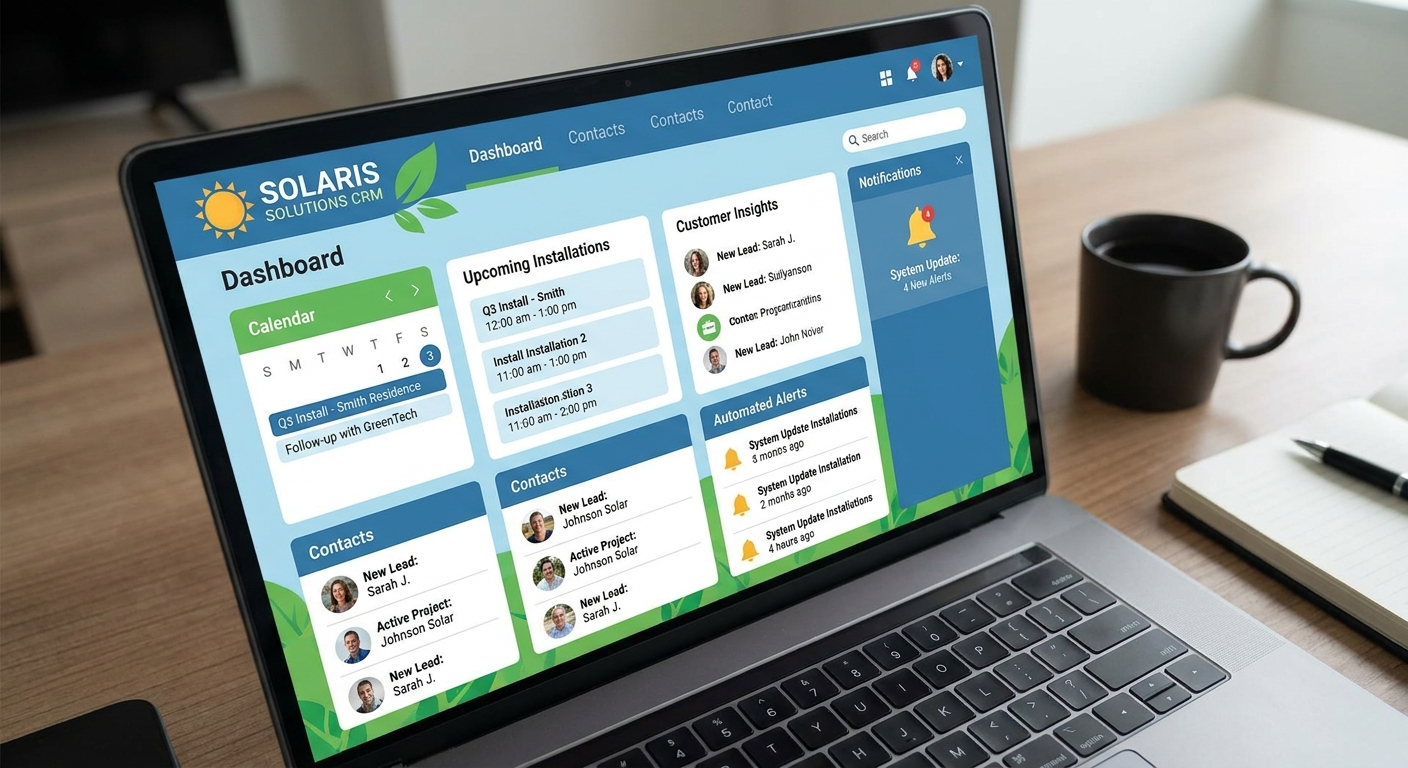
With a solar CRM platform, you can tag each customer with their installation date, system type, and location. From there, you can automate reminders based on logical triggers. For example, send a panel cleaning reminder every year before summer (when dust and heat reduce efficiency), or schedule an inverter health check reminder every two years.
These reminders serve two purposes. First, they genuinely help your customer get the most out of their solar investment, which builds trust and loyalty. Second, they create natural touchpoints where your team can offer paid maintenance services, AMC renewals, or system upgrades. Customer retention and revenue generation go hand in hand when your follow-up system is built around real customer value.
QuickEstimate’s automated follow-up system lets you create customizable reminder sequences with pre-built email and WhatsApp templates. You can set reminders to trigger automatically based on installation date, ensuring no customer ever falls through the cracks. This is one of the most underused features in CRM features for solar businesses, and one of the highest-ROI activities you can implement this year.
3. Use CRM Data to Identify Upsell and Cross-Sell Opportunities
Your existing customer base is your best source of new revenue. A customer who already trusts you, has seen your work, and is happy with their solar system is far more likely to buy from you again than a cold lead. The challenge is identifying the right customers at the right time with the right offer.
What to Look for in Your CRM Data
A good solar CRM India platform stores rich data about each customer’s installation. Use this data to spot upsell opportunities:
- System age: Customers with systems installed 3 to 5 years ago may be ready for a battery storage addition or an inverter upgrade.
- System size: Customers with smaller residential systems who have since expanded their home or business may need additional capacity.
- Energy consumption patterns: Customers who mention high electricity bills despite their solar system may benefit from a system audit and expansion proposal.
- New property: Customers who mention a new home, office, or factory are prime candidates for a second installation.
Once you identify a upsell opportunity, speed matters. With QuickEstimate’s proposal automation feature, your sales team can generate a professional, branded solar proposal in under 60 seconds and send it directly via WhatsApp or email. That kind of responsiveness impresses existing customers and dramatically increases conversion rates on upsell offers.
Want to improve your overall sales conversion rates alongside retention? Read our guide on 7 Proven Ways to Boost Sales Conversion in Solar 2026.
4. Turn Happy Customers Into a Referral Engine
Referrals are the highest-converting lead source in the solar industry. A homeowner who hears about your company from a neighbor who already has panels on their roof is far more likely to convert than someone who found you through a Facebook ad. Yet most solar companies have no systematic process for generating referrals. They rely on customers to volunteer them, which rarely happens consistently.
How to Build a Systematic Referral Process
The secret to generating referrals is timing and simplicity. Ask at the right moment, make it easy, and follow up. Here’s how to build this into your customer retention workflow:
- Ask at peak satisfaction: The best time to ask for a referral is right after a positive experience, such as the one-month check-in when the customer sees their first electricity bill savings, or after you’ve resolved a service issue quickly.
- Make it specific: Instead of “do you know anyone who might be interested?”, try “do you have a neighbor or colleague who has mentioned high electricity bills?” Specific questions get specific answers.
- Track referrals in your CRM: Log every referral in your lead management India system so you can track which customers are your best advocates and ensure referred leads get prompt follow-up.
- Close the loop: Always let the referring customer know when their referral has been contacted and, if appropriate, when the installation is complete. This reinforces their decision to refer and encourages them to do it again.
With QuickEstimate’s lead management system, you can tag leads by source, including referrals, and track which existing customers are generating the most new business. This data helps you identify your top advocates and prioritize your customer retention efforts where they have the highest impact.
5. Personalize Communication at Scale With Solar CRM India
Generic communication is the enemy of customer retention. When a customer receives a mass email that clearly wasn’t written for them, it signals that you see them as a number, not a person. In a relationship-driven industry like solar, that perception can quietly erode loyalty over time.
Segmentation: The Foundation of Personalized Communication
Personalization at scale starts with smart segmentation in your solar CRM India platform. Group your customers by meaningful attributes:
- Installation type: Residential vs. commercial vs. industrial systems have very different needs and communication preferences.
- System size: A 3 kW residential customer and a 100 kW commercial customer need completely different messaging.
- Installation date: Newer customers need onboarding content; older customers need upgrade and renewal messaging.
- Location: Customers in different states face different weather patterns, grid regulations, and subsidy schemes.
Once segmented, you can use QuickEstimate’s customizable email and WhatsApp templates to send messages that feel personal even when they’re automated. A message that says “Your 5 kW system in Pune has been running for 2 years this month” feels very different from a generic newsletter blast. This level of personalization is what separates solar companies with strong customer retention from those that constantly struggle to re-engage lapsed customers.
Personalization also extends to your proposals. When you reach out with an upsell offer, a branded proposal that references the customer’s existing system, their location, and their specific energy needs shows that you’ve done your homework. QuickEstimate’s proposal automation tools make this level of customization fast and consistent across your entire team.
6. Track Customer Satisfaction and Act on Feedback
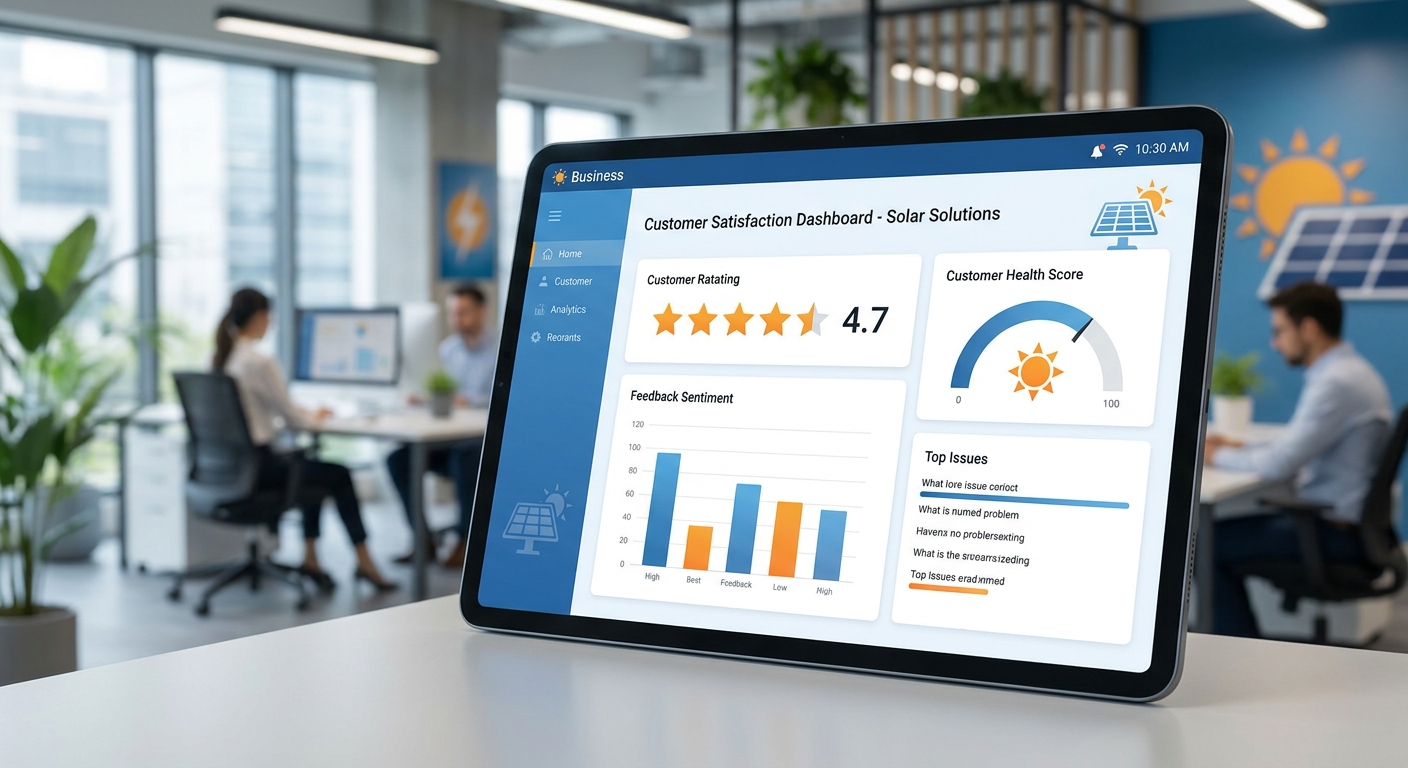
You can’t improve what you don’t measure. Customer retention requires a clear view of how satisfied your customers are at every stage of their journey. Solar companies that systematically collect and act on feedback catch problems early, prevent churn, and often turn dissatisfied customers into loyal advocates by showing they genuinely care.
Building a Simple Feedback Loop
You don’t need a complex survey platform to collect meaningful feedback. A simple, consistent process works best:
- Post-installation survey: Send a short 3-question survey within two weeks of installation. Ask about the installation experience, communication quality, and overall satisfaction.
- 6-month check-in: Ask how the system is performing relative to expectations and whether they have any concerns.
- Annual review: A more comprehensive check-in that covers system performance, service experience, and likelihood to recommend.
Log all feedback in your solar CRM so your team can see each customer’s satisfaction history at a glance. Flag customers who express dissatisfaction for immediate follow-up. A customer who feels heard and sees their concern resolved quickly is far more likely to stay loyal and refer others than one who never hears back.
QuickEstimate’s real-time sales performance dashboard gives your team visibility into customer interactions and follow-up status, so no feedback goes unaddressed. This kind of systematic approach to customer retention is what separates high-growth solar companies from those stuck in a constant cycle of new lead dependency.
Understanding how your CRM scales with your growing customer base is also important. See our guide on CRM Scalability: 8 Critical Questions Before You Buy to make sure your tools can grow with you.
7. Build Long-Term Loyalty With Value-Added Content and Education
The solar companies with the strongest customer retention rates don’t just sell and service panels. They educate and inform their customers year-round. By positioning yourself as a trusted source of solar knowledge, you stay top of mind even when there’s no immediate transaction to be had.
What Value-Added Content Looks Like for Solar Companies
You don’t need a full content marketing team to do this well. A few consistent touchpoints throughout the year can make a significant difference:
- Government subsidy updates: India’s solar subsidy landscape changes regularly. Customers appreciate timely updates on new schemes, PM Surya Ghar Muft Bijli Yojana changes, or state-level incentives that might benefit them.
- Seasonal energy tips: Share advice on maximizing solar output during different seasons, managing consumption during peak summer months, or preparing systems for monsoon.
- Technology updates: Brief customers on new battery storage options, smart inverter upgrades, or net metering policy changes in their state.
- Savings milestones: Celebrate when a customer’s system crosses a significant savings threshold, such as ₹50,000 or ₹1 lakh in cumulative savings. These moments create emotional connection and are highly shareable on social media.
Delivering this content via WhatsApp broadcasts and email newsletters is simple with QuickEstimate’s bulk communication tools. The goal isn’t to sell on every touchpoint. It’s to be the company your customers think of first when they’re ready to upgrade, refer a friend, or expand their solar investment. That’s the long game of customer retention, and it pays dividends for years.
According to the International Energy Agency’s solar PV reports, customer trust and post-sale service quality are among the top factors influencing repeat purchases and referrals in the residential solar segment globally. Indian solar companies that invest in education-based retention are aligning with this global best practice.
How QuickEstimate Powers Customer Retention for Solar Companies

Every customer retention strategy in this guide becomes significantly easier to execute with the right solar CRM India platform. QuickEstimate is built specifically for solar businesses and B2B service companies, which means it comes with the features that matter most for retention, without the complexity and cost of generic enterprise CRM tools.
Key QuickEstimate Features for Customer Retention
- Automated follow-up sequences: Set up post-installation follow-ups, maintenance reminders, and anniversary messages once, and let the system run them automatically via WhatsApp and email.
- 60-second proposal generation: When an upsell or upgrade opportunity arises, your team can generate and send a professional, branded proposal in under a minute, striking while the iron is hot.
- Lead and customer management: Track every customer’s history, system details, communication log, and satisfaction status in one place. No more spreadsheets or missed follow-ups.
- Real-time analytics dashboard: Monitor customer engagement, follow-up completion rates, and team performance to ensure your retention processes are actually being executed.
- Mobile app access: Your sales and service team can access customer data, send proposals, and log interactions from anywhere, whether they’re in the office or on-site at an installation.
- Integration capabilities: Connect QuickEstimate with Facebook Ads, Pabbly Connect, and other tools via APIs and webhooks to create a seamless customer journey from first inquiry to long-term retention.
Compared to general-purpose tools like Zoho CRM or Salesforce, QuickEstimate’s solar-specific design means you spend less time configuring and more time actually retaining customers. And compared to design-focused tools like OpenSolar, QuickEstimate covers the full customer relationship lifecycle, from lead capture through post-installation engagement and upsell.
If you’re evaluating CRM options for your solar business, our guide on Solar CRM Software Costs: What You’re Really Paying For breaks down what to expect in terms of investment and value.
Getting started is straightforward. QuickEstimate offers a FREE Plan at ₹0 so you can explore the platform and start building your retention workflows without any upfront commitment. For growing solar teams that need the full suite of automation and analytics features, the PRO Plan at ₹6,999 per user per year delivers everything you need to turn your customer base into a compounding growth engine.
Frequently Asked Questions About Customer Retention for Solar Companies
What is the best way to retain solar customers?
The most effective customer retention approach combines proactive communication, genuine value delivery, and systematic follow-up. Start with a structured post-installation follow-up sequence, automate maintenance reminders, and regularly share useful content like subsidy updates and energy tips. Using a solar CRM India platform to automate these touchpoints ensures consistency without adding workload to your team.
How does a CRM help with customer retention in solar?
A solar CRM centralizes all customer data, automates follow-up sequences, and gives your team real-time visibility into every customer relationship. Instead of relying on memory or spreadsheets, your team gets automated reminders, pre-built communication templates, and a clear view of which customers need attention. This systematic approach is the foundation of scalable customer retention for solar businesses.
When should I start a customer retention program?
The best time to start is before you need it. Ideally, your customer retention program should begin the moment a customer signs their installation contract. Set up your post-installation follow-up sequences in your CRM before the installation is complete, so the first touchpoint goes out automatically on day seven without any manual effort from your team.
How do I measure customer retention rate for my solar business?
Your customer retention rate is calculated as the percentage of existing customers who engage with you again (through AMC renewals, upgrades, or referrals) over a given period. Track this in your solar CRM by tagging customers by engagement status and monitoring how many move from “installed” to “active relationship” over 12 months. A healthy solar business should aim for at least 40 to 60 percent of installed customers to have some form of ongoing engagement within two years of installation.
Can small solar companies implement customer retention strategies?
Absolutely. In fact, customer retention strategies are often more impactful for smaller solar companies because each customer relationship represents a larger share of total revenue. With an affordable solar CRM India platform like QuickEstimate, even a team of two or three people can automate follow-ups, send professional proposals, and manage customer relationships at a level that was previously only possible for large enterprises.
Start Building Your Customer Retention Engine Today
The solar companies that will dominate the Indian market over the next five years won’t just be the ones with the best panels or the lowest prices. They’ll be the ones with the strongest customer relationships. Customer retention is not a nice-to-have. It’s a core business strategy that drives referrals, upsells, AMC revenue, and brand reputation simultaneously. Every day you delay building a systematic retention program is a day your installed customer base is quietly drifting toward your competitors.
QuickEstimate gives your solar business the solar CRM India tools to automate follow-ups, generate upsell proposals in 60 seconds, track customer satisfaction, and turn your happiest customers into your most powerful sales channel. Over 1,000 solar businesses, including Sunnovative, Heaven Solar, JJ Solar, and Tata Power, already use QuickEstimate to manage their customer relationships and grow their revenue.
Ready to take the first step? Start with the FREE Plan at ₹0 and see how QuickEstimate transforms your approach to customer retention. If you’re ready to unlock the full power of automation and analytics for your growing team, explore the PRO Plan at ₹6,999 per user per year. Have questions about which plan fits your business? Contact us and our team will help you find the right fit.
For a complete guide on getting your CRM set up and running quickly, see our CRM Implementation India: Step-by-Step Setup Guide 2026.
This blog post was written using thestacc.com