
Introduction: Why Solar Proposals Make or Break Your Sales Success
In the competitive solar industry landscape of India, the difference between closing a deal and losing a customer often comes down to one critical document: your solar proposal. While your sales pitch might be compelling and your product superior, a poorly crafted proposal can derail even the most promising opportunities. Conversely, a well-designed, professional solar proposal can transform hesitant prospects into committed customers.
Solar sales teams across India face mounting pressure to respond quickly to leads, present compelling value propositions, and stand out in an increasingly crowded marketplace. The challenge is real: according to industry insights, solar businesses that respond to leads within the first hour are 7 times more likely to qualify the lead compared to those who wait longer. Yet many solar companies still struggle with manual proposal creation processes that take hours or even days, causing them to lose deals to faster competitors.

This comprehensive FAQ guide addresses the 20 most common questions solar installation companies, EPCs, and sales teams have about creating effective solar proposals. Whether you’re struggling with proposal design, pricing presentation, follow-up timing, or acceptance rates, you’ll find actionable answers that can immediately improve your sales performance. From understanding what to include in your quotes to leveraging proposal automation tools, we’ll cover everything you need to transform your solar proposal process and close more deals faster in 2026.
Solar Proposal Fundamentals
Before diving into specific questions, it’s essential to understand what makes solar proposals unique in the B2B sales landscape. A solar proposal is far more than a simple price quote—it’s a comprehensive document that educates potential customers, demonstrates value, builds trust, and provides a clear path to decision-making.
Unlike generic product quotes, solar proposals must address complex financial considerations including return on investment, payback periods, energy savings projections, and available government incentives. They need to balance technical specifications with accessible language, present significant upfront costs while emphasizing long-term value, and differentiate your offering in a competitive market. The most effective solar proposals serve as both educational resources and persuasive sales tools, guiding customers through what is often one of their most significant investment decisions.
1. What Should Be Included in a Solar Proposal?
A comprehensive solar proposal should include several essential components that address both the practical and financial aspects of the solar installation. At minimum, every professional solar proposal must contain:
- Executive Summary: A brief overview highlighting the key benefits, total investment, and projected savings
- System Design and Specifications: Detailed information about panel types, inverters, mounting systems, and total system capacity (kW)
- Financial Analysis: Complete cost breakdown, energy savings projections, payback period, ROI calculations, and available financing options
- Installation Timeline: Clear project milestones from site survey through commissioning and grid connection
- Warranties and Guarantees: Product warranties, performance guarantees, and workmanship coverage details
- Company Credentials: Your certifications, experience, past projects, and customer testimonials
- Terms and Conditions: Payment schedules, project scope, and legal agreements
- Next Steps: Clear call-to-action with contact information and approval process
For solar businesses in India, it’s particularly important to include information about government subsidies, net metering policies, and state-specific incentives that can significantly impact the customer’s decision. Using a specialized solar CRM India platform can help ensure you consistently include all necessary components while maintaining professional presentation standards.
2. How Quickly Should I Send a Solar Proposal After Meeting a Lead?
Speed is absolutely critical in solar sales. The ideal timeframe for sending a solar proposal after an initial meeting or site visit is within 24 hours, and preferably within the same day. Research consistently shows that response time directly correlates with conversion rates—the faster you deliver your proposal, the higher your chances of closing the deal.
Here’s why speed matters so much:
- Customer enthusiasm is highest immediately after your meeting: Strike while the iron is hot and capitalize on their interest
- Competitors are moving fast: Your prospects are likely getting quotes from multiple solar companies; being first creates a significant advantage
- Memory and context are fresh: Both you and the customer remember the conversation details, making the proposal more relevant
- Professionalism and efficiency signal: Quick turnaround demonstrates your company’s operational excellence and customer service standards
Modern solar businesses are leveraging technology to achieve remarkable speed. Platforms like QuickEst enable solar sales teams to generate and send professional solar proposals within 60 seconds, directly from their mobile devices. This capability transforms the sales process—imagine completing a site visit and sending a comprehensive, branded proposal to the customer via WhatsApp or email before you even leave their property. This level of responsiveness creates a powerful competitive advantage and significantly improves conversion rates.
3. Should I Send Solar Proposals via WhatsApp or Email?
The short answer: use both channels for maximum reach and engagement. However, the optimal delivery method depends on your customer demographics, communication preferences, and the complexity of your proposal.
WhatsApp Advantages:
- Extremely high open rates (98% compared to 20-30% for email)
- Instant delivery notifications and read receipts
- Preferred communication channel for many Indian customers
- Enables quick follow-up conversations and question answering
- Mobile-first format aligns with how customers consume content
Email Advantages:
- More professional for B2B and corporate clients
- Better for longer, detailed proposals with multiple attachments
- Easier for customers to forward to decision-makers
- Creates formal documentation trail
- Professional appearance for larger commercial projects
The most effective approach is a multi-channel strategy: send the proposal via the customer’s preferred channel first (ask during your initial conversation), then follow up through the alternate channel. For example, send via WhatsApp for immediate visibility, then follow up with an email containing the same proposal for their records. This dual-channel approach ensures maximum visibility while accommodating different customer preferences and use cases.
4. How Do I Present Pricing in Solar Proposals Without Scaring Customers Away?
Pricing presentation is one of the most delicate aspects of solar proposals. The key is to lead with value, not cost, and frame the investment in terms of long-term financial benefits rather than upfront expense.
Effective pricing presentation strategies include:
- Start with savings, not costs: Open your financial section by highlighting monthly electricity bill savings and total savings over the system lifetime
- Show payback period prominently: Clearly state when the system will pay for itself (typically 3-5 years in India)
- Break down costs transparently: Itemize equipment, installation, permits, and other components to build trust and justify the total investment
- Present multiple financing options: Offer cash purchase, loan financing, and lease options to accommodate different financial situations
- Emphasize ROI and IRR: Use financial metrics that business customers understand and value
- Include government incentives: Clearly show subsidies, tax benefits, and net metering advantages that reduce effective cost
- Use visual comparisons: Charts showing “cost of doing nothing” vs. “cost of going solar” over 25 years
Consider presenting pricing in terms of monthly payment equivalents rather than total system cost. For example, “₹8,500 per month” sounds more manageable than “₹25 lakhs total investment,” even though they represent the same financial commitment. This psychological framing helps customers compare the solar investment directly to their current electricity bills, making the value proposition more tangible and less intimidating.
5. What Are the Most Common Mistakes in Solar Proposals?
Understanding common pitfalls helps you avoid them and create more effective solar proposals. The most frequent mistakes solar sales teams make include:
- Information Overload: Including excessive technical jargon and overwhelming detail that confuses rather than clarifies. Keep it accessible and focus on what customers actually care about.
- Missing Financial Projections: Failing to provide clear ROI calculations, payback periods, and long-term savings analysis. Customers need to understand the financial benefits to justify the investment.
- Poor Visual Presentation: Using generic templates, inconsistent branding, or cluttered layouts that look unprofessional and diminish perceived value.
- Lack of Personalization: Sending cookie-cutter proposals that don’t reference the specific customer’s situation, energy needs, or concerns discussed during meetings.
- Unclear Next Steps: Leaving customers uncertain about how to proceed, who to contact, or what happens after they accept the proposal.
- Delayed Delivery: Taking too long to send proposals, allowing customer enthusiasm to cool and competitors to move in.
- Ignoring Mobile Optimization: Creating proposals that don’t display properly on smartphones, where many customers will first view them.
- Weak Differentiation: Failing to clearly articulate why your company and solution are superior to alternatives.
Avoiding these mistakes requires both process discipline and the right tools. A specialized CRM with solar-specific features can help ensure consistency, professionalism, and completeness across all your proposals while enabling the speed and personalization that modern customers expect.
Creating Professional Solar Proposals
The visual presentation and professional quality of your solar proposals significantly impact customer perception and decision-making. A polished, well-designed proposal signals competence, attention to detail, and professionalism—qualities customers want in a company that will be installing a major system on their property.
6. Should I Use a Solar Proposal Template or Create Custom Proposals?
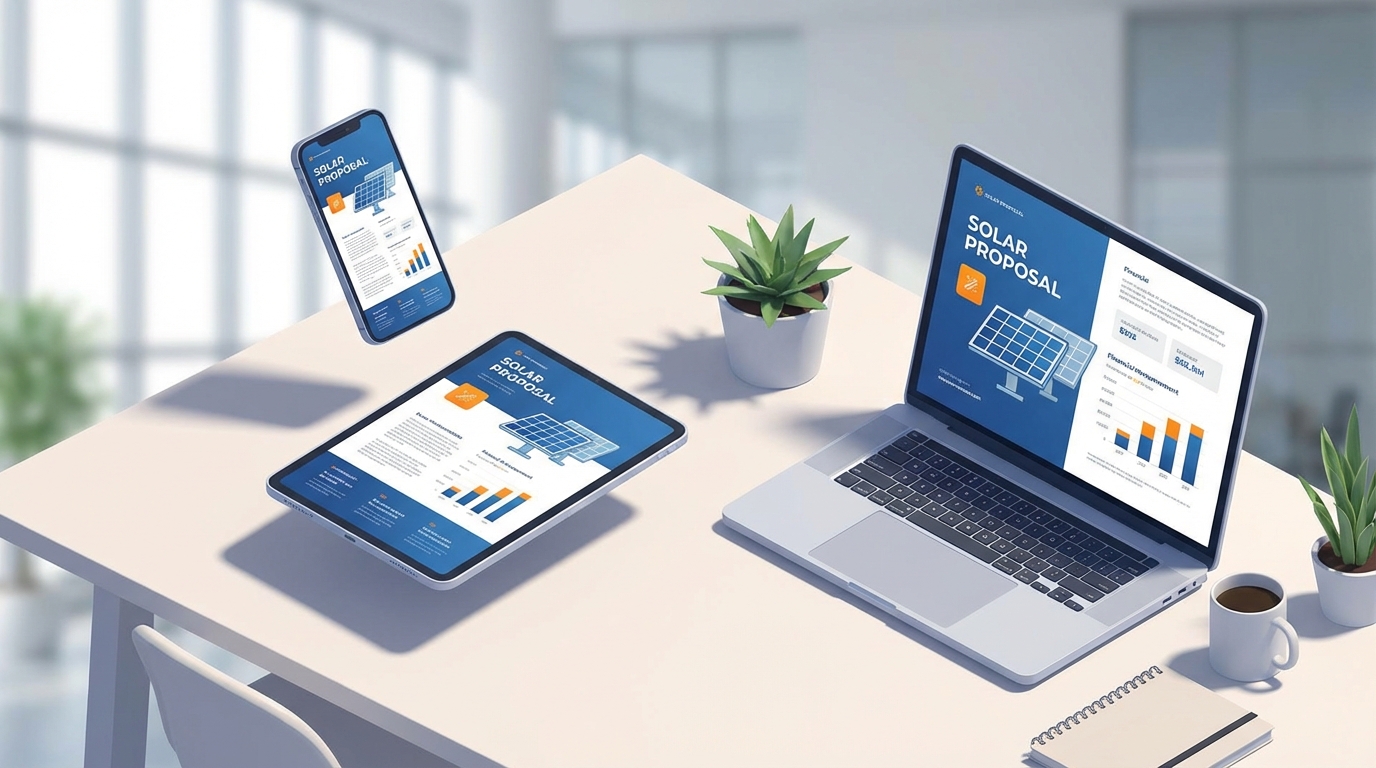
The most effective approach combines the efficiency of templates with strategic customization. Use professional templates as your foundation, then personalize key elements for each customer.
Benefits of using solar proposal templates:
- Consistency and Quality: Ensures every proposal meets professional standards and includes all essential components
- Time Efficiency: Reduces creation time from hours to minutes, enabling rapid response to leads
- Brand Cohesion: Maintains consistent visual identity and messaging across all customer touchpoints
- Reduced Errors: Minimizes mistakes that can occur when creating proposals from scratch under time pressure
- Team Scalability: Enables multiple sales team members to produce equally professional proposals
However, templates should never be used as completely generic documents. Effective personalization includes:
- Customer name and specific property details throughout the document
- Customized system design based on their actual energy consumption and roof characteristics
- References to specific concerns or priorities discussed during your meeting
- Tailored financial scenarios reflecting their budget and financing preferences
- Relevant case studies from similar customers or industries
Modern solar CRM platforms offer template libraries with customization capabilities, allowing you to maintain speed while delivering personalized proposals. QuickEst, for example, provides professional proposal templates that can be customized with customer-specific data and sent within 60 seconds, striking the perfect balance between efficiency and personalization.
7. How Long Should a Solar Proposal Be?
The optimal solar proposal length is 8-12 pages for residential projects and 15-25 pages for commercial installations. However, length should always be determined by value, not arbitrary page counts—every page should serve a clear purpose and provide meaningful information.
Structure your proposal with a layered information approach:
- Executive Summary (1-2 pages): Key highlights for busy decision-makers who want the bottom line quickly
- Core Proposal (5-8 pages): Essential information including system design, financial analysis, timeline, and company credentials
- Technical Appendix (optional): Detailed specifications, engineering drawings, and technical documentation for customers who want deeper information
Remember that many customers will view your proposal on mobile devices first. Ensure your document is scannable with clear headings, bullet points, visual elements, and white space. Front-load the most compelling information—many customers won’t read beyond the first few pages, so make sure your value proposition and key differentiators appear early.
8. What Financial Information Must Be Included in Solar Proposals?
Financial transparency and comprehensive analysis are critical for solar proposal success. Customers are making a significant investment decision and need complete financial information to evaluate the opportunity. Essential financial components include:
- Total System Cost: Complete investment broken down by major components (panels, inverters, installation, permits, etc.)
- Energy Production Estimates: Projected annual kWh generation based on system size and location
- Electricity Savings Projections: Monthly and annual savings based on current electricity rates and projected rate escalation
- Payback Period: Time required to recover the initial investment through savings
- Return on Investment (ROI): Percentage return over system lifetime (typically 25 years)
- Net Present Value (NPV): Current value of all future savings minus the initial investment
- Government Incentives: Available subsidies, accelerated depreciation benefits, and tax advantages specific to India
- Financing Options: If applicable, loan terms, interest rates, monthly payments, and total cost of financing
- Maintenance Costs: Estimated ongoing maintenance and operational expenses
- Comparison Scenarios: Side-by-side comparison of “going solar” vs. “continuing with grid electricity”
For commercial and industrial customers in India, include information about accelerated depreciation benefits, which allow businesses to depreciate 40% of the solar system cost in the first year. This tax advantage significantly improves the financial attractiveness of solar investments for business customers.
Present financial information both in tables (for precision) and charts (for visual impact). Many customers respond better to visual representations of savings over time than to raw numbers alone.
9. How Do I Make My Solar Proposals Stand Out from Competitors?
In a competitive solar market, differentiation is essential. Your proposal must clearly communicate why customers should choose your company over alternatives. Effective differentiation strategies include:
- Professional Design and Branding: Invest in high-quality visual design that reflects your brand identity and creates a premium impression
- Customer-Centric Language: Focus on customer benefits and outcomes rather than technical features and company achievements
- Social Proof: Include relevant testimonials, case studies, and project photos from similar customers
- Unique Value Propositions: Clearly articulate what makes your offering different—whether it’s superior equipment, extended warranties, faster installation, or exceptional service
- Interactive Elements: Consider including QR codes linking to video testimonials, virtual system tours, or online calculators
- Risk Reversal: Offer strong guarantees, performance warranties, or satisfaction commitments that reduce customer perceived risk
- Educational Content: Provide valuable information that helps customers make informed decisions, positioning you as a trusted advisor
- Personalization: Reference specific details from your conversations and tailor recommendations to their unique situation
One often-overlooked differentiator is response speed and follow-up excellence. When you can deliver a professional proposal within an hour of meeting a customer while competitors take days, you’ve already demonstrated superior service. Implementing automated follow-up systems through a sales automation platform ensures you maintain consistent communication without manual effort, further differentiating your customer experience.
10. Should I Include Technical Specifications in Solar Proposals?
Yes, but with strategic placement and presentation. Include technical specifications, but don’t lead with them. Most customers care more about outcomes (savings, reliability, aesthetics) than technical details (cell efficiency, temperature coefficients, maximum power point tracking).
The best approach is a layered information structure:
- Main Proposal Body: Include essential technical information in accessible language—panel brand and wattage, inverter type, total system capacity, expected production. Focus on what these specs mean for the customer.
- Technical Appendix: Provide detailed specifications, datasheets, engineering drawings, and technical documentation for customers who want deeper information or need it for internal approval processes.
- Visual Presentation: Use diagrams, system layouts, and infographics to make technical information more accessible and engaging.
For residential customers, keep technical details minimal and benefit-focused. For commercial and industrial customers, especially those with engineering teams or technical decision-makers, provide comprehensive technical documentation. Understanding your audience and tailoring technical depth accordingly is key to proposal effectiveness.
Follow-Up and Conversion Strategies
Sending a great proposal is only the beginning—systematic follow-up is where deals are won or lost. Research shows that 80% of sales require five or more follow-up contacts, yet many solar sales teams give up after one or two attempts. Effective follow-up strategies can dramatically improve your proposal acceptance rates.
11. When Should I Follow Up After Sending a Solar Proposal?
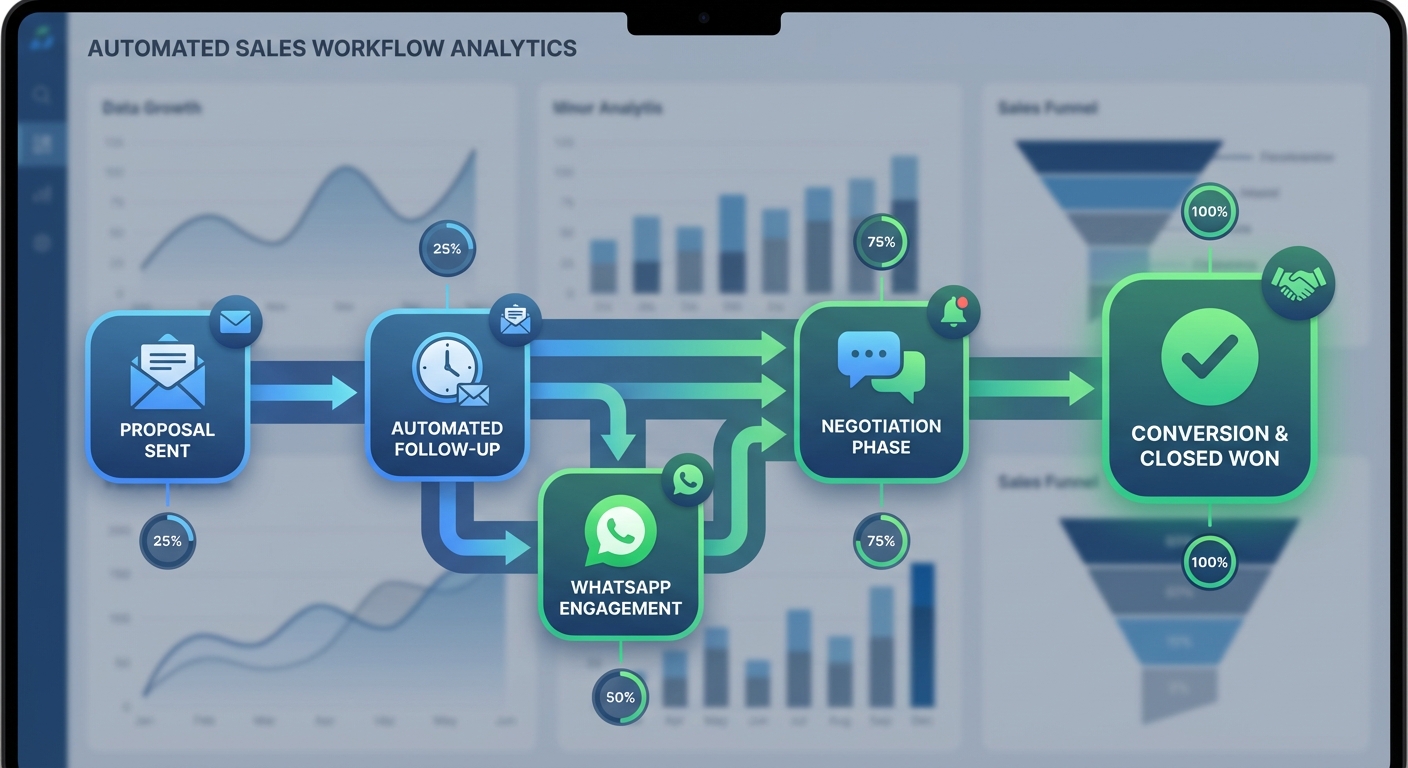
The optimal follow-up timeline balances persistence with respect for the customer’s decision-making process. Here’s a proven follow-up schedule:
- Same Day (2-3 hours after sending): Quick confirmation message asking if they received the proposal and if they have any immediate questions
- Day 2: Value-added follow-up sharing a relevant case study, customer testimonial, or answering a question they raised during your meeting
- Day 4-5: Check-in call or message asking if they’ve had a chance to review the proposal and if they’d like to discuss any aspects
- Day 7: More substantive follow-up addressing common questions or concerns, perhaps sharing information about financing options or current incentives
- Day 10-14: Final follow-up offering to schedule a call to discuss the proposal in detail or answer any outstanding questions
This timeline should be adjusted based on customer signals. If they indicate they need two weeks to review with their team, respect that timeline. If they’re highly engaged and asking questions, accelerate your follow-up. The key is maintaining consistent contact without being pushy or annoying.
Automated follow-up systems can ensure you never miss a follow-up opportunity while maintaining personalization. QuickEst’s automated follow-up features enable you to set customizable reminders and email templates, ensuring systematic contact with every prospect while freeing your sales team to focus on high-value conversations rather than administrative follow-up tasks.
12. How Many Times Should I Follow Up on a Solar Proposal?
The data is clear: persistent follow-up dramatically improves conversion rates. Industry research shows that 44% of salespeople give up after one follow-up, yet 80% of sales happen between the fifth and twelfth contact. For solar proposals, plan for a minimum of 5-7 follow-up touchpoints over a 2-3 week period.
However, quantity alone isn’t the goal—each follow-up should provide value:
- Share additional information that addresses potential concerns
- Provide updates on incentives, financing options, or equipment availability
- Offer to answer specific questions or provide clarification
- Share relevant case studies or testimonials
- Invite them to visit completed installations or speak with existing customers
Know when to stop: if a customer explicitly asks you to stop contacting them, respect that immediately. If you’ve had 7-8 touchpoints with no response or engagement, it’s reasonable to send a final “breakup email” letting them know you’re closing their file but they’re welcome to reach out in the future. Sometimes this final message actually prompts a response from customers who were interested but distracted.
13. What Should I Say in Follow-Up Messages?
Effective follow-up messages are brief, value-focused, and make it easy for customers to respond. Avoid generic “just checking in” messages that provide no value. Instead, use these proven follow-up message frameworks:
Value-Added Follow-Up:
“Hi Mr. Sharma, I was reviewing your proposal and realized I forgot to mention that we recently completed a similar 50kW installation for a textile manufacturer in Surat. They’re seeing 35% reduction in their electricity costs. Would you like me to share their experience with you?”
Question-Based Follow-Up:
“Hi Mrs. Patel, many customers at this stage have questions about financing options or installation timelines. What questions can I answer for you?”
Resource-Sharing Follow-Up:
“Hi Mr. Kumar, I came across this update about the extended MNRE subsidy deadline for rooftop solar and thought of you. This could impact your solar investment positively. Happy to discuss how this applies to your proposal.”
Urgency-Creating Follow-Up (use sparingly):
“Hi Mrs. Reddy, I wanted to let you know that panel prices are expected to increase next month due to supply chain changes. I’ve reserved your installation slot through March 31st, but wanted to make sure you had all the information you need to make a decision.”
Always include a clear, low-friction call-to-action: “Would you like to schedule a quick call?” or “Can I answer any questions?” Make it easy for them to respond with minimal effort.
14. How Can I Track Whether Customers Have Opened My Solar Proposals?
Proposal tracking provides valuable insights into customer engagement and helps you time your follow-up more effectively. Several tracking methods are available:
- Email Tracking Tools: Email platforms and CRM systems can track when emails are opened, how many times, and which links are clicked
- PDF Tracking Services: Specialized tools can track when PDF proposals are opened, which pages are viewed, and how long customers spend on each section
- WhatsApp Read Receipts: When sending via WhatsApp, you can see when messages are delivered and read
- CRM Analytics: Comprehensive lead management systems provide engagement tracking and analytics across all customer touchpoints
Tracking data helps you prioritize follow-up efforts. A customer who has opened your proposal five times and spent 20 minutes reviewing it is clearly more engaged than someone who hasn’t opened it at all. This intelligence allows you to tailor your follow-up approach—perhaps the engaged customer needs a gentle nudge toward decision, while the non-opener might need a different delivery method or a phone call to ensure they received the proposal.
QuickEst provides real-time sales analytics and performance tracking, giving solar sales teams visibility into proposal engagement and helping them identify which leads are hot and ready for follow-up versus which need nurturing or different approaches.
15. What’s the Average Acceptance Rate for Solar Proposals?
Solar proposal acceptance rates vary significantly based on lead quality, market conditions, and sales process effectiveness. Industry benchmarks for India suggest:
- Residential Solar: 15-25% acceptance rate for qualified leads
- Commercial Solar: 20-30% acceptance rate for qualified leads
- Industrial Solar: 25-35% acceptance rate for qualified leads
However, these averages mask significant variation. Top-performing solar companies achieve acceptance rates of 40-50% or higher through superior qualification, proposal quality, and follow-up processes. Factors that influence acceptance rates include:
- Lead Quality: Self-generated leads typically convert better than purchased leads
- Lead Qualification: Thorough qualification before proposal creation improves conversion
- Response Speed: Faster proposal delivery correlates with higher acceptance rates
- Proposal Quality: Professional, comprehensive proposals outperform generic quotes
- Follow-Up Consistency: Systematic follow-up dramatically improves conversion
- Pricing Competitiveness: Value proposition relative to alternatives
- Trust and Credibility: Company reputation and sales relationship quality
Track your own acceptance rates by lead source, sales representative, and proposal type to identify improvement opportunities. A robust CRM system with ROI tracking capabilities helps you measure these metrics and optimize your sales process based on data rather than intuition.
Technology and Automation for Solar Proposals
Modern solar businesses are leveraging technology to create competitive advantages through speed, consistency, and data-driven optimization. The right tools can transform your proposal process from a time-consuming bottleneck into a streamlined competitive weapon.
16. Should I Use Solar Proposal Software or Create Proposals Manually?
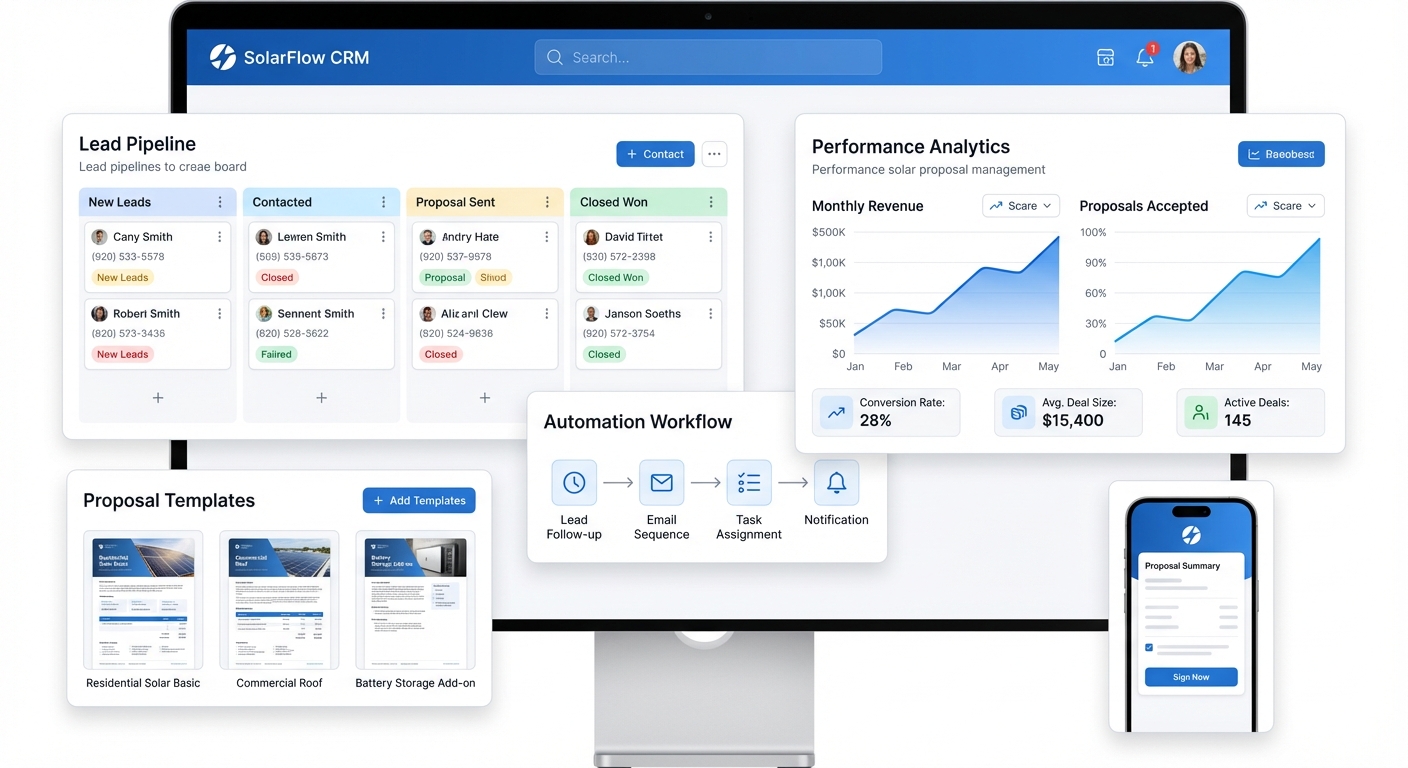
For any solar business serious about growth and efficiency, proposal software is no longer optional—it’s essential. The time savings, consistency benefits, and competitive advantages far outweigh the investment.
Benefits of solar proposal software:
- Dramatic Time Savings: Reduce proposal creation from hours to minutes or even seconds
- Professional Consistency: Every proposal meets quality standards regardless of which team member creates it
- Reduced Errors: Automated calculations eliminate pricing mistakes and technical errors
- Mobile Accessibility: Create and send proposals from anywhere, even during site visits
- Brand Consistency: Maintain professional branding across all customer touchpoints
- Integration Benefits: Connect proposals to your CRM, lead management, and follow-up systems
- Analytics and Optimization: Track proposal performance and identify improvement opportunities
- Scalability: Support team growth without proportional increase in proposal creation time
The cost-benefit analysis is compelling. If a sales representative spends 3 hours creating each proposal manually and sends 20 proposals per month, that’s 60 hours of labor. With proposal software reducing creation time to 5 minutes, you save 58+ hours monthly—time that can be redirected to higher-value activities like customer meetings, follow-up, and relationship building.
When evaluating solar proposal software, consider factors like ease of use, customization capabilities, mobile accessibility, integration options, and CRM pricing that fits your budget and business size.
17. How Can I Speed Up My Solar Proposal Creation Process?
Speed is a critical competitive advantage in solar sales. Here are proven strategies to accelerate your proposal creation process:
- Implement Proposal Automation Software: The single most impactful change—platforms like QuickEst enable 60-second proposal generation
- Use Template Libraries: Maintain pre-built templates for common scenarios (residential, commercial, different system sizes)
- Integrate with Lead Management: Automatically pull customer information from your CRM to eliminate manual data entry
- Standardize Pricing Models: Create pricing calculators or matrices that enable instant quote generation
- Pre-Build Content Modules: Develop reusable sections for company credentials, warranties, technical specs, etc.
- Enable Mobile Creation: Equip sales teams with mobile apps that allow proposal creation during or immediately after site visits
- Automate Calculations: Use software that automatically calculates ROI, payback periods, and savings projections
- Streamline Approval Workflows: Implement clear approval processes for proposals requiring management review
The fastest solar companies can now create and send professional proposals within minutes of completing a site visit. This speed creates a powerful first-mover advantage—you’re presenting your solution while competitors are still gathering information. QuickEst’s 60-second proposal generation capability, combined with WhatsApp and email delivery, enables this level of responsiveness without sacrificing quality or professionalism.
18. What CRM Features Are Most Important for Managing Solar Proposals?
Not all CRM systems are created equal, especially for solar businesses with unique proposal and sales process requirements. When evaluating CRM options for your solar business, prioritize these essential features:
- Integrated Proposal Generation: Built-in tools to create professional solar proposals without switching between multiple platforms
- Automated Follow-Up Systems: Customizable reminder sequences and email templates that ensure consistent follow-up
- Real-Time Analytics Dashboard: Visibility into proposal status, acceptance rates, pipeline value, and team performance
- Mobile Accessibility: Full-featured mobile apps for iOS and Android enabling field sales activities
- Lead Management Capabilities: Tools to capture, track, qualify, and nurture leads efficiently
- Team Collaboration Features: Task assignment, progress monitoring, and communication tools for coordinated sales efforts
- Template Customization: Ability to create branded proposal templates with your company identity
- Integration Options: Connections to marketing platforms, accounting software, and other business tools
- WhatsApp Integration: Direct proposal delivery via WhatsApp for maximum engagement in the Indian market
- Data Security: Robust encryption and security measures to protect customer information
- Bulk Import Capabilities: Easy migration of existing lead data from Excel or other systems
QuickEst is specifically designed for solar businesses with all these features built-in. Unlike general-purpose CRM platforms like Salesforce or Zoho CRM that require extensive customization, QuickEst provides solar-specific functionality out of the box—from proposal templates designed for solar installations to analytics dashboards tracking solar-specific metrics. This specialization means faster implementation, easier adoption, and better alignment with your actual sales process.
19. How Do I Handle Proposal Revisions and Negotiations?
Proposal revisions are a normal part of the sales process. Handling them efficiently and professionally can be the difference between closing a deal and losing a customer. Best practices for managing revisions include:
- Version Control: Maintain clear version numbers and dates on all proposals to avoid confusion
- Document Changes: Keep notes on what changed between versions and why
- Quick Turnaround: Respond to revision requests as quickly as possible—speed demonstrates commitment
- Understand the “Why”: Before creating a revision, understand what’s driving the request—is it price, system size, equipment, timeline, or something else?
- Offer Alternatives: When customers request price reductions, present options (smaller system, different equipment, phased installation) rather than simply discounting
- Set Boundaries: Establish reasonable limits on revisions to prevent endless negotiation cycles
- Use Proposal Software: Tools that enable quick revisions without starting from scratch save enormous time
- Track Approval Workflows: Implement clear processes for proposals requiring management approval before sending
When negotiating, focus on value rather than price alone. If a customer requests a 10% price reduction, explore whether a slightly smaller system or different equipment configuration might meet their budget while maintaining your margins. Sometimes customers request revisions simply to feel they’ve negotiated—offering a small concession (extended warranty, free monitoring, expedited installation) can satisfy this need without significantly impacting your profitability.
20. How Can I Increase My Solar Proposal Acceptance Rate?
Improving proposal acceptance rates requires a holistic approach addressing every stage of the sales process. Here are proven strategies that top-performing solar companies use to achieve acceptance rates of 40-50% or higher:
Pre-Proposal Strategies:
- Better Lead Qualification: Invest time upfront to ensure you’re proposing to genuinely interested, qualified prospects
- Thorough Discovery: Understand customer motivations, concerns, budget, and decision-making process before creating proposals
- Set Expectations: Discuss pricing ranges and project scope during initial conversations to avoid sticker shock
- Build Relationships: Establish trust and credibility before presenting your proposal
Proposal Creation Strategies:
- Professional Design: Invest in high-quality, branded proposal templates that create a premium impression
- Value-First Presentation: Lead with benefits and savings, not costs and technical specifications
- Personalization: Reference specific customer situations, concerns, and priorities throughout the proposal
- Clear Differentiation: Articulate why your solution is superior to alternatives
- Social Proof: Include relevant testimonials and case studies that build confidence
- Risk Reversal: Offer strong guarantees and warranties that reduce perceived risk
Post-Proposal Strategies:
- Immediate Follow-Up: Contact customers within hours of sending the proposal
- Systematic Follow-Up: Implement consistent multi-touchpoint follow-up sequences
- Value-Added Communication: Provide helpful information and resources in every follow-up
- Address Objections Proactively: Anticipate and address common concerns before they become obstacles
- Create Appropriate Urgency: Use genuine time-sensitive factors (incentive deadlines, equipment availability) to encourage timely decisions
Process and Technology Strategies:
- Speed Optimization: Deliver proposals within hours, not days, to capitalize on customer enthusiasm
- Proposal Automation: Use technology to ensure consistency and enable rapid response
- Analytics and Optimization: Track acceptance rates by various factors and continuously improve based on data
- Team Training: Invest in sales training focused on consultative selling and objection handling
Remember that proposal acceptance is the culmination of your entire sales process, not just the quality of the document itself. A mediocre proposal following an excellent sales conversation will often outperform a perfect proposal sent to a poorly qualified lead. Focus on the complete customer journey from first contact through proposal acceptance.
Conclusion: Transform Your Solar Proposal Process in 2026
Creating winning solar proposals in 2026 requires more than just listing equipment specifications and pricing. It demands a strategic approach that combines professional presentation, compelling value communication, rapid response, systematic follow-up, and the right technology tools to execute consistently at scale.
The solar businesses that thrive in India’s competitive market are those that recognize proposals as a critical competitive weapon rather than an administrative task. They invest in professional templates, leverage automation to achieve remarkable speed, implement systematic follow-up processes, and continuously optimize based on data and customer feedback.
The 20 questions and answers covered in this guide provide a comprehensive framework for evaluating and improving your solar proposal process. Whether you’re struggling with slow proposal creation, low acceptance rates, inconsistent follow-up, or simply want to close more deals faster, implementing these best practices will deliver measurable improvements in your sales performance.
Technology plays an increasingly important role in proposal success. Modern solar CRM platforms like QuickEst enable capabilities that were impossible just a few years ago—creating professional proposals in 60 seconds, sending them via WhatsApp directly from your mobile device, automating follow-up sequences, and tracking engagement in real-time. These tools don’t just save time; they create competitive advantages that translate directly to higher conversion rates and faster sales cycles.
If you’re ready to transform your solar proposal process and unlock your sales potential, consider how specialized solar CRM software can help. QuickEst offers everything solar businesses need to streamline sales processes, create professional proposals instantly, manage leads efficiently, and close more deals faster. With features specifically designed for solar installation companies, EPCs, and sales teams, QuickEst eliminates the common pain points that slow down solar sales.
Explore QuickEst’s FREE PLAN – ₹0 to experience how 60-second proposal generation can transform your sales process, or upgrade to the PRO PLAN – ₹6999 Per User / Year for full access to advanced features including automated follow-ups, real-time analytics, team collaboration tools, and unlimited proposals. For personalized guidance on optimizing your solar proposal process, Contact Us to speak with our solar sales experts.
The solar market in India continues to grow rapidly, creating enormous opportunities for businesses that can respond quickly, present professionally, and follow up systematically. By implementing the strategies and best practices outlined in this guide, you’ll be well-positioned to seize every opportunity, boost your sales performance, and build a thriving solar business in 2026 and beyond.