
The Indian solar market is experiencing unprecedented growth in 2026, with businesses racing to capture their share of the renewable energy revolution. However, many solar companies struggle with a critical challenge: effectively managing the flood of leads generated from government schemes, digital campaigns, and referrals. Without a structured approach to lead management in India, solar businesses lose potential customers to competitors who respond faster and nurture relationships more effectively.
For solar installation companies, EPCs, and sales teams operating across India’s diverse markets, mastering lead management isn’t just about organization—it’s about maximizing conversion rates, reducing sales cycles, and building a sustainable pipeline that drives consistent revenue growth. This comprehensive guide explores proven strategies specifically tailored for the Indian solar market, helping you transform leads into loyal customers.
Understanding the Indian Solar Lead Management Landscape
India’s solar sector has matured significantly, with the country targeting 500 GW of renewable energy capacity by 2030. This ambitious goal has created a competitive marketplace where solar businesses must differentiate themselves not just through pricing, but through superior customer experience and responsiveness.

The Indian solar lead landscape presents unique characteristics that demand specialized management approaches. Unlike Western markets, Indian customers often require extensive education about solar technology, have specific concerns about monsoon performance, and are heavily influenced by government subsidy programs. Additionally, the decision-making process typically involves multiple family members or business stakeholders, extending the sales cycle.
Key challenges facing solar businesses in India include:
- High lead volume with varying quality: Government schemes and digital advertising generate thousands of inquiries, but conversion rates remain low without proper qualification
- Regional diversity: Customer preferences, electricity tariffs, and subsidy programs vary dramatically across states, requiring localized approaches
- Price sensitivity: Indian customers conduct extensive research and comparison shopping, demanding quick, competitive proposals
- Communication preferences: WhatsApp dominates business communication in India, making traditional email-only CRM systems less effective
- Mobile-first behavior: Sales teams and customers alike expect mobile accessibility for all interactions
Effective lead management addresses these challenges by creating systematic processes for capturing, qualifying, nurturing, and converting leads while maintaining visibility across your entire sales pipeline. Companies that implement robust solar CRM India solutions report conversion rate improvements of 30-50% compared to manual spreadsheet-based approaches.
1. Capture Leads from Multiple Indian Channels
The first step in effective lead management is ensuring you capture every potential customer inquiry, regardless of where it originates. Indian solar businesses typically generate leads through diverse channels, each requiring different integration strategies.
Digital lead sources dominating the Indian market:
- Facebook and Instagram Ads: Social media advertising remains highly effective for reaching residential customers, particularly in Tier 2 and Tier 3 cities where solar adoption is accelerating
- Google Search and Display Ads: Commercial customers and serious buyers often start their journey with search queries about solar costs, subsidies, and ROI
- WhatsApp Business: Direct inquiries through WhatsApp Business accounts are increasingly common, requiring immediate capture and response
- Website contact forms: Your website remains a critical lead source, especially for customers in the consideration stage
- Online marketplaces: Platforms connecting solar buyers with installers generate qualified leads but require quick response times
Traditional channels continue to deliver high-quality leads in the Indian context. Trade shows, solar exhibitions, and industry events provide face-to-face interactions with serious buyers. Referrals from satisfied customers remain the highest-converting lead source, while partnerships with architects, builders, and electrical contractors create steady lead flow for commercial projects.
The key to effective multi-channel lead capture is centralization. Every lead, regardless of source, should flow into a single system where your team can track, prioritize, and act. Modern solar CRM systems offer integration capabilities with Facebook Ads, allowing automatic lead import, as well as bulk Excel upload for trade show contacts and phonebook synchronization for referral tracking.
Without centralized capture, leads fall through the cracks. A customer who inquires via WhatsApp might be forgotten when a sales representative is reviewing leads from Facebook Ads. A trade show contact entered into one team member’s phone never reaches the person best positioned to close the deal. Centralized lead management ensures nothing is lost and every opportunity receives appropriate attention.
2. Implement Smart Lead Scoring for the Indian Market
Not all leads are created equal. A residential customer in Mumbai with a ₹30,000 monthly electricity bill represents a dramatically different opportunity than a small shop owner in a rural area with minimal power consumption. Lead scoring helps your team prioritize efforts on the highest-value opportunities while nurturing lower-priority leads through automated sequences.
Effective lead scoring for the Indian solar market should consider multiple dimensions:
Financial Qualification Criteria
Budget and purchasing power remain primary indicators. Leads who mention specific budget ranges, express urgency about rising electricity costs, or inquire about financing options score higher than those making general inquiries. For commercial leads, company size, number of facilities, and current energy expenditure provide strong qualification signals.
Property and Technical Factors
Property ownership status is critical—owners score higher than tenants who may lack installation authority. Available roof space, building age, and structural condition affect project feasibility. Location within high-solar-irradiation zones (Rajasthan, Gujarat, Karnataka) may score higher due to better ROI potential, though this varies based on local electricity tariffs.
Subsidy Eligibility and Government Schemes
Leads eligible for central or state government subsidies often convert faster due to improved economics. Residential customers qualifying for the PM-KUSUM scheme or state-specific incentives should receive priority attention. Understanding subsidy eligibility requires staying current with frequently changing government programs across different states.
Behavioral Engagement Signals
How leads interact with your business provides powerful scoring signals. Leads who open proposals multiple times, click through to detailed specifications, or respond quickly to follow-ups demonstrate higher intent. Those who engage with educational content about solar technology or ROI calculations are moving through the buying journey and warrant increased attention.
Timing and Urgency Indicators
Explicit urgency statements (“need installation before summer,” “current generator costs are unsustainable”) indicate hot leads. Seasonal factors matter—inquiries during peak summer months when electricity bills spike often convert faster than off-season inquiries.
A practical lead scoring system might assign points across these categories, with leads scoring above a threshold (say, 70 out of 100) automatically flagged for immediate sales team attention, while lower-scoring leads enter nurturing sequences. The specific scoring criteria should be refined based on your historical conversion data—analyze which lead characteristics correlate with closed deals and adjust your scoring model accordingly.
3. Master Follow-Up Timing and Communication Preferences
In the competitive Indian solar market, response speed directly impacts conversion rates. Research consistently shows that leads contacted within the first hour are seven times more likely to convert than those contacted after two hours. Yet many solar companies still take days to respond to inquiries, essentially handing opportunities to faster competitors.

The Critical First Response
Your first response sets the tone for the entire relationship. For digital leads from Facebook Ads or website forms, aim for response within 15-30 minutes during business hours. This immediate acknowledgment, even if it’s just confirming receipt and scheduling a detailed discussion, demonstrates professionalism and keeps your company top-of-mind.
Automated responses can bridge the gap for after-hours inquiries. A well-crafted automatic message acknowledging the inquiry, providing basic information, and promising follow-up the next business day maintains engagement without requiring 24/7 staffing.
WhatsApp: The Dominant Channel in India
WhatsApp has become the preferred business communication channel for Indian customers across demographics. Unlike email, which many customers check infrequently, WhatsApp messages are read within minutes. The platform’s ubiquity, ease of use, and multimedia capabilities make it ideal for solar sales.
Effective WhatsApp communication for lead management includes:
- Quick proposal delivery: Send professional PDF proposals directly through WhatsApp for instant access on customers’ mobile devices
- Visual content sharing: Share installation photos, customer testimonials, and educational videos about solar technology
- Real-time query resolution: Answer technical questions and address concerns through conversational messaging
- Status updates: Keep customers informed about proposal revisions, site survey scheduling, and installation timelines
However, WhatsApp communication requires professionalism. Avoid excessive messaging that feels intrusive, maintain business hours for non-urgent communication, and always provide value in your messages rather than generic “checking in” texts.
Multi-Touch Follow-Up Sequences
Single-touch follow-up rarely succeeds. Effective lead nurturing requires multiple touchpoints across different channels. A proven sequence for Indian solar leads might include:
- Day 0: Immediate response via customer’s preferred channel (WhatsApp/phone/email) acknowledging inquiry
- Day 1: Detailed proposal sent via WhatsApp and email with personalized ROI calculations
- Day 3: Follow-up call to discuss proposal, answer questions, and address concerns
- Day 7: Educational content via WhatsApp about solar technology, maintenance, or customer success stories
- Day 14: Revised proposal if needed, or reminder about current subsidies/offers with deadline
- Day 21: Final follow-up with alternative options or financing solutions
- Day 30+: Move to long-term nurturing sequence with monthly valuable content
This sequence should be customized based on lead scoring and engagement. Hot leads require more aggressive follow-up, while cooler leads benefit from educational nurturing that builds trust over time.
Cultural Considerations for Indian Market
Understanding cultural nuances improves communication effectiveness. Indian customers often appreciate relationship-building before business discussions—a brief personal connection creates trust. Decision-making frequently involves family consultation, so providing materials that customers can share with family members facilitates the process. Respect for festivals and regional holidays in your follow-up timing demonstrates cultural awareness and prevents poorly-timed outreach.
Language preferences vary by region. While English works for urban, educated customers, offering communication in Hindi or regional languages (Tamil, Telugu, Marathi, Bengali) significantly improves engagement in many markets. Sales teams should be equipped to communicate in languages relevant to their territories.
4. Create Compelling Solar Proposals Quickly
In India’s price-sensitive solar market, the ability to deliver professional, detailed proposals quickly provides a significant competitive advantage. Customers comparing multiple vendors often choose the company that responds fastest with the most comprehensive information.
Traditional proposal creation—manually calculating system sizes, costs, ROI, and formatting documents—can take hours or even days. This delay costs deals. Modern proposal automation tools enable solar businesses to generate professional proposals in under 60 seconds, dramatically improving response times and conversion rates.
Essential Elements of Indian Solar Proposals
Effective proposals for the Indian market must address specific customer concerns and decision criteria:
- System specifications: Clear details about panel wattage, inverter capacity, mounting structures, and total system size in kW
- Cost breakdown: Transparent pricing showing equipment costs, installation charges, and any additional fees
- Subsidy calculations: Explicit breakdown of applicable central and state subsidies, showing pre- and post-subsidy costs
- ROI and payback period: Detailed financial analysis showing monthly savings, annual returns, and payback timeline based on customer’s current electricity consumption
- Energy generation estimates: Monthly and annual energy production projections based on location-specific solar irradiation data
- Warranty information: Clear explanation of panel warranties (typically 25 years), inverter warranties, and installation guarantees
- Company credentials: Certifications, past project photos, customer testimonials, and years of experience
Visual presentation matters significantly. Proposals with professional branding, clear formatting, charts showing ROI projections, and high-quality images of equipment and past installations create stronger impressions than text-heavy documents. Mobile-friendly formatting is essential since many customers will review proposals on smartphones.
Customization for Different Segments
Residential and commercial customers have different priorities requiring tailored proposals. Residential customers focus heavily on payback period, monthly savings, and subsidy availability. They appreciate simple, jargon-free explanations and visual ROI representations.
Commercial and industrial customers require more technical detail, including demand charge savings, tax benefits like accelerated depreciation, and impact on power factor. They often need proposals that can be presented to management or boards, requiring professional polish and comprehensive financial modeling.
Agricultural customers, particularly those interested in solar pumps under PM-KUSUM, need proposals emphasizing water pumping capacity, diesel savings, and scheme-specific subsidy structures.
Speed Without Sacrificing Quality
QuickEst enables solar businesses to achieve the ideal balance—professional, customized proposals delivered within 60 seconds. The platform’s template library includes industry-standard formats that can be instantly customized with customer-specific data, while automated calculations ensure accuracy in ROI projections and subsidy applications. Proposals can be sent directly via WhatsApp or email from mobile devices, enabling sales teams to respond to inquiries immediately, even while in the field.
This speed transforms the sales process. Instead of “I’ll send you a proposal in 2-3 days,” sales representatives can say “Let me send you a detailed proposal right now,” creating momentum and demonstrating professionalism that builds customer confidence.
5. Nurture Leads Through the Indian Solar Buying Journey
The solar purchase decision in India is rarely impulsive. Most customers spend weeks or months researching, comparing options, and building confidence before committing to a system that represents a significant investment. Effective lead nurturing guides prospects through this journey, providing the right information at the right time to move them toward a purchase decision.
Understanding the Indian Solar Customer Journey
The typical journey progresses through distinct stages, each requiring different support:
Awareness Stage: Customers recognize high electricity costs or power reliability issues and begin exploring solar as a solution. They need educational content explaining how solar works, basic economics, and whether it’s suitable for their situation. Content like “Is Solar Right for Your Home?” or “Understanding Solar ROI” addresses awareness-stage needs.
Consideration Stage: Customers actively compare solar companies, technologies (monocrystalline vs. polycrystalline panels), and financing options. They need detailed proposals, case studies from similar customers, and answers to specific technical questions. Comparison content, detailed ROI calculators, and customer testimonials prove valuable here.
Decision Stage: Customers are ready to commit but may have final concerns about reliability, warranties, or installation logistics. They need reassurance through strong guarantees, clear installation timelines, and responsive communication. Limited-time incentives or financing options can provide the final push toward commitment.
Content Strategy for Lead Nurturing
Develop a content library addressing common questions and concerns at each stage. This might include:
- Educational videos explaining solar technology in Hindi and regional languages
- Case studies showcasing successful installations in similar properties or industries
- ROI calculators allowing customers to input their electricity bills and see potential savings
- Maintenance guides addressing concerns about long-term system care
- Subsidy guides explaining current government schemes and eligibility criteria
- Financing options overview for customers concerned about upfront costs
Deliver this content strategically through your follow-up sequences. A lead who hasn’t engaged with your initial proposal might respond to a case study showing how a similar customer achieved 4-year payback. A customer concerned about monsoon performance benefits from technical content about waterproofing and system durability.
Addressing Common Objections
Indian solar customers consistently raise similar concerns that, if unaddressed, prevent conversion:
“Solar is too expensive”: Counter with total cost of ownership comparisons showing that solar is cheaper than grid electricity over 25 years. Emphasize subsidies, financing options, and monthly savings that often exceed loan EMIs.
“What about monsoon and cloudy days?”: Explain that systems are designed based on annual solar irradiation, accounting for seasonal variations. Share performance data from existing installations showing consistent annual returns despite weather variations.
“Will it really last 25 years?”: Highlight manufacturer warranties, share examples of decades-old installations still performing well, and explain your company’s maintenance and support services.
“What if I need to relocate?”: Discuss how solar increases property value, making homes more attractive to buyers. For commercial customers, explain system portability options or lease arrangements.
Proactively addressing these objections in your nurturing content builds confidence and removes barriers to purchase.
Seasonal Timing Strategies
Solar sales in India follow seasonal patterns. Inquiries spike during summer months (April-June) when electricity bills peak and power cuts frustrate customers. This creates urgency that should be leveraged in your messaging. Conversely, monsoon season (July-September) sees slower inquiry rates but can be positioned as ideal for installation completion before the next summer.
Year-end (December-March) is optimal for commercial customers considering tax benefits and budget utilization. Tailor your nurturing messages to seasonal factors—summer messaging emphasizes immediate relief from high bills, while winter messaging focuses on preparation for the coming year.
6. Leverage Solar CRM Technology for Indian Operations
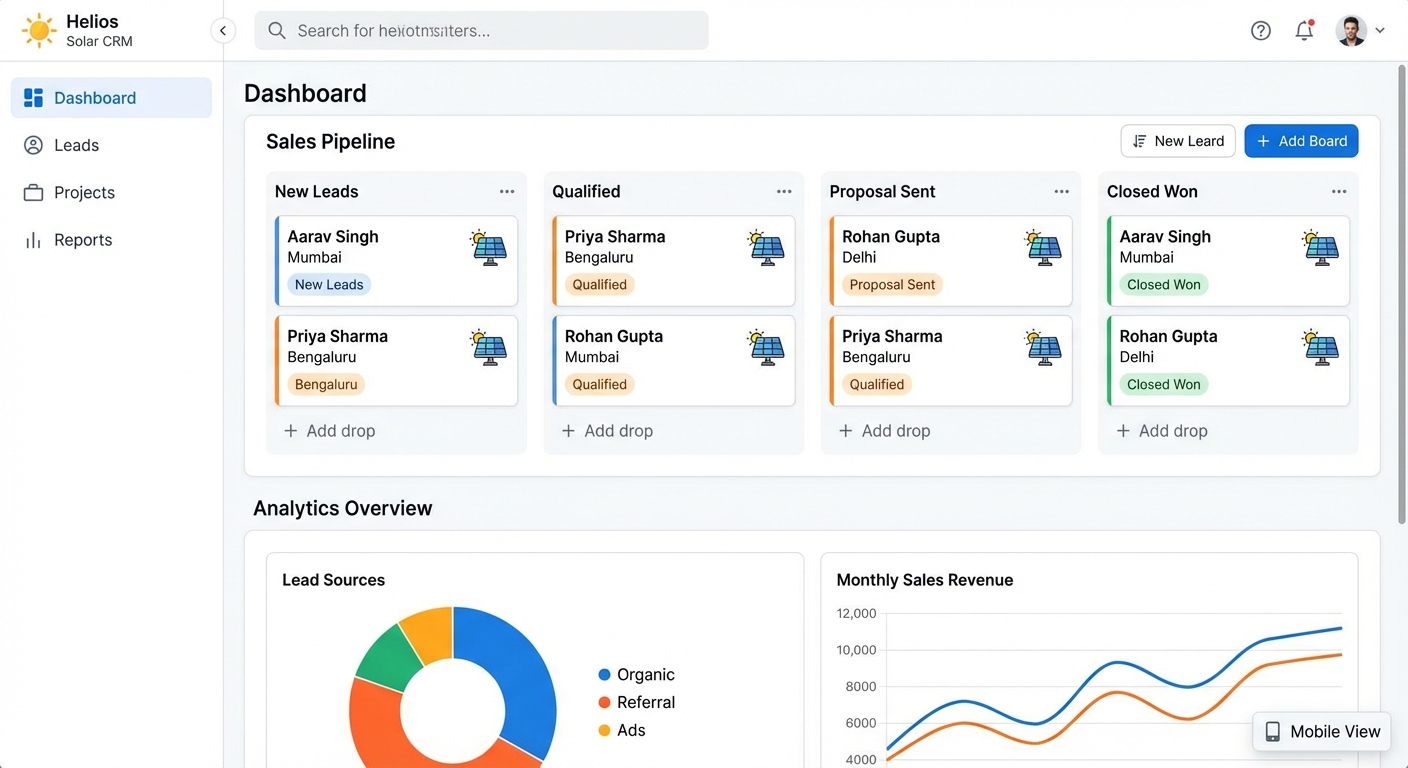
Manual lead management using spreadsheets, WhatsApp chats, and paper notes becomes unmanageable as your solar business scales. Leads get lost, follow-ups are missed, and team coordination breaks down. Specialized solar CRM India technology transforms chaotic lead management into systematic, scalable processes that drive consistent results.
Why Specialized Solar CRM Beats General CRM
While general-purpose CRM platforms like Salesforce or Zoho CRM offer powerful features, they require extensive customization to address solar-specific needs. Generic CRMs don’t include solar proposal templates, ROI calculators, or subsidy tracking. They lack WhatsApp integration critical for Indian market communication. Implementation requires months of configuration and significant investment.
Specialized solar CRM solutions like QuickEst are purpose-built for solar businesses, offering industry-specific features out of the box. This includes solar proposal generation with automated ROI calculations, WhatsApp integration for instant proposal delivery, and workflows designed around the solar sales process. Implementation takes days rather than months, with pricing structures accessible to growing solar businesses.
Essential CRM Features for Indian Solar Businesses
Centralized Lead Database: Every lead from every source flows into a single system with complete history—initial inquiry, proposals sent, follow-up communications, and current status. Team members access the same information, preventing duplicate outreach and ensuring continuity when leads are reassigned.
Automated Follow-Up System: Customizable reminder sequences ensure no lead goes cold. The system automatically prompts sales representatives to follow up at optimal times, with suggested messaging based on lead stage and previous interactions. Email templates and WhatsApp message templates maintain consistency while saving time.
Mobile Accessibility: Indian solar sales teams work in the field, meeting customers at sites, attending trade shows, and conducting surveys. Mobile apps for iOS and Android enable lead management anywhere—capture new leads, send proposals, update status, and log communications without returning to the office.
Real-Time Sales Analytics: Dashboard visibility into pipeline metrics helps managers identify bottlenecks and optimize performance. Track conversion rates by lead source, sales representative performance, average deal size, and sales cycle length. Data-driven insights reveal which marketing channels deliver the best ROI and which team members need additional training.
Team Collaboration Tools: Task assignment, progress monitoring, and internal notes facilitate coordination across sales, technical, and installation teams. When a sales representative closes a deal, the installation team automatically receives project details and customer information, ensuring smooth handoffs.
Integration Capabilities: Connect your CRM with lead sources (Facebook Ads), communication tools (WhatsApp Business), and business systems (accounting software, payment gateways). Integration eliminates manual data entry and ensures information flows seamlessly across your technology stack.
Bulk Operations: Import hundreds of leads from Excel spreadsheets collected at trade shows or from partner referrals. Bulk update lead status, assign leads to team members, or send mass communications to segmented lead groups.
How QuickEst Addresses Indian Solar Business Needs
QuickEst was designed specifically for solar businesses operating in markets like India where speed, mobile accessibility, and WhatsApp integration are critical. The platform enables sales teams to create and send professional solar proposals within 60 seconds via WhatsApp or email, directly addressing the Indian market’s demand for rapid response.
The automated follow-up system with customizable reminders ensures consistent lead nurturing without manual tracking. Sales representatives receive automatic prompts to follow up at optimal times, with suggested messaging based on lead stage. This systematic approach prevents the common problem of leads going cold due to forgotten follow-ups.
Real-time analytics provide visibility into sales performance across your team and regions. Track which lead sources deliver the highest conversion rates, identify top-performing sales representatives, and spot bottlenecks in your pipeline. This data-driven approach enables continuous optimization of your lead management process.
Mobile apps for iOS and Android ensure your team can manage leads from anywhere—whether meeting customers on-site, attending solar exhibitions, or working from home. The ability to capture leads, send proposals, and update status from mobile devices dramatically improves response times and team productivity.
Integration with Facebook Ads, Pabbly Connect, and phonebook synchronization streamlines lead capture from multiple sources. Bulk Excel import accommodates trade show leads and partner referrals. These integration capabilities ensure all leads flow into your centralized system regardless of origin.
Security features including TLS 1.2 encryption and 256-bit AES data protection ensure customer information remains secure, addressing growing privacy concerns in the Indian market.
7. Optimize Conversion Rates with Data-Driven Insights
Effective lead management isn’t static—it requires continuous measurement, analysis, and optimization. Solar businesses that systematically track performance metrics and adjust strategies based on data consistently outperform competitors relying on intuition alone.
Key Metrics for Indian Solar Sales
Lead-to-Proposal Conversion Rate: What percentage of inquiries receive proposals? Low rates suggest qualification problems or slow response times. Target: 60-80% for qualified leads.
Proposal-to-Close Conversion Rate: What percentage of proposals result in signed contracts? This metric reveals proposal quality, pricing competitiveness, and follow-up effectiveness. Target: 20-35% for residential, 15-25% for commercial.
Average Response Time: How quickly does your team respond to new inquiries? Faster response correlates directly with higher conversion. Target: Under 1 hour during business hours.
Sales Cycle Length: How long from initial inquiry to signed contract? Shorter cycles improve cash flow and team efficiency. Typical: 2-4 weeks for residential, 4-8 weeks for commercial.
Lead Source ROI: Which marketing channels deliver the highest quality leads at the lowest cost? Calculate cost per lead and cost per acquisition for each source to optimize marketing spend.
Sales Representative Performance: Track individual conversion rates, average deal size, and sales cycle length to identify top performers and those needing additional training.
Pipeline Value and Velocity: Total value of opportunities in your pipeline and how quickly they move through stages. Stagnant pipelines indicate nurturing problems or qualification issues.
A/B Testing for Continuous Improvement
Systematic testing reveals what works best for your specific market and customer base. Test variables including:
- Proposal formats: Compare conversion rates for different proposal templates, layouts, and content emphasis
- Follow-up timing: Test different follow-up sequences to identify optimal timing and frequency
- Communication channels: Compare response rates for WhatsApp vs. email vs. phone outreach
- Pricing presentation: Test different ways of presenting costs, subsidies, and ROI
- Offer structures: Experiment with financing options, bundled services, or limited-time incentives
Implement changes systematically, measuring impact before and after. Small improvements compound—a 5% increase in proposal conversion rate combined with 10% faster response times can increase overall sales by 15-20%.
Identifying and Addressing Bottlenecks
Pipeline analysis reveals where leads get stuck. Common bottlenecks in Indian solar sales include:
Slow proposal delivery: If many leads request proposals but few receive them quickly, invest in proposal automation tools to accelerate response.
Proposal-to-follow-up gap: If proposals are sent but follow-ups don’t happen consistently, implement automated reminder systems to ensure systematic nurturing.
Price objections: If many leads cite cost concerns, develop better ROI communication, explore financing partnerships, or adjust your target customer profile.
Technical concerns: If customers frequently raise technical questions your team can’t answer confidently, invest in technical training and develop FAQ resources.
Address bottlenecks systematically rather than assuming they’re inevitable. Most conversion barriers can be overcome with process improvements, better tools, or enhanced training.
8. Navigate Regional Considerations Across India
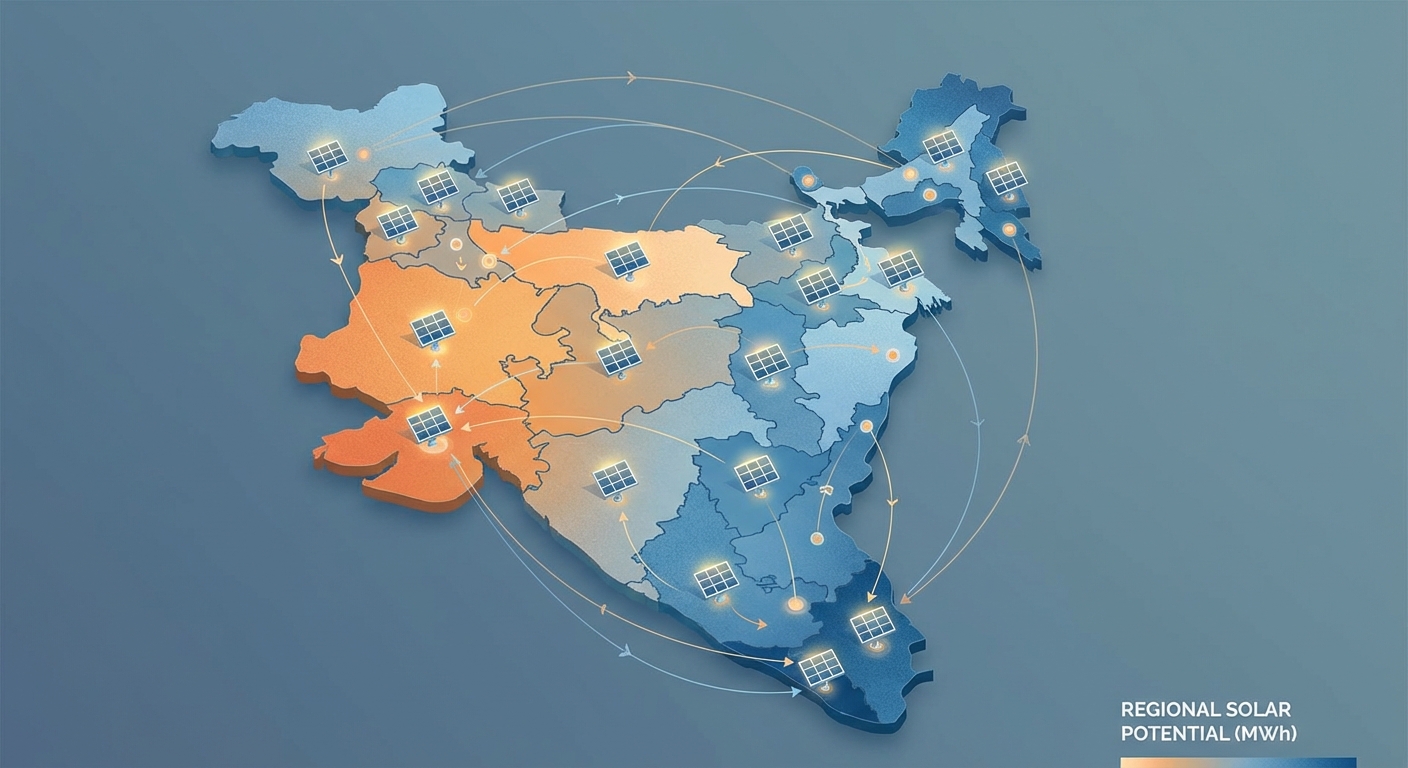
India’s diversity creates dramatically different solar markets across states and regions. Effective lead management requires understanding and adapting to these regional variations rather than applying one-size-fits-all approaches.
State-Specific Subsidies and Policies
Central government subsidies provide a baseline, but state-level incentives vary significantly. Some states offer additional subsidies, net metering benefits, or accelerated approval processes that improve project economics and customer interest. Others have restrictive policies or bureaucratic hurdles that slow adoption.
Your lead management system should track subsidy eligibility by location, ensuring proposals reflect accurate incentives. Sales teams need current knowledge of state policies in their territories. What works in Gujarat (with strong solar policies and high adoption) may not apply in states with less developed solar ecosystems.
Electricity Tariff Variations
Solar ROI depends heavily on electricity costs, which vary dramatically across India. States with high tariffs (Maharashtra, Rajasthan, Punjab) offer compelling 3-4 year payback periods, making sales easier. States with lower tariffs require different value propositions, emphasizing energy independence, power reliability, or environmental benefits alongside financial returns.
Customize ROI calculations and messaging based on local tariff structures. A customer in Mumbai paying ₹12 per unit needs different messaging than one in a subsidized-tariff state paying ₹5 per unit.
Urban vs. Rural Market Dynamics
Urban markets feature higher electricity consumption, better financing access, and more competitive solar markets. Customers are typically more educated about solar technology and compare multiple vendors. Lead management requires speed, professional proposals, and strong differentiation.
Rural and semi-urban markets present different dynamics. Customers may need more education about solar technology, have concerns about service availability, and rely more heavily on word-of-mouth referrals. Building local presence and trust becomes more important than rapid digital response. Agricultural customers focus on solar pumps and irrigation applications rather than rooftop systems.
Climate Zone Considerations
Solar irradiation varies across India’s climate zones, affecting system performance and ROI. High-irradiation states (Rajasthan, Gujarat, Karnataka) deliver better energy generation per kW installed, strengthening the financial case. Lower-irradiation regions require larger systems to achieve similar savings, affecting pricing and payback periods.
Proposals should reflect location-specific generation estimates using accurate solar irradiation data. Overpromising performance in lower-irradiation areas creates dissatisfied customers and damages reputation.
Local Competition and Market Maturity
Market saturation varies dramatically. Major metros have dozens of solar companies competing aggressively on price, while smaller cities may have limited competition. Your lead management strategy should reflect competitive intensity—highly competitive markets demand faster response and stronger differentiation, while less saturated markets allow more consultative, relationship-focused approaches.
Understanding regional competitive dynamics helps with lead scoring and resource allocation. A lead in an underserved market may warrant more investment than a similar lead in an oversaturated market with razor-thin margins.
Implementing Your Lead Management System: Action Plan
Understanding best practices is valuable, but implementation determines results. Follow this systematic approach to transform your solar lead management:
Phase 1: Assessment and Planning (Week 1-2)
Audit your current lead management process. Document how leads currently flow through your organization, where they come from, how they’re tracked, and where they’re lost. Calculate current conversion rates, response times, and sales cycle length to establish baseline metrics.
Define your ideal process. Map out how leads should flow from capture through conversion, identifying required tools, team roles, and communication protocols. Set specific, measurable goals for improvement—for example, “reduce average response time from 4 hours to 30 minutes” or “increase proposal-to-close conversion from 15% to 25%.”
Phase 2: Tool Selection and Setup (Week 3-4)
Evaluate CRM solutions based on your specific needs. For most Indian solar businesses, specialized solar CRM platforms offer better value than general-purpose systems requiring extensive customization. Key evaluation criteria include proposal generation speed, WhatsApp integration, mobile accessibility, ease of use, and pricing structure.
QuickEst offers flexible options for solar businesses at different stages. The FREE PLAN – ₹0 allows you to test the platform and manage initial leads without financial commitment, while the PRO PLAN – ₹6999 Per User / Year provides full functionality for growing teams. This accessible pricing enables implementation without major capital investment.
Configure your chosen system with your proposal templates, follow-up sequences, and team structure. Import existing leads from spreadsheets or previous systems. Set up integrations with lead sources like Facebook Ads and communication channels like WhatsApp Business.
Phase 3: Team Training and Adoption (Week 5-6)
Successful CRM implementation depends on team adoption. Conduct comprehensive training covering not just how to use the system, but why it matters. Help team members understand how better lead management increases their commissions through higher conversion rates.
Start with a pilot group of 2-3 sales representatives who are tech-savvy and influential within the team. Their success and advocacy will drive broader adoption. Address concerns and resistance proactively—many sales professionals fear CRM systems will create bureaucracy or micromanagement. Emphasize how automation reduces administrative work, allowing more time for actual selling.
Create simple reference guides and video tutorials for common tasks. Make support easily accessible during the transition period.
Phase 4: Launch and Optimization (Week 7-12)
Roll out the system to your full team with clear expectations. Make CRM usage non-negotiable—all leads must be entered, all communications logged, all follow-ups completed through the system. Inconsistent adoption undermines the entire initiative.
Monitor metrics weekly during the first month, then bi-weekly. Track leading indicators (response time, follow-up completion rate) and lagging indicators (conversion rates, sales cycle length). Celebrate improvements and address problems quickly.
Gather team feedback and refine processes. Your initial setup won’t be perfect—adjust follow-up sequences, proposal templates, and workflows based on real-world experience. The goal is continuous improvement, not perfection from day one.
Common Pitfalls to Avoid
Overcomplicating the system: Start with core functionality—lead capture, proposal generation, follow-up tracking. Add advanced features after mastering basics.
Insufficient training: Assuming team members will figure it out leads to poor adoption. Invest time in comprehensive training and ongoing support.
Lack of management commitment: If leadership doesn’t use the system and hold teams accountable, adoption fails. Managers must lead by example.
Ignoring data: Implementing a CRM but not analyzing the data it generates wastes the system’s primary value. Schedule regular pipeline reviews and metric analysis.
Rigid processes: While consistency matters, allow flexibility for different customer types and situations. Overly rigid processes frustrate sales teams and customers.
Scaling Your Lead Management
As your solar business grows, your lead management system should scale seamlessly. Cloud-based CRM platforms handle increasing lead volumes without performance degradation. Add team members easily with per-user pricing models that align costs with growth.
Expand functionality as needs evolve. Start with basic lead management and proposal generation, then add advanced features like territory management, commission tracking, or customer service modules as your organization matures.
Regional expansion requires adapting your system for new markets. Create state-specific proposal templates reflecting local subsidies and tariffs. Develop region-specific follow-up sequences addressing local customer preferences. Your CRM should accommodate this regional customization while maintaining centralized visibility.
Conclusion: Transform Your Solar Business with Effective Lead Management
The Indian solar market in 2026 offers tremendous opportunity, but only for businesses that can effectively capture, nurture, and convert the flood of leads generated by government initiatives, digital marketing, and growing environmental awareness. Manual, disorganized lead management leaves money on the table—lost opportunities, missed follow-ups, and frustrated customers who choose faster, more professional competitors.
Implementing systematic lead management in India transforms your solar business from reactive to proactive, from chaotic to organized, from inconsistent to predictable. The strategies outlined in this guide—multi-channel lead capture, smart scoring, optimized follow-up timing, rapid proposal generation, strategic nurturing, specialized CRM technology, data-driven optimization, and regional customization—work together to create a sales machine that consistently converts leads into satisfied customers.
The difference between struggling solar businesses and thriving ones often comes down to systems and processes. Companies that invest in proper lead management tools and training see dramatic improvements: 30-50% higher conversion rates, 60% faster response times, and sales cycles shortened by weeks. These improvements directly impact revenue and profitability.
Technology enables these improvements, but it’s not about the tools themselves—it’s about the systematic approach they enable. QuickEst provides the specialized solar CRM India functionality that solar businesses need: 60-second proposal generation, WhatsApp integration, mobile accessibility, automated follow-ups, and real-time analytics. But the platform’s value comes from how it enables your team to implement the best practices that drive results.
Start your lead management transformation today. Whether you’re a small solar installer handling dozens of leads monthly or a growing EPC managing hundreds of opportunities across multiple states, implementing proper lead management systems will unlock growth you’re currently leaving on the table.
Ready to revolutionize your solar lead management? Explore QuickEst’s FREE PLAN – ₹0 to experience how specialized solar CRM technology transforms your sales process, or upgrade to the PRO PLAN – ₹6999 Per User / Year for full functionality that scales with your business. For personalized guidance on implementing lead management best practices for your specific situation, Contact Us to speak with our solar CRM specialists who understand the unique challenges of the Indian market.
The solar revolution in India is accelerating. Ensure your business captures its full share by mastering lead management—the foundation of sustainable, scalable solar sales success.