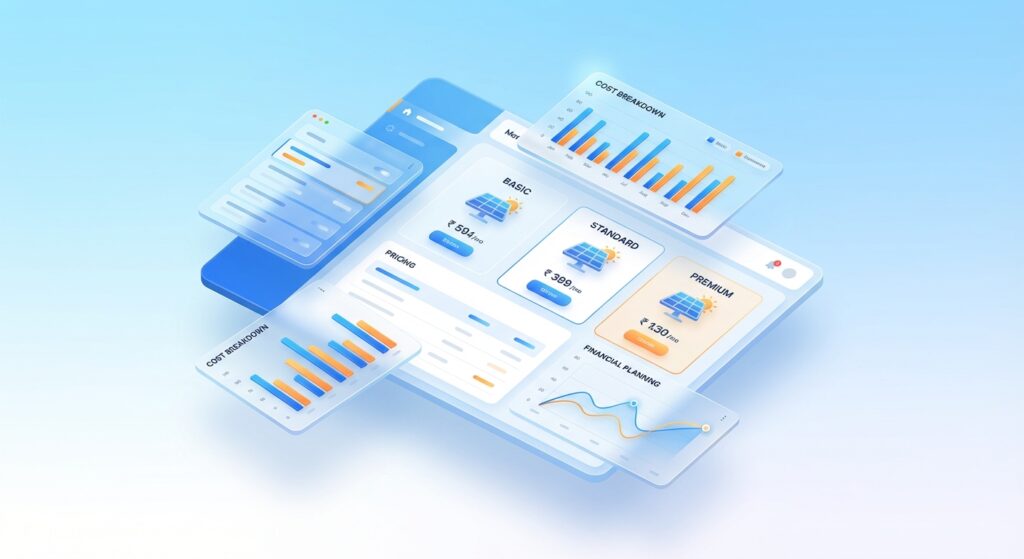
Choosing the right CRM software for your solar installation company is a critical business decision, but understanding CRM pricing can feel like navigating a maze of subscription tiers, hidden fees, and complex licensing models. For solar businesses in India looking to streamline their sales processes and close more deals, the question isn’t just “How much does a CRM cost?” but rather “What am I actually getting for my investment, and will it deliver measurable returns?”
In 2026, the solar CRM landscape has evolved significantly, with specialized solutions designed specifically for solar installation companies offering compelling alternatives to traditional general-purpose CRM platforms. This comprehensive guide breaks down everything you need to know about CRM pricing for solar businesses—from subscription costs and implementation expenses to hidden fees and ROI expectations. Whether you’re a small solar installation team or a large EPC managing multiple projects, this guide will help you budget effectively and make informed decisions about your CRM investment.
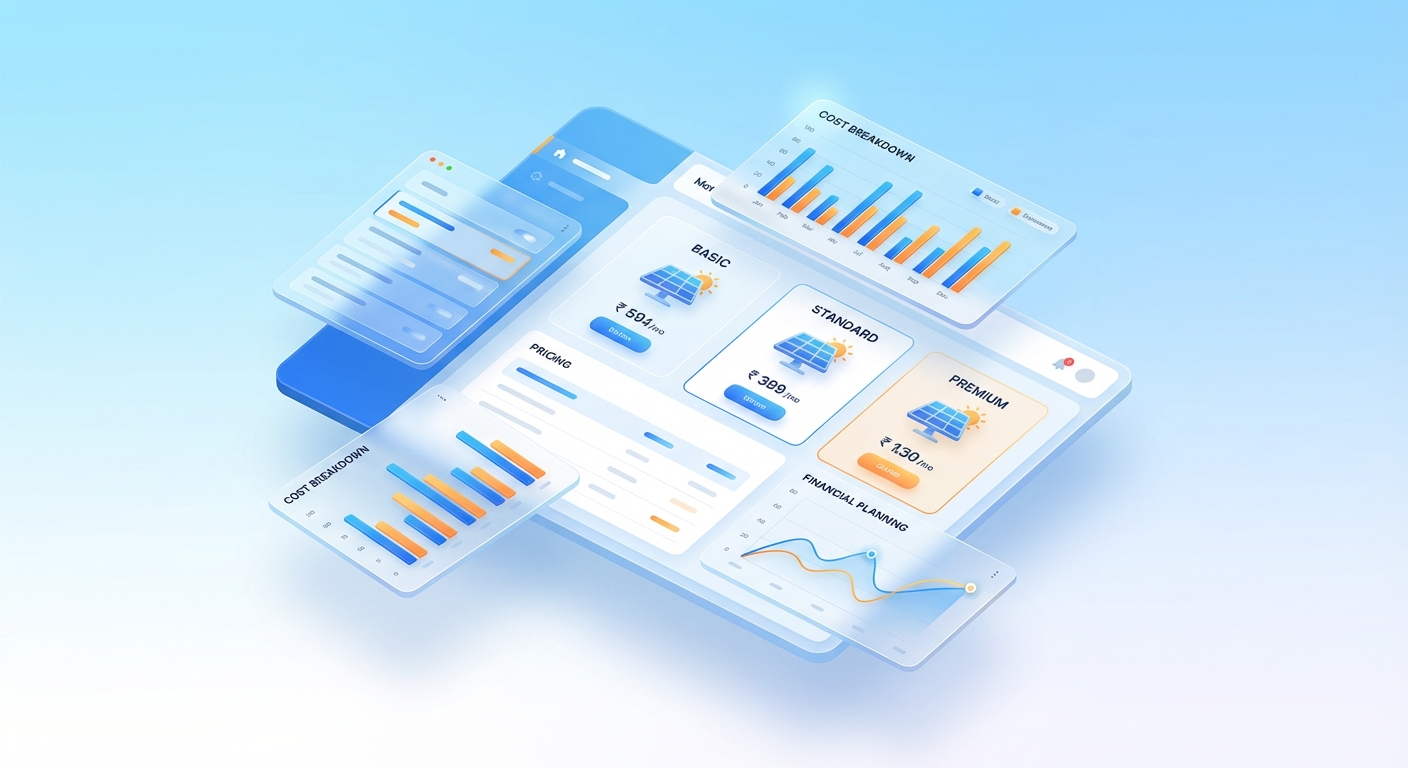
Understanding Solar CRM Pricing in 2026
The solar industry in India has experienced remarkable growth, with installation companies facing increasing pressure to manage larger lead volumes, accelerate sales cycles, and maintain competitive advantage. This growth has driven demand for specialized solar CRM solutions that go beyond basic contact management to offer industry-specific features like proposal automation, solar-specific sales pipelines, and integration with solar design tools.
CRM pricing matters because it directly impacts your bottom line in two ways: the upfront and ongoing costs you’ll pay, and the revenue gains you’ll achieve through improved sales efficiency. A solar installation company that can generate professional proposals in 60 seconds instead of hours, automate follow-ups to prevent lost opportunities, and track sales performance in real-time will close more deals and grow faster than competitors using manual processes or ill-fitted general CRM systems.
The shift from general CRM platforms to specialized solar CRM solutions reflects a broader trend in the Indian market. While platforms like Salesforce, Zoho CRM, and Pipedrive offer powerful general-purpose capabilities, they require significant customization to address solar-specific workflows. This customization adds both time and cost, often making the total investment higher than specialized alternatives designed specifically for solar businesses.
Several key factors influence CRM pricing in the Indian solar market:
- User count and team size: Most CRM platforms use per-user pricing models, making team size a primary cost driver
- Feature requirements: Advanced capabilities like proposal automation, WhatsApp integration, and sales analytics typically come at higher price tiers
- Implementation complexity: Data migration, system integration, and customization needs affect initial setup costs
- Support and training: Ongoing support levels and training requirements impact total cost of ownership
- Regional pricing: CRM vendors often adjust pricing for the Indian market, with some offering India-specific plans
This guide will walk you through each component of CRM pricing, helping you understand not just the sticker price but the true total cost of ownership and expected return on investment for your solar installation business.
Core Components of Solar CRM Pricing
Understanding the building blocks of CRM pricing helps you compare options accurately and avoid surprises. Solar CRM pricing typically consists of several core components that work together to determine your total investment.
Subscription Models: Monthly vs Annual Pricing
Most CRM vendors offer both monthly and annual subscription options, with annual plans typically providing 15-20% cost savings. For example, a CRM that costs ₹999 per user per month might be available at ₹9,999 per user per year—effectively giving you two months free. For solar businesses with predictable growth and stable team sizes, annual billing often makes financial sense and improves cash flow planning.
Monthly billing offers flexibility for companies testing a new CRM or experiencing seasonal fluctuations in team size. However, the premium you pay for this flexibility adds up over time. When evaluating subscription models, consider your business stability, growth projections, and cash flow situation.
Per-User Licensing Costs and Team Scaling
The per-user licensing model is the most common pricing structure in the CRM industry. Your monthly or annual cost multiplies by the number of users who need access to the system. This creates important planning considerations:
- Define user roles carefully: Not everyone needs full CRM access—some team members may only need view-only or limited access
- Plan for growth: As your solar installation team expands, your CRM costs will scale proportionally
- Consider seasonal needs: If you hire temporary sales staff during peak seasons, understand how adding and removing users affects billing
- Evaluate unlimited user options: Some specialized solar CRMs offer flat-rate pricing regardless of user count, which can be advantageous for larger teams
Tiered Pricing Structures
CRM vendors typically offer multiple pricing tiers, each with different feature sets and capabilities. Understanding these tiers helps you match your needs to the right plan without overpaying for features you won’t use or underpaying and missing critical capabilities.
Common tier structures include:
- Free or Starter tiers: Basic contact management and lead tracking with limited features and user counts
- Professional or Growth tiers: Mid-range plans with automation, reporting, and integration capabilities suitable for growing solar businesses
- Enterprise tiers: Advanced features including custom workflows, API access, dedicated support, and enhanced security for large solar EPCs
Feature-Based Pricing Differences
The features available at each pricing tier create the value differentiation between plans. For solar installation companies, certain features deliver disproportionate value:
- Proposal automation: The ability to generate professional solar proposals quickly can dramatically reduce sales cycle time
- Lead management and scoring: Automated lead capture and prioritization helps sales teams focus on high-value opportunities
- Sales pipeline visualization: Real-time visibility into deal stages and forecasting capabilities
- Mobile access: Field sales teams need iOS and Android apps to manage leads and create proposals on-site
- Integration capabilities: Connections to Facebook Ads, WhatsApp, email marketing, and other tools in your sales stack
- Automated follow-ups: Scheduled reminders and email templates that prevent lost opportunities
Storage and Data Limits
Many CRM platforms impose storage limits or charge additional fees for data beyond certain thresholds. For solar businesses managing proposal documents, customer files, and project documentation, these limits can become constraints. When evaluating CRM pricing, understand:
- How much storage is included at each tier
- What additional storage costs if you exceed limits
- Whether document storage counts against your limits
- How long historical data is retained
Subscription Tiers: What You Get at Each Level
Let’s examine what solar installation companies typically receive at different CRM pricing tiers and how to determine which level matches your business needs.
Free Tier Capabilities and Limitations
Several CRM platforms offer free tiers that can work for very small solar businesses or those just starting to formalize their sales processes. Free tiers typically include:
- Basic contact and lead management for a limited number of records
- Simple sales pipeline tracking
- Task management and reminders
- Limited user accounts (often 1-3 users)
- Mobile app access with restricted features
- Basic reporting capabilities
However, free tiers come with significant limitations that may hinder solar businesses:
- No proposal automation or template libraries
- Limited or no integration capabilities
- Restricted data storage and record limits
- Basic or community-only support
- Vendor branding on customer-facing materials
- No advanced automation or workflow capabilities
For solar installation companies serious about growth, free tiers often serve best as trial periods to evaluate the platform before committing to paid plans. QuickEst offers a FREE PLAN – ₹0 that provides solar businesses with essential CRM capabilities to get started without upfront investment, making it an accessible entry point for companies exploring specialized solar CRM solutions.
Mid-Tier Professional Plans for Growing Solar Businesses
Professional or growth-tier plans represent the sweet spot for most solar installation companies in India. These plans typically range from ₹5,000 to ₹15,000 per user per year and include:
- Full proposal automation: Professional template libraries with customization options and rapid proposal generation
- Advanced lead management: Lead scoring, automated assignment, and nurture campaigns
- Complete sales pipeline: Customizable stages, forecasting, and deal tracking
- Automation capabilities: Workflow automation, scheduled follow-ups, and email sequences
- Integration options: Connections to marketing tools, communication platforms, and business applications
- Mobile functionality: Full-featured iOS and Android apps for field sales teams
- Reporting and analytics: Real-time dashboards, performance metrics, and custom reports
- Team collaboration: Task assignment, activity tracking, and shared visibility
- Standard support: Email and chat support with reasonable response times
For context, QuickEst’s PRO PLAN – ₹6999 Per User / Year positions in this professional tier, offering specialized solar CRM capabilities including 60-second proposal generation, automated follow-ups, and real-time sales analytics specifically designed for solar installation companies.
Enterprise Solutions for Large Solar EPCs
Enterprise-tier CRM solutions cater to large solar EPCs managing complex sales processes, multiple teams, and high transaction volumes. These plans typically start at ₹20,000+ per user per year and include:
- Unlimited customization and workflow configuration
- API access for custom integrations
- Advanced security features and compliance capabilities
- Dedicated account management and priority support
- Custom training and onboarding programs
- Advanced analytics and business intelligence tools
- Multi-currency and multi-language support
- Service level agreements (SLAs) for uptime and support response
Enterprise plans make sense for solar businesses with 50+ users, complex integration requirements, or specific compliance needs. However, many growing solar installation companies find that professional-tier plans from specialized solar CRM providers offer better value than enterprise plans from general CRM platforms.
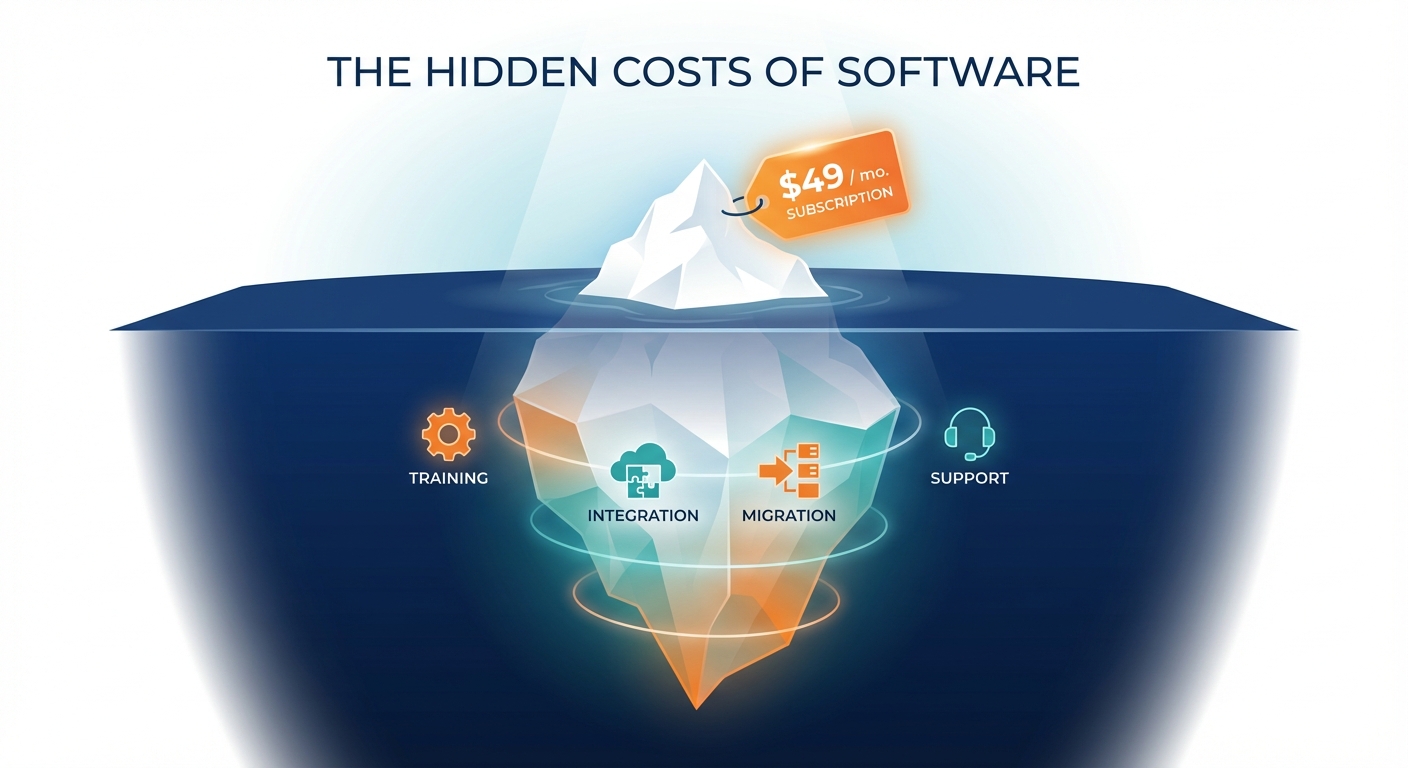
Hidden Costs and Implementation Expenses
The subscription price you see advertised rarely tells the complete story of CRM pricing. Understanding hidden costs and implementation expenses is crucial for accurate budget planning and avoiding unpleasant surprises.
Setup and Onboarding Fees
Many CRM vendors charge one-time setup fees to configure your system, import initial data, and establish your account. These fees can range from ₹10,000 to ₹100,000+ depending on complexity. Some specialized solar CRM providers include setup in their subscription price, while others charge separately.
Onboarding fees may cover:
- Initial system configuration and customization
- User account creation and permission setup
- Template creation for proposals and communications
- Initial training sessions for administrators and users
- Documentation and resource provision
When evaluating CRM options, ask explicitly whether setup and onboarding are included in the subscription price or charged separately.
Data Migration Costs from Existing Systems
If you’re switching from another CRM or moving from spreadsheets to a formal CRM system, data migration represents a significant cost consideration. Migration complexity depends on:
- Data volume: Number of contacts, leads, deals, and historical records to transfer
- Data quality: Cleanliness and standardization of existing data
- Source system: Whether you’re migrating from another CRM, Excel files, or multiple disparate systems
- Field mapping: Complexity of matching old data fields to new CRM structure
Data migration costs can range from ₹15,000 for simple Excel imports to ₹200,000+ for complex multi-system migrations. Some CRM vendors offer free migration assistance as part of their onboarding, while others charge hourly rates or project fees.
For solar businesses, consider whether your historical proposal data, customer project information, and sales history need to migrate or whether you can start fresh with new opportunities while maintaining old records in archive systems.
Training and Adoption Expenses
The most expensive CRM is one your team doesn’t use. Training and adoption expenses include both direct costs (training fees) and indirect costs (productivity loss during learning curves).
Training costs to consider:
- Initial training sessions: Vendor-provided training for administrators and end users
- Ongoing education: Training for new hires and refresher sessions for existing team members
- Custom training materials: Development of company-specific guides and documentation
- Productivity ramp-up time: The period where sales team efficiency dips while learning the new system
Specialized solar CRM solutions often require less training than general CRM platforms because their workflows align naturally with solar sales processes. A CRM designed specifically for solar proposal generation and lead management has a shorter learning curve than a general platform that requires customization to support solar-specific workflows.
Integration Costs with Existing Tools
Your CRM doesn’t operate in isolation—it needs to connect with other tools in your sales and marketing stack. Integration costs vary widely based on complexity:
- Native integrations: Pre-built connections to popular tools (often included in subscription)
- Third-party integration platforms: Tools like Pabbly Connect or Zapier that bridge systems (₹1,000-₹5,000/month)
- Custom API integrations: Developer-built connections for specialized needs (₹50,000-₹300,000+ per integration)
For solar installation companies in India, common integration needs include:
- Facebook Ads for lead capture and campaign tracking
- WhatsApp for customer communication and proposal delivery
- Email marketing platforms for nurture campaigns
- Accounting software for invoicing and payment tracking
- Solar design tools for technical proposal components
When evaluating CRM pricing, inventory your existing tools and understand integration options and costs for each platform you’re considering.
Customization and Configuration Fees
Beyond basic setup, you may need customization to match your specific solar business processes. Customization costs include:
- Custom field creation for solar-specific data points
- Workflow automation tailored to your sales process
- Custom report and dashboard development
- Proposal template design and branding
- Custom user roles and permission structures
General CRM platforms typically require more customization than specialized solar CRMs, which come pre-configured with industry-appropriate workflows. This difference can represent tens of thousands of rupees in savings when choosing a solar-specific solution.
Ongoing Support and Maintenance Costs
After implementation, ongoing support and maintenance create recurring costs beyond your subscription fee:
- Premium support plans: Enhanced support with faster response times (₹2,000-₹10,000/month additional)
- System administration: Internal staff time or external consultants to manage the CRM (₹20,000-₹80,000/month)
- Updates and upgrades: Costs to adopt new features or migrate to new versions
- Additional storage or usage fees: Charges when you exceed plan limits
When calculating total cost of ownership, include these ongoing expenses in your multi-year projections.
Specialized Solar CRM vs General CRM: Price-Value Analysis
One of the most important decisions solar installation companies face is whether to invest in a specialized solar CRM or customize a general-purpose platform. This decision has significant pricing implications that extend beyond simple subscription costs.
Cost Comparison: General CRMs vs Solar-Specific Solutions
Let’s examine typical pricing for popular CRM options available to solar businesses in India:
General CRM Platforms:
- Salesforce: Professional tier starts around ₹18,000 per user per year, with enterprise features at ₹36,000+ per user per year
- Zoho CRM: Professional tier around ₹12,000 per user per year, enterprise at ₹24,000+ per user per year
- Pipedrive: Professional tier approximately ₹15,000 per user per year
Specialized Solar CRM Solutions:
- QuickEst: Professional tier at ₹6,999 per user per year with solar-specific features included
- Other solar-specific platforms: Typically range from ₹8,000 to ₹20,000 per user per year depending on feature sets
At first glance, subscription costs appear comparable, with some specialized solutions offering lower entry points. However, the true cost difference emerges when you factor in customization and implementation expenses.
Hidden Costs of Customizing General CRMs for Solar Businesses
General CRM platforms require significant customization to support solar-specific workflows:
- Proposal generation: Building or integrating solar proposal tools (₹100,000-₹500,000)
- Solar-specific fields and objects: Custom development for system size, panel types, inverter specifications, etc. (₹50,000-₹150,000)
- Sales pipeline customization: Configuring stages and workflows for solar sales cycles (₹30,000-₹100,000)
- Integration with solar design tools: Custom API work to connect design software (₹100,000-₹300,000)
- Reporting and analytics: Custom dashboards for solar-specific metrics (₹40,000-₹120,000)
These customization costs can easily add ₹300,000 to ₹1,000,000+ to your initial implementation, dramatically increasing total cost of ownership compared to specialized solar CRM solutions that include these capabilities out of the box.
Time-to-Value Differences and Their Financial Impact
Beyond direct costs, consider the time required to achieve value from your CRM investment:
General CRM platforms: Typically require 3-6 months for customization, configuration, and full deployment. During this period, your sales team continues using manual processes or legacy systems, missing opportunities for efficiency gains.
Specialized solar CRMs: Can often be deployed in 2-4 weeks because they’re pre-configured for solar workflows. This faster time-to-value means your team starts closing deals faster and generating ROI sooner.
If faster proposal generation and automated follow-ups help your team close even 2-3 additional deals per month, the revenue impact of a 4-month deployment advantage can exceed ₹500,000 for a typical solar installation company.
Industry-Specific Features That Justify Pricing Differences
Specialized solar CRM solutions include features that would require expensive customization in general platforms:
- Solar proposal templates: Pre-built professional templates with solar-specific components
- 60-second proposal generation: Rapid quote creation optimized for solar sales cycles
- WhatsApp integration: Direct proposal delivery via WhatsApp, the dominant communication channel in India
- Solar-specific sales stages: Pipeline stages that match actual solar installation sales processes
- Panel and inverter databases: Pre-loaded product information for quick proposal building
- Solar-specific reporting: Metrics and KPIs relevant to solar installation businesses
These features deliver immediate value without customization costs, making specialized solutions more cost-effective despite potentially similar subscription prices.
Total Cost of Ownership: 1, 3, and 5-Year Projections
Let’s compare total cost of ownership for a 10-person solar installation team:
General CRM Platform (e.g., Salesforce Professional):
- Year 1: ₹180,000 (subscriptions) + ₹500,000 (customization) + ₹100,000 (training) = ₹780,000
- Year 3: ₹540,000 (subscriptions) + ₹500,000 (initial customization) + ₹150,000 (ongoing customization) + ₹150,000 (training) = ₹1,340,000
- Year 5: ₹900,000 (subscriptions) + ₹650,000 (customization) + ₹200,000 (training) = ₹1,750,000
Specialized Solar CRM (e.g., QuickEst):
- Year 1: ₹69,990 (subscriptions) + ₹0 (included setup) + ₹20,000 (training) = ₹89,990
- Year 3: ₹209,970 (subscriptions) + ₹40,000 (training) = ₹249,970
- Year 5: ₹349,950 (subscriptions) + ₹60,000 (training) = ₹409,950
Over five years, the specialized solar CRM delivers savings of approximately ₹1,340,000 for this 10-person team—money that can be invested in sales team expansion, marketing, or other growth initiatives.
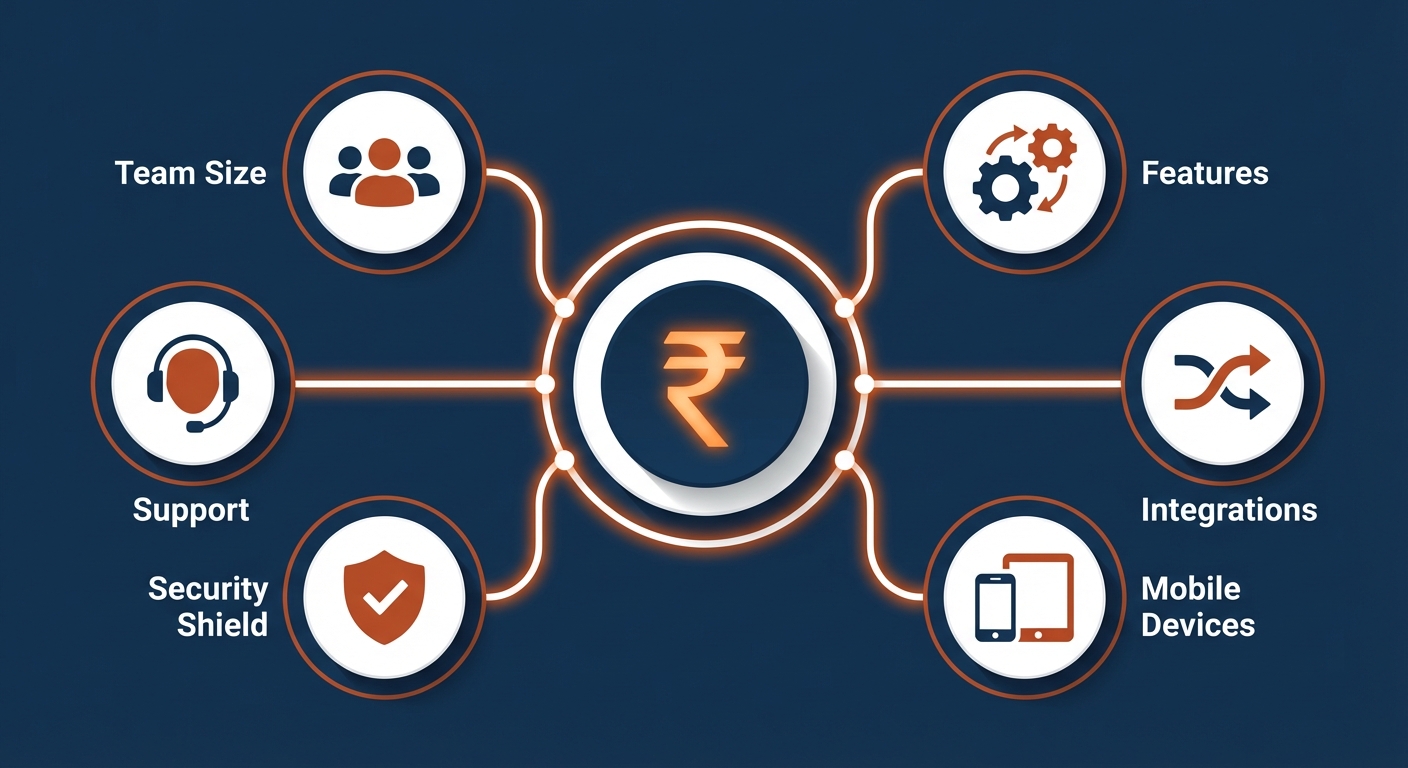
Factors That Affect Solar CRM Pricing in India
Understanding the variables that influence CRM pricing helps you make informed decisions and negotiate effectively with vendors. Several factors specific to the Indian solar market affect what you’ll pay for CRM solutions.
Team Size and User Count Requirements
Your team size directly impacts CRM costs under per-user pricing models. Consider these team composition factors:
- Sales representatives: Front-line team members who need full CRM access for lead management and proposal generation
- Sales managers: Leaders who need reporting, analytics, and team oversight capabilities
- Support staff: Administrative team members who may need limited access for data entry or customer service
- Executive leadership: Decision-makers who need dashboard visibility but not daily operational access
Some CRM platforms offer role-based pricing where view-only or limited users cost less than full users. Others charge the same per-user rate regardless of access level. Understanding your team’s actual access needs can help you optimize costs.
For growing solar installation companies, consider how your team size might evolve. If you plan to expand from 5 to 15 sales representatives over the next two years, factor that growth into your CRM budget planning.
Required Features: Proposal Automation, Lead Management, Sales Pipeline
The features you need directly determine which pricing tier makes sense for your business. For solar installation companies, certain capabilities deliver outsized value:
Proposal automation is arguably the most valuable feature for solar businesses. The ability to generate professional proposals in 60 seconds versus 2-3 hours per proposal can transform your sales capacity. If your team creates 50 proposals per month, proposal automation saves approximately 100 hours monthly—equivalent to 2.5 full-time employees. This efficiency gain alone can justify premium CRM pricing.
Lead management capabilities prevent lost opportunities and improve conversion rates. Features like automated lead capture from Facebook Ads, lead scoring to prioritize high-value prospects, and automated assignment to sales representatives ensure no opportunity falls through the cracks. For solar businesses in competitive markets, effective lead management can increase conversion rates by 20-30%.
Sales pipeline visualization provides real-time visibility into deal stages, forecasting, and team performance. This visibility helps solar installation companies identify bottlenecks, coach sales representatives effectively, and forecast revenue accurately—capabilities that become increasingly valuable as your business scales.
Integration Needs with Facebook Ads, WhatsApp, and Other Tools
The Indian solar market has unique integration requirements that affect CRM pricing:
Facebook Ads integration is critical for solar companies running digital marketing campaigns. Automatic lead capture from Facebook forms directly into your CRM eliminates manual data entry and ensures immediate follow-up. Some CRM platforms include this integration in base pricing, while others charge additional fees or require third-party integration tools.
WhatsApp integration is particularly important in India, where WhatsApp dominates business communication. The ability to send solar proposals directly via WhatsApp and track customer engagement through the platform significantly improves response rates. Specialized solar CRMs often include WhatsApp integration, while general platforms may require expensive custom development.
Other integration needs for solar businesses include:
- Email marketing platforms for nurture campaigns
- Accounting software for invoicing and payment tracking
- Solar design tools for technical proposal components
- Phonebook and contact management systems
- Project management tools for installation coordination
When evaluating CRM pricing, create an inventory of your required integrations and understand whether they’re included, available through native connections, or require custom development.
Mobile Accessibility Requirements
Solar sales teams often work in the field, meeting customers at their homes or businesses. Mobile accessibility isn’t optional—it’s essential. Mobile CRM capabilities affect pricing in several ways:
- Some CRM platforms charge extra for mobile app access
- Feature parity between desktop and mobile versions varies, with some platforms offering limited mobile functionality
- Offline access capabilities (important in areas with poor connectivity) may be restricted to higher pricing tiers
For solar installation companies in India, where sales representatives frequently work in areas with inconsistent internet connectivity, robust mobile capabilities with offline functionality are worth premium pricing.
Data Security and Compliance Needs
As solar businesses handle sensitive customer information including financial details and property information, data security becomes a critical consideration. Security features that affect CRM pricing include:
- Data encryption: TLS 1.2 and 256-bit AES encryption for data in transit and at rest
- Access controls: Role-based permissions and multi-factor authentication
- Data residency: Whether data is stored in India or overseas (important for compliance)
- Backup and recovery: Frequency of backups and disaster recovery capabilities
- Compliance certifications: ISO 27001, SOC 2, or other security standards
Enterprise-tier CRM plans typically include enhanced security features, while basic plans may have limited security capabilities. For solar businesses handling high-value customer data, investing in appropriate security features is essential.
Support Level and Response Time Expectations
The level of support you receive affects both CRM pricing and your team’s ability to use the system effectively. Support considerations include:
- Support channels: Email-only, chat, phone, or dedicated account management
- Response times: 24-48 hour email response versus immediate chat support
- Support hours: Business hours only versus 24/7 availability
- Language support: English-only versus regional language support for Indian teams
- Training resources: Self-service documentation versus personalized training sessions
For solar installation companies without dedicated IT staff, responsive support becomes more valuable and may justify higher pricing tiers that include premium support.
Regional Pricing Considerations for the Indian Market
CRM vendors often adjust pricing for different markets. Factors affecting regional pricing in India include:
- Currency and payment options: Pricing in INR versus USD and local payment method support
- Market positioning: Competitive pricing adjusted for Indian purchasing power
- Local infrastructure: India-based servers and support teams may affect pricing
- Tax implications: GST and other local taxes that affect total cost
When comparing CRM options, ensure you’re evaluating India-specific pricing rather than global pricing that may not reflect local market realities. Some international CRM vendors offer India-specific plans with adjusted pricing and localized features.
Budget Planning Framework for Solar Installation Companies
Effective budget planning for CRM investment requires a structured approach that considers both immediate costs and long-term value. This framework helps solar installation companies allocate resources appropriately and build compelling business cases for CRM investment.
Calculating Your CRM Budget Based on Team Size
Start with a realistic assessment of your team size and growth projections:
Current team inventory:
- Number of sales representatives needing full CRM access
- Number of managers needing reporting and oversight capabilities
- Number of support staff needing limited access
- Number of executives needing dashboard visibility
Growth projections:
- Expected team size in 12 months
- Expected team size in 24 months
- Seasonal fluctuations in team size
For a typical growing solar installation company in India, a reasonable CRM budget allocation is:
- Small teams (1-5 users): ₹50,000-₹150,000 annually including subscription, setup, and training
- Medium teams (6-15 users): ₹150,000-₹400,000 annually
- Large teams (16-50 users): ₹400,000-₹1,500,000 annually
- Enterprise teams (50+ users): ₹1,500,000+ annually
These ranges assume specialized solar CRM solutions. General CRM platforms with customization requirements typically cost 2-3x these amounts.
Allocating Budget for Implementation and Training
Beyond subscription costs, allocate budget for successful implementation:
Implementation budget (one-time):
- Setup and configuration: 10-20% of annual subscription cost
- Data migration: ₹15,000-₹100,000 depending on complexity
- Integration setup: ₹10,000-₹50,000 per integration
- Customization: 0-50% of annual subscription (lower for specialized solar CRMs)
Training budget (annual):
- Initial training: ₹20,000-₹100,000 for comprehensive team training
- Ongoing training: 5-10% of annual subscription for new hires and refresher sessions
- Training materials development: ₹10,000-₹30,000 for custom documentation
Planning for Growth and Scalability
Your CRM should grow with your business without requiring expensive migrations or platform changes. When budget planning, consider:
- Scalability of pricing: How costs increase as you add users—linear growth or volume discounts?
- Feature availability: Will you need to upgrade tiers as your needs evolve?
- Data limits: How will storage and record limits affect costs as your customer base grows?
- Integration expansion: What additional integrations might you need as your sales stack evolves?
Build a 3-year budget projection that accounts for team growth, feature expansion, and increased usage. This long-term view helps you choose a CRM platform that remains cost-effective as you scale.
Building a Business Case for CRM Investment
To secure budget approval for CRM investment, build a compelling business case that demonstrates ROI:
Quantify current inefficiencies:
- Hours spent creating proposals manually × hourly cost = proposal inefficiency cost
- Lost deals due to slow follow-up × average deal value = opportunity cost
- Time spent on administrative tasks × hourly cost = administrative burden cost
Project efficiency gains:
- Time saved per proposal × proposals per month = monthly time savings
- Improved conversion rate × monthly leads = additional deals closed
- Reduced sales cycle time × deal value = accelerated revenue
Calculate payback period:
- Total first-year CRM cost ÷ monthly efficiency value = months to payback
For most solar installation companies, CRM investment pays for itself within 3-6 months through improved efficiency and increased deal closure rates.
Cost Per Deal Closed: The Metric That Matters
Ultimately, CRM pricing should be evaluated based on cost per deal closed rather than absolute subscription cost. This metric provides true value perspective:
Calculate your cost per deal:
- Annual CRM cost ÷ number of deals closed annually = cost per deal
For example, if your annual CRM cost is ₹200,000 and you close 100 solar installation deals per year, your CRM cost per deal is ₹2,000. If the CRM helps you close even 10% more deals (110 instead of 100), your cost per deal drops to ₹1,818—and you’ve generated additional revenue of 10 × average deal value.
This perspective helps justify CRM investment: if your average solar installation deal is worth ₹300,000, spending ₹2,000 per deal (0.67% of deal value) on CRM capabilities that improve closure rates is clearly worthwhile.
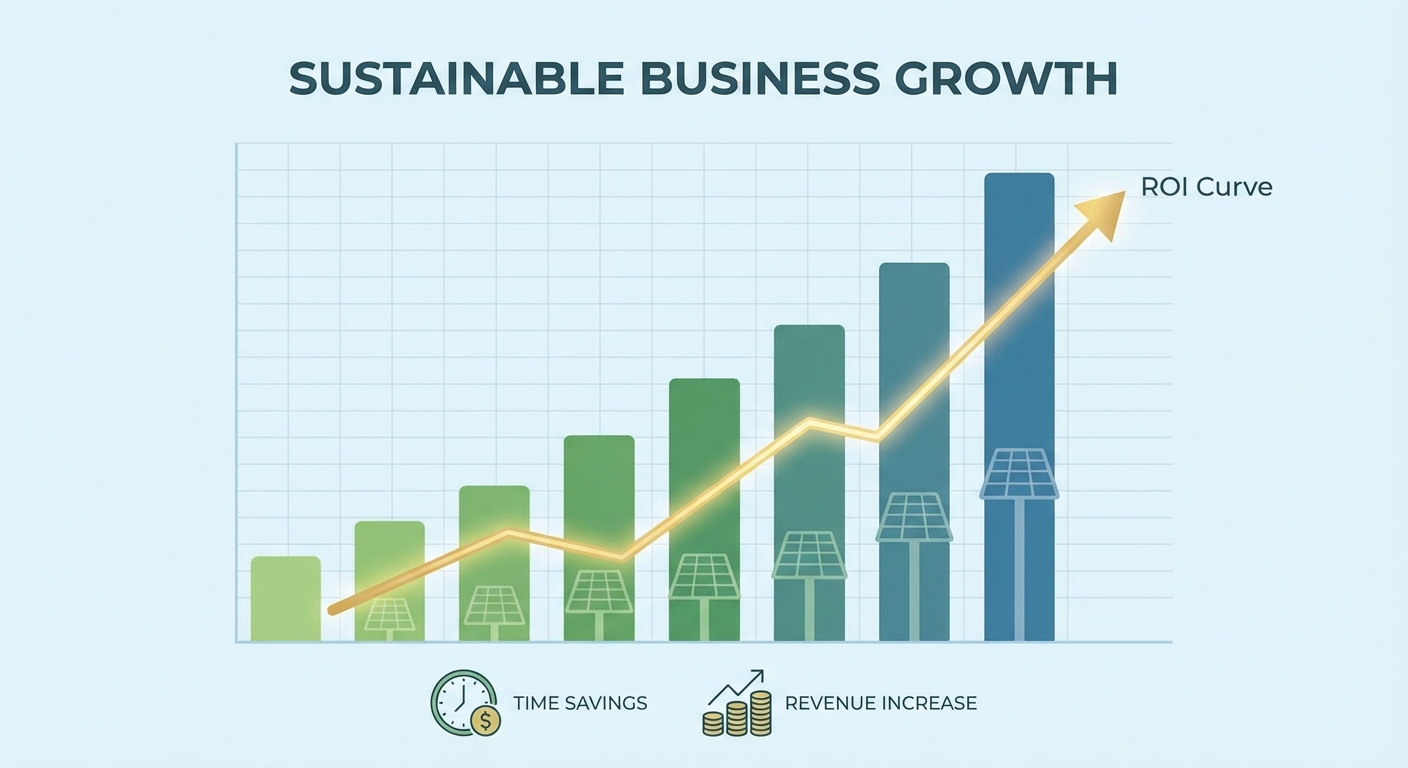
ROI Expectations: What Returns to Expect from Your CRM Investment
Understanding realistic ROI expectations helps you evaluate CRM pricing in context and set appropriate success metrics for your investment. Solar installation companies typically see returns across multiple dimensions.
Average Time to ROI for Solar CRM Implementations
Most solar businesses achieve positive ROI from specialized CRM implementations within 3-6 months. This relatively quick payback period results from immediate efficiency gains in proposal generation and lead management.
ROI timeline typically follows this pattern:
- Month 1-2: Implementation and training period—limited productivity gains as team learns the system
- Month 3-4: Initial efficiency gains become apparent—faster proposal generation and better lead tracking
- Month 5-6: Full adoption achieved—measurable improvements in conversion rates and sales cycle time
- Month 7-12: Compounding benefits—improved forecasting, better team coordination, and optimized sales processes
- Year 2+: Strategic advantages—data-driven decision making, scalable processes, and competitive differentiation
Specialized solar CRM solutions typically achieve ROI faster than general CRM platforms because they require less customization and have shorter learning curves.
Key Performance Metrics: Conversion Rates, Sales Cycle Time, Proposal Speed
Track these metrics to measure CRM ROI:
Conversion rate improvements: Solar businesses typically see 15-30% improvement in lead-to-customer conversion rates after implementing effective CRM systems. Better lead tracking, automated follow-ups, and timely proposal delivery all contribute to higher conversion rates.
Sales cycle time reduction: CRM automation can reduce sales cycle time by 20-40%. Faster proposal generation, automated scheduling, and streamlined communication help move deals through the pipeline more quickly.
Proposal generation speed: This is where specialized solar CRMs deliver dramatic improvements. Reducing proposal creation time from 2-3 hours to 60 seconds represents a 95%+ time savings—allowing sales teams to handle significantly more opportunities with the same resources.
Follow-up consistency: Automated follow-up systems ensure no lead goes uncontacted. Solar businesses often see 40-50% improvement in follow-up consistency, directly impacting conversion rates.
Sales team productivity: By eliminating administrative tasks and streamlining workflows, CRM systems can increase sales representative productivity by 25-35%, effectively expanding your team capacity without adding headcount.
Revenue Impact of Faster Proposal Generation
The ability to generate solar proposals in 60 seconds versus hours has profound revenue implications:
Increased proposal volume: If your sales representative previously spent 2 hours per proposal and now spends 1 minute, they can handle 120x more proposals in the same time. Practically, this means a representative who created 2-3 proposals daily can now handle 10-15 proposals daily—dramatically expanding your sales capacity.
Improved response time: In competitive solar markets, the first company to provide a proposal often wins the deal. Instant proposal generation allows you to respond to inquiries within minutes rather than days, significantly improving win rates.
Higher-quality proposals: Professional templates and automated calculations reduce errors and create more polished proposals, improving customer perception and trust.
For a solar installation company closing 100 deals annually at ₹300,000 average deal value, even a 10% increase in deals closed (from faster proposals and better follow-up) generates ₹3,000,000 in additional annual revenue—far exceeding typical CRM costs.
Cost Savings from Automated Follow-ups and Reduced Manual Work
CRM automation delivers direct cost savings through reduced manual labor:
Administrative time savings: Automated data entry, follow-up scheduling, and task management can save 5-10 hours per sales representative per week. For a 10-person sales team, this represents 50-100 hours weekly—equivalent to 1.25-2.5 full-time employees.
Reduced missed opportunities: Automated follow-up systems prevent leads from falling through the cracks. If your team previously lost 10-15% of opportunities due to missed follow-ups, automated systems can recover much of this lost revenue.
Lower customer acquisition costs: By improving conversion rates, CRM systems reduce the cost per customer acquired. If your marketing spend remains constant but conversion rates improve 20%, your customer acquisition cost drops 20%.
Team Productivity Gains and Their Financial Value
Quantifying productivity gains helps demonstrate CRM ROI:
Time savings calculation:
- Hours saved per representative per week × number of representatives × hourly cost = weekly productivity value
- Example: 8 hours saved × 10 reps × ₹500/hour = ₹40,000 weekly = ₹2,080,000 annually
Capacity expansion: Productivity gains effectively expand your team capacity without adding headcount. If CRM automation increases productivity 30%, your 10-person team can handle the workload of 13 people—saving the cost of 3 additional hires (approximately ₹1,500,000-₹2,000,000 annually in salary and benefits).
Improved team morale: While harder to quantify, reducing administrative burden and providing better tools improves sales team satisfaction and reduces turnover—saving recruitment and training costs.
Real-World ROI Scenarios for Small, Medium, and Large Solar Companies
Let’s examine realistic ROI scenarios across different company sizes:
Small solar installation company (5 sales representatives, 50 deals/year):
- Annual CRM cost: ₹50,000
- Efficiency gains: 15% more deals closed = 7.5 additional deals
- Average deal value: ₹250,000
- Additional revenue: ₹1,875,000
- ROI: 3,650% (payback in less than 2 weeks)
Medium solar installation company (15 sales representatives, 200 deals/year):
- Annual CRM cost: ₹250,000
- Efficiency gains: 20% more deals closed = 40 additional deals
- Average deal value: ₹300,000
- Additional revenue: ₹12,000,000
- ROI: 4,700% (payback in less than 1 week)
Large solar EPC (50 sales representatives, 800 deals/year):
- Annual CRM cost: ₹800,000
- Efficiency gains: 15% more deals closed = 120 additional deals
- Average deal value: ₹400,000
- Additional revenue: ₹48,000,000
- ROI: 5,900% (payback in less than 1 week)
These scenarios demonstrate that CRM investment delivers exceptional returns when it improves conversion rates and sales efficiency—making the pricing question less about cost and more about which solution delivers the best results.
How to Choose the Right CRM Pricing Plan for Your Solar Business
With a clear understanding of CRM pricing components, hidden costs, and ROI expectations, you’re ready to select the right plan for your solar installation company. This decision framework helps you match your needs to the optimal pricing tier.
Assessing Your Current Sales Process and Pain Points
Start by documenting your current sales process and identifying specific pain points:
Sales process audit:
- How long does it take to create a solar proposal?
- What percentage of leads receive timely follow-up?
- How do you track deals through your sales pipeline?
- What tools do you currently use for lead management?
- How do sales representatives access customer information in the field?
- What reporting and analytics do you currently have?
Pain point prioritization:
- Which inefficiencies cost the most time or money?
- Which problems cause the most lost opportunities?
- Which issues frustrate your sales team most?
- Which capabilities would have the biggest impact on revenue?
This assessment helps you identify must-have features versus nice-to-have capabilities, guiding your pricing tier selection.
Matching Features to Your Business Needs
Map your prioritized needs to CRM features and pricing tiers:
Essential features for most solar businesses:
- Proposal generation and template management
- Lead capture and management
- Sales pipeline visualization
- Mobile access for field sales teams
- Basic automation for follow-ups
- Standard reporting and analytics
These essential features typically require professional-tier pricing plans. Free or basic tiers rarely include sufficient capabilities for growing solar installation companies.
Advanced features for scaling businesses:
- Advanced workflow automation
- Custom reporting and dashboards
- Multiple integration options
- Team collaboration tools
- Advanced security features
- API access for custom integrations
These advanced features typically appear in premium or enterprise tiers. Evaluate whether your business needs justify the additional cost.
Starting Small vs Going All-In: Which Approach Works
Solar businesses face a strategic decision: start with a basic plan and upgrade as needed, or invest in a comprehensive solution from the beginning?
Starting small makes sense when:
- You’re new to CRM systems and want to learn gradually
- Your team is small (1-5 users) with simple needs
- Budget constraints require phased investment
- You want to validate CRM value before full commitment
Going all-in makes sense when:
- You have clear understanding of your CRM requirements
- Your team is ready for immediate adoption
- You’re switching from another CRM and know what you need
- The cost difference between tiers is minimal relative to value gained
For most solar installation companies, starting with a professional-tier plan from a specialized solar CRM provider offers the best balance—sufficient features to drive real value without overwhelming complexity or cost.
Questions to Ask CRM Vendors During Evaluation
Ask these questions to understand true pricing and value:
Pricing transparency questions:
- What is included in the base subscription price?
- Are there setup, onboarding, or implementation fees?
- What does data migration cost?
- Are integrations included or charged separately?
- What happens if we exceed data or usage limits?
- What are the terms for adding or removing users?
- Are there discounts for annual vs monthly billing?
Value and capability questions:
- How long does typical implementation take?
- What training and support is included?
- Can you provide customer references from similar solar businesses?
- What is your average customer ROI and time to value?
- How do you handle upgrades and new feature releases?
- What is your customer retention rate?
Solar-specific questions:
- How does your platform handle solar proposal generation?
- What solar-specific features are included?
- Do you integrate with WhatsApp for the Indian market?
- How do you support mobile sales teams in areas with poor connectivity?
- Can you demonstrate a typical solar sales workflow in your system?
Red Flags in CRM Pricing Structures
Watch for these warning signs when evaluating CRM pricing:
- Unclear or hidden fees: Vendors who can’t provide transparent pricing breakdowns
- Excessive customization requirements: Platforms that require expensive customization for basic solar workflows
- Restrictive contracts: Long-term commitments without trial periods or exit clauses
- Per-feature pricing: Charging separately for each capability rather than bundled tiers
- Expensive integrations: Charging premium fees for standard integrations like email or calendar
- Limited scalability: Pricing that increases dramatically as you add users or data
- Poor support in base pricing: Requiring expensive support upgrades for reasonable response times
Making the Switch: When to Upgrade or Change Providers
Recognize when it’s time to upgrade your CRM tier or switch providers:
Signs you’ve outgrown your current plan:
- Regularly hitting data or user limits
- Needing features only available in higher tiers
- Team productivity suffering from platform limitations
- Integration needs that your current plan doesn’t support
- Support response times inadequate for your business needs
Signs you should switch providers:
- Excessive customization costs making total ownership expensive
- Platform doesn’t support solar-specific workflows effectively
- Poor vendor support or product development stagnation
- Better alternatives available at similar or lower cost
- Integration or compatibility issues with your sales stack
When switching CRM providers, factor in migration costs and temporary productivity loss, but don’t let switching costs trap you in an inadequate solution. The long-term cost of staying with the wrong CRM often exceeds the one-time cost of switching.
Frequently Asked Questions About Solar CRM Pricing
What is the average cost of solar CRM software in India?
Solar CRM pricing in India varies significantly based on features and vendor type. Specialized solar CRM solutions typically range from ₹5,000 to ₹15,000 per user per year for professional-tier plans that include proposal automation, lead management, and mobile access. General CRM platforms customized for solar businesses often cost ₹15,000 to ₹35,000 per user per year when you include customization expenses. For a typical 10-person solar installation team, expect to budget ₹150,000 to ₹400,000 annually for a comprehensive CRM solution including implementation and training.
Are there free solar CRM options available?
Yes, several CRM platforms offer free tiers that can work for very small solar businesses or those just starting to formalize their sales processes. QuickEst offers a FREE PLAN – ₹0 that provides essential CRM capabilities for solar businesses without upfront investment. However, free plans typically have limitations including restricted user counts, limited features (especially proposal automation), basic reporting, and minimal integration options. Most growing solar installation companies find that professional-tier paid plans deliver significantly better value through time savings and improved conversion rates that quickly justify the investment.
What hidden costs should I watch out for?
Beyond subscription fees, watch for these hidden costs: setup and onboarding fees (₹10,000-₹100,000), data migration expenses (₹15,000-₹200,000), integration costs for connecting to your existing tools (₹10,000-₹50,000 per integration), customization fees for solar-specific workflows (₹50,000-₹500,000 for general CRMs), training expenses (₹20,000-₹100,000 initially), premium support upgrades (₹2,000-₹10,000/month), and additional storage or usage fees when exceeding plan limits. Specialized solar CRM solutions typically have fewer hidden costs because they include solar-specific features without requiring expensive customization.
How does CRM pricing scale as my team grows?
Most CRM platforms use per-user pricing models, meaning your costs scale linearly with team size. For example, if you pay ₹7,000 per user per year and grow from 5 to 15 users, your annual cost increases from ₹35,000 to ₹105,000. Some vendors offer volume discounts at certain thresholds (e.g., 10% discount for 20+ users). A few specialized CRM providers offer flat-rate pricing regardless of user count, which can be advantageous for larger teams. When evaluating CRM options, project your team size over 2-3 years and calculate total costs at those scales to understand long-term pricing implications.
Is annual or monthly billing more cost-effective?
Annual billing typically offers 15-20% savings compared to monthly billing. For example, a CRM that costs ₹999/month per user (₹11,988/year) might be available at ₹9,999/year with annual billing—saving ₹1,989 per user annually. For a 10-person team, annual billing could save approximately ₹20,000 per year. Annual billing also simplifies budgeting and reduces administrative overhead. However, monthly billing offers flexibility for companies testing a new CRM, experiencing seasonal team size fluctuations, or with uncertain growth trajectories. If you’re confident in your CRM choice and have stable team size, annual billing delivers better value.
What’s included in implementation costs?
Implementation costs typically include: initial system configuration and setup (₹10,000-₹50,000), user account creation and permission configuration, data migration from existing systems (₹15,000-₹200,000 depending on complexity), integration setup with your existing tools (₹10,000-₹50,000 per integration), proposal template creation and branding (₹5,000-₹30,000), initial training for administrators and end users (₹20,000-₹100,000), and documentation and resource provision. Specialized solar CRM solutions often include basic implementation in their subscription price, while general CRM platforms typically charge separately for implementation services. Always ask vendors for detailed implementation cost breakdowns before committing.
How long does it take to see ROI from a CRM investment?
Most solar installation companies achieve positive ROI from specialized CRM implementations within 3-6 months. The timeline depends on several factors: how quickly your team adopts the system (faster with user-friendly, solar-specific platforms), the efficiency gains you achieve (proposal generation speed, automated follow-ups), and your baseline conversion rates (companies with lower starting conversion rates see faster ROI). Specialized solar CRM solutions typically deliver faster ROI than general CRM platforms because they require less customization and have shorter learning curves. Key early indicators of ROI include reduced time per proposal, improved follow-up consistency, and increased conversion rates—all of which translate to additional deals closed and revenue generated.
Unlock Your Solar Sales Potential with the Right CRM Investment
Understanding CRM pricing is about more than comparing subscription costs—it’s about evaluating total cost of ownership, recognizing hidden expenses, and projecting realistic returns on your investment. For solar installation companies in India, the right CRM solution can transform sales efficiency, improve conversion rates, and accelerate business growth.
The key insights from this comprehensive pricing guide:
- Specialized solar CRM solutions typically deliver better value than general CRM platforms because they include industry-specific features without expensive customization
- Hidden costs including implementation, training, integration, and customization often exceed subscription fees—especially for general CRM platforms
- ROI timelines for solar CRM investments typically range from 3-6 months, with returns driven by faster proposal generation, improved conversion rates, and increased team productivity
- Pricing tiers should be evaluated based on feature alignment with your business needs, not just cost—the cheapest option rarely delivers the best value
- Budget planning should account for team growth, feature expansion, and total cost of ownership over 3-5 years
When evaluating CRM options for your solar business, focus on these critical questions: Does this platform support solar-specific workflows without expensive customization? Can my team generate professional proposals in minutes rather than hours? Will automated follow-ups prevent lost opportunities? Does the pricing scale reasonably as my business grows? What is the realistic time to ROI based on my current sales metrics?
For solar installation companies ready to streamline their sales processes and close more deals, QuickEst offers specialized CRM capabilities designed specifically for the solar industry. With professional proposal generation in 60 seconds, automated follow-up systems, real-time sales analytics, and comprehensive lead management—all at competitive pricing—QuickEst delivers the features solar businesses need without the complexity and cost of general CRM platforms.
Whether you’re just starting to explore CRM options with the FREE PLAN – ₹0 or ready to unlock full sales potential with the PRO PLAN – ₹6999 Per User / Year, investing in the right CRM solution is one of the most impactful decisions you can make for your solar business growth.
Ready to see how QuickEst can transform your solar sales process? Contact us to discuss your specific needs, get a personalized pricing recommendation, and discover how quickly you can achieve ROI from specialized solar CRM investment. Your competitors are already accelerating their sales cycles—don’t let manual processes hold your business back.