
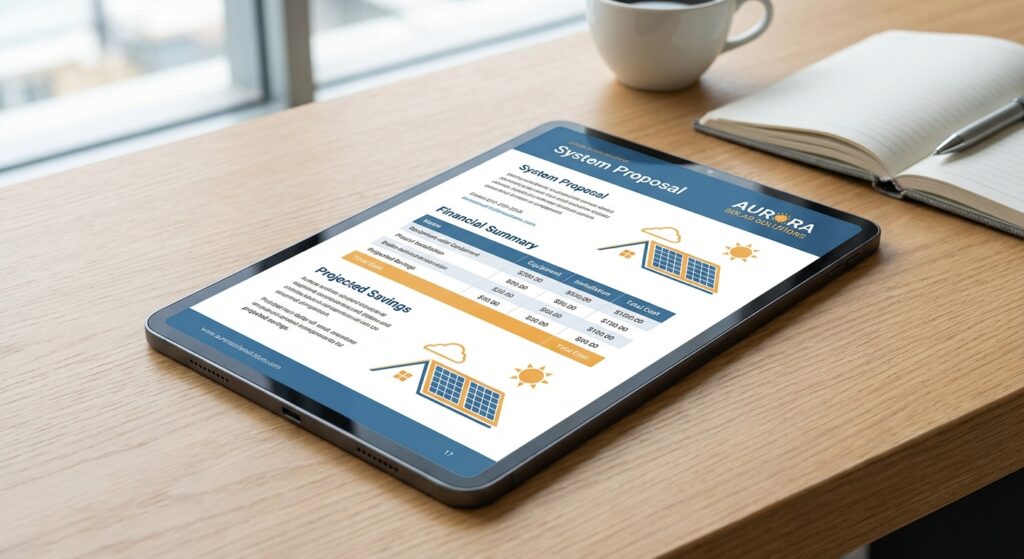
In the competitive solar industry of 2026, the difference between winning and losing a deal often comes down to how quickly and professionally you can present your offer. For solar EPCs, installers, and B2B service companies across India, proposal templates have evolved from simple document formats into strategic sales tools that can dramatically impact your conversion rates and revenue growth.
This comprehensive buyer’s guide will walk you through everything you need to know about selecting the right proposal templates for your solar business. Whether you’re a solo installer sending five proposals a month or a large EPC managing hundreds of commercial projects, understanding the landscape of proposal templates will help you make an informed decision that aligns with your business goals, customer segments, and sales processes.
The right proposal templates don’t just save time—they create consistency, build trust, and enable your sales team to focus on what matters most: building relationships and closing deals. Let’s explore how to evaluate, compare, and choose the proposal template solution that will transform your sales process.
Why Proposal Templates Matter for Solar Businesses in 2026
The solar market in India has reached unprecedented levels of competition. With thousands of installers vying for the same residential and commercial clients, your proposal is often the first substantial touchpoint that demonstrates your professionalism and value proposition. A well-designed proposal template can be the difference between a client choosing your company or moving to a competitor.
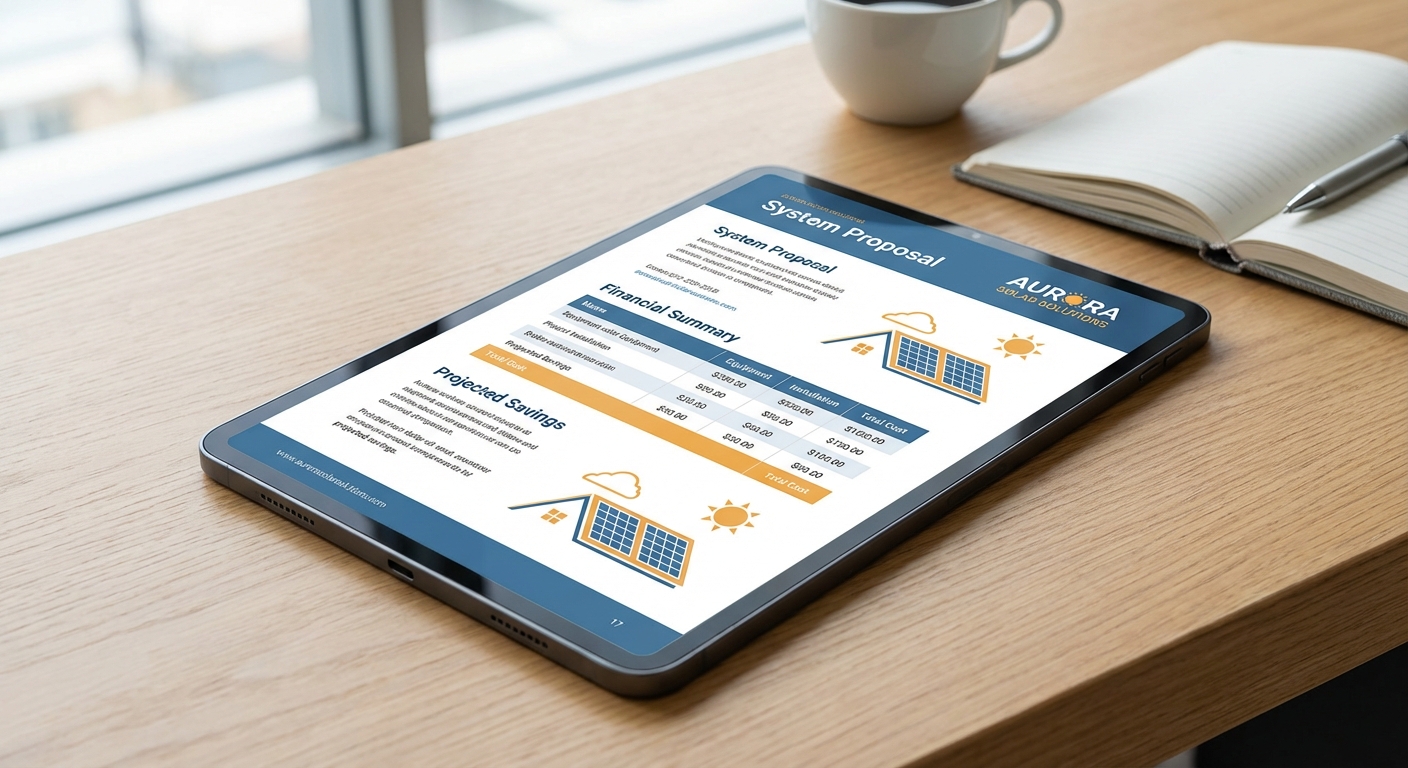
Conversion rates are directly tied to proposal quality. Research shows that professionally designed proposals with clear pricing, technical specifications, and visual appeal convert at rates 30-40% higher than basic, text-heavy documents. When a potential client receives your proposal, they’re not just evaluating your solar system design—they’re assessing whether your company is organized, trustworthy, and capable of delivering on promises.
Time is another critical factor. Solar sales teams that spend hours manually creating each proposal from scratch are losing valuable selling time. The average solar proposal created without templates takes 2-4 hours to complete, including gathering specifications, calculating pricing, designing layouts, and proofreading. With effective proposal templates, this process can be reduced to minutes, allowing your team to respond to inquiries faster and handle higher lead volumes.
However, speed shouldn’t come at the expense of customization. The best proposal templates strike a balance between efficiency and personalization, allowing you to maintain brand consistency while tailoring each proposal to the specific needs of residential homeowners, commercial businesses, or institutional clients. This balance is what separates effective proposal templates from generic, one-size-fits-all solutions that fail to resonate with diverse customer segments.
First impressions matter immensely in B2B sales. When a commercial client receives a polished, comprehensive proposal within an hour of their inquiry, it signals responsiveness and professionalism. Conversely, a delayed or poorly formatted proposal suggests disorganization and can erode confidence before the relationship even begins. In 2026, with clients expecting instant communication and professional digital experiences, your proposal templates are a direct reflection of your company’s capabilities.
Types of Proposal Templates Available
Understanding the different categories of proposal templates is essential for making an informed purchasing decision. The market offers several distinct approaches, each with unique advantages and limitations for solar businesses.
Static PDF templates represent the most basic option. These are pre-designed document formats that you fill in manually using word processors or PDF editors. While affordable and simple to understand, static templates require significant manual work for each proposal, offer limited customization, and lack automation capabilities. They’re suitable for very small operations with low proposal volumes, but quickly become inefficient as your business grows.
Dynamic proposal systems represent the modern approach to proposal generation. These cloud-based platforms allow you to input client information and project details once, then automatically populate professional proposals with pricing calculations, technical specifications, and branded design elements. Dynamic systems integrate with your CRM and sales workflows, enabling features like automated follow-ups, proposal tracking, and performance analytics. For solar businesses serious about scaling, dynamic proposal templates offer the best combination of speed, professionalism, and data-driven insights.
The distinction between industry-specific and generic business templates is particularly important for solar companies. Generic business proposal templates designed for consulting firms or service providers lack the specialized sections solar clients expect: system specifications, equipment warranties, performance projections, subsidy information, and installation timelines. Industry-specific solar proposal templates include these elements by default, ensuring you never miss critical information that influences buying decisions.
Finally, consider whether you need standalone templates or integrated CRM proposal tools. Standalone template libraries provide document formats without connection to your broader sales process. Integrated solutions like QuickEst combine proposal templates with lead management, follow-up automation, and sales tracking, creating a unified workflow where proposals are generated directly from lead data and automatically tracked through the sales pipeline. This integration eliminates duplicate data entry and provides visibility into which proposals are being viewed, shared, or ignored.
Essential Features to Look for in Proposal Templates
When evaluating proposal templates for your solar business, certain features separate effective solutions from inadequate ones. Understanding these essential capabilities will help you create a comprehensive evaluation checklist.
Customization and Branding Capabilities
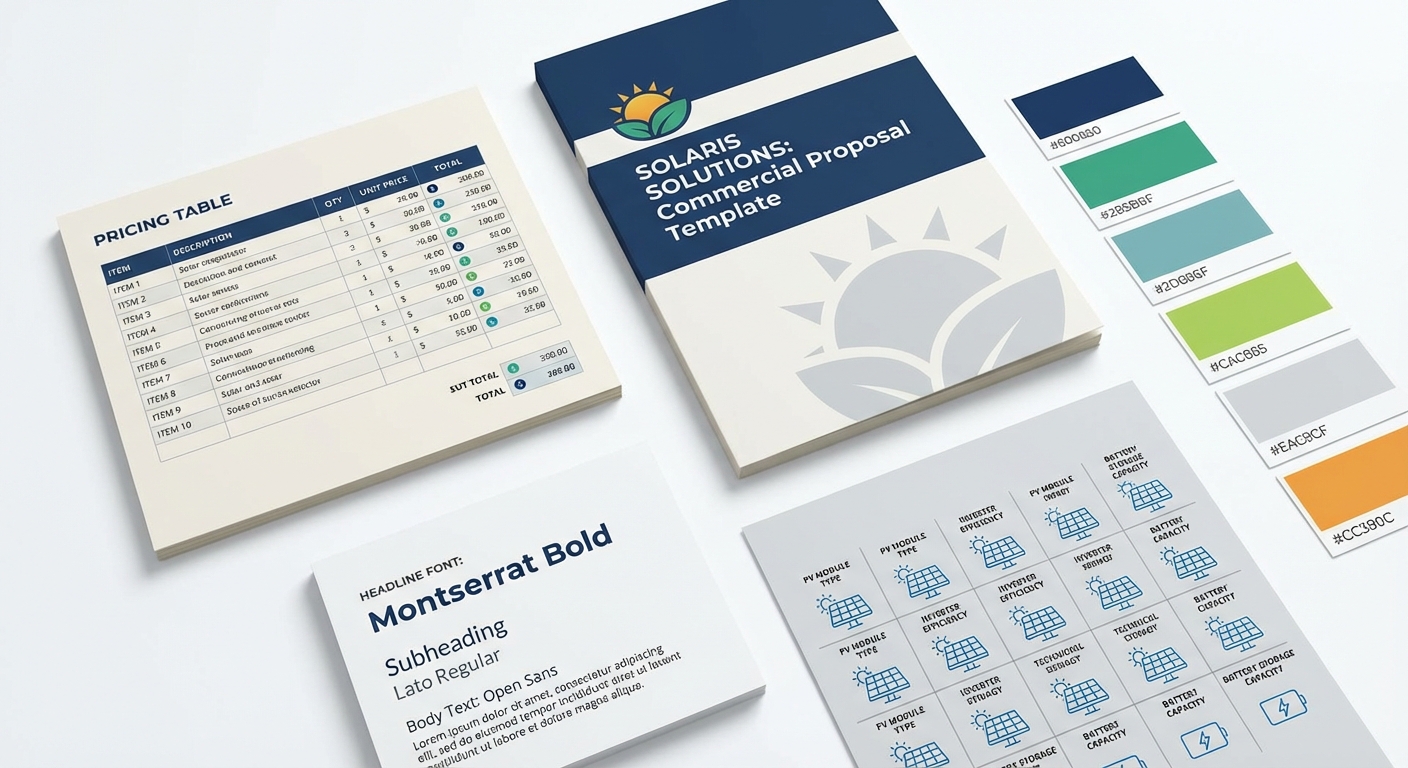
Your proposal templates should function as an extension of your brand identity. Look for solutions that allow comprehensive customization of visual elements including logo placement, color schemes that match your brand guidelines, and typography options that maintain consistency with your website and marketing materials.
Template structure flexibility is equally important. The best proposal templates allow you to add, remove, or reorder sections based on project type. A residential rooftop installation requires different information than a commercial ground-mount system or an agricultural solar pump project. Your templates should adapt to these varying requirements without forcing you into a rigid format.
Content block customization enables you to create reusable sections for common elements—company introductions, warranty information, installation processes, financing options—while still allowing project-specific customization. This approach maintains consistency across proposals while reducing repetitive work.
Pricing Tables and Financial Components
Financial clarity is critical in solar proposals. Your proposal templates must include sophisticated pricing tables that clearly break down system costs, equipment expenses, installation charges, and any additional services. The best templates offer automated calculation features that update totals when you modify quantities or unit prices, eliminating manual math errors that can undermine credibility.
Payment terms and financing options deserve prominent, clear presentation. Many solar clients in India are interested in financing arrangements, EMI options, or lease structures. Your proposal templates should accommodate these various payment models with professional formatting that makes complex financial information easy to understand.
ROI and savings projections are powerful selling tools. Templates that include sections for electricity bill savings, payback period calculations, and long-term financial benefits help clients understand the investment value beyond the upfront cost. Integration with subsidy information, such as government incentives, accelerated depreciation benefits, or state-specific programs, adds another layer of value that can tip the decision in your favor.
Technical Specifications and System Details
Solar clients want to understand exactly what they’re purchasing. Your proposal templates should include dedicated sections for equipment specifications, displaying panel wattage, inverter capacity, mounting structure details, and other technical components in a format that’s informative without being overwhelming.
System design visualization capabilities vary across template solutions. Basic templates might include static image placeholders, while advanced systems integrate with solar design software to automatically include system layouts, shading analysis, and production estimates. Consider what level of technical detail your customer segments expect and choose templates that match those expectations.
Performance metrics and warranties provide the assurance clients need to move forward. Your templates should clearly present expected energy production, performance guarantees, equipment warranties, and workmanship coverage. Installation timeline and process information helps set realistic expectations and demonstrates your organized approach to project management.
How to Assess Proposal Template Quality
Not all proposal templates are created equal. Developing objective criteria for assessing quality will help you distinguish between professional solutions and subpar options that could damage your brand reputation.
Visual appeal and professional design standards should be your first assessment criterion. Does the template look modern and polished, or does it feel dated and amateurish? Professional design includes appropriate use of white space, consistent formatting, logical information hierarchy, and visual elements that enhance rather than distract from the content. If you wouldn’t be proud to present the template to your most important client, it’s not good enough.
Content completeness is another critical factor. Quality proposal templates guide you through all the information a client needs to make an informed decision: company background, project understanding, proposed solution, technical specifications, pricing, terms and conditions, warranties, and next steps. Incomplete templates that skip essential sections force you to add content manually, defeating the purpose of using templates in the first place.
Clarity and readability for non-technical clients cannot be overlooked. Many solar customers lack technical expertise and can be intimidated by jargon-heavy proposals. The best proposal templates present technical information in accessible language, use visual aids to explain complex concepts, and organize information in a logical flow that builds understanding progressively.
Conversion-focused elements distinguish strategic templates from basic document formats. Look for templates that include trust-building components like client testimonials, case studies, certifications, and awards. Strong calls-to-action that clearly outline next steps, scheduling a site visit, signing the agreement, making a deposit, guide clients toward decision-making rather than leaving them uncertain about how to proceed.
Finally, error-free calculations and data accuracy are non-negotiable. Test any template system thoroughly with various scenarios to ensure pricing calculations, tax computations, and financial projections are accurate. A single mathematical error in a proposal can destroy client trust and cost you the deal.
Evaluation Criteria: Choosing the Right Proposal Templates
Selecting proposal templates requires a systematic evaluation process that considers your specific business context, customer needs, and operational requirements. The following framework will help you make a decision that aligns with your strategic goals.
Proposal Templates for Different Business Sizes
Your company size significantly influences which proposal template solution makes sense. Solo installers and small teams (1-5 people) typically need straightforward, affordable solutions that are quick to implement and easy to use without extensive training. For these businesses, proposal templates integrated with basic CRM functionality, like QuickEst’s 60-second proposal generation, offer the best value, eliminating the need for multiple software subscriptions while providing professional results.
Mid-size solar EPCs (5-20 people) require more sophisticated capabilities including team collaboration features, proposal approval workflows, and performance analytics across multiple sales representatives. These businesses benefit from proposal templates that integrate with comprehensive scalable CRM systems that can grow with the organization and provide visibility into team activities and proposal conversion rates.
Large solar companies and enterprises (20+ people) need enterprise-grade proposal solutions with advanced customization, multi-location support, role-based permissions, and extensive integration capabilities with existing business systems. These organizations should prioritize proposal templates that offer API access, custom development options, and dedicated support for implementation and ongoing optimization.
Templates for Different Customer Segments
The customer segments you serve should directly influence your proposal template selection. Residential solar proposals need to emphasize simplicity, visual appeal, and financial benefits. Homeowners respond well to proposals that include photos of similar installations, clear savings projections, and straightforward financing options. Templates for this segment should avoid excessive technical jargon and focus on lifestyle benefits and return on investment.
Commercial and industrial proposals require more technical depth and business-focused value propositions. These templates should include detailed equipment specifications, commercial financing structures, tax benefit analysis, and corporate sustainability messaging. The ability to create multi-page proposals with appendices for technical documentation is essential for this segment.
Government and institutional projects demand the most comprehensive proposal templates, often requiring compliance with specific formatting requirements, detailed technical submissions, and extensive documentation. If you serve this segment, ensure your proposal templates can accommodate these specialized requirements or can be easily customized to meet tender specifications.
Consider whether you need multiple template variations for different segments or a flexible system that adapts to various customer types. The best approach depends on how different your customer segments are and how much customization each requires.
What Makes a Solar Proposal Template Effective for Closing Deals
Understanding the psychology of decision-making helps you recognize which proposal template features actually drive conversions. Effective proposal templates incorporate several key elements that move prospects from consideration to commitment.
Clear value proposition presentation is fundamental. Your proposal templates should prominently feature the unique benefits of choosing your company, whether that’s superior equipment, faster installation timelines, comprehensive warranties, or exceptional customer service. This value proposition should appear early in the proposal and be reinforced throughout with specific evidence and examples.
Trust-building elements provide the social proof and credibility that overcome natural skepticism. The best proposal templates include sections for customer testimonials, case studies of similar projects, industry certifications, manufacturer partnerships, and company awards. These elements reassure clients that you have a proven track record and the expertise to deliver on your promises.
Addressing common objections proactively demonstrates that you understand client concerns and have solutions ready. Effective proposal templates include sections that address typical hesitations: “What happens if panels underperform?” “How do you handle maintenance?” “What if I need to relocate?” By anticipating and answering these questions within the proposal, you remove barriers to decision-making.
Strong calls-to-action and clear next steps are essential for moving prospects forward. Vague proposals that end without direction leave clients uncertain about how to proceed. The best templates conclude with specific, actionable next steps: “Schedule your site survey by clicking here,” “Sign this agreement to lock in current pricing,” or “Call us at [number] to discuss financing options.” Make it easy for clients to say yes.
Speed of delivery matters more than many solar businesses realize. Clients who receive proposals within hours of their inquiry are significantly more likely to convert than those who wait days. This is where integrated proposal automation systems excel, by generating professional proposals in minutes and delivering them instantly via WhatsApp or email, you capture client interest while it’s at its peak. The ability to set up automated follow-up sequences ensures that even if clients don’t respond immediately, they receive timely reminders that keep your proposal top-of-mind.
Comparison Framework: Evaluating Your Options
A structured comparison framework helps you objectively evaluate different proposal template solutions and make a data-driven decision. Use this approach to systematically assess your options.
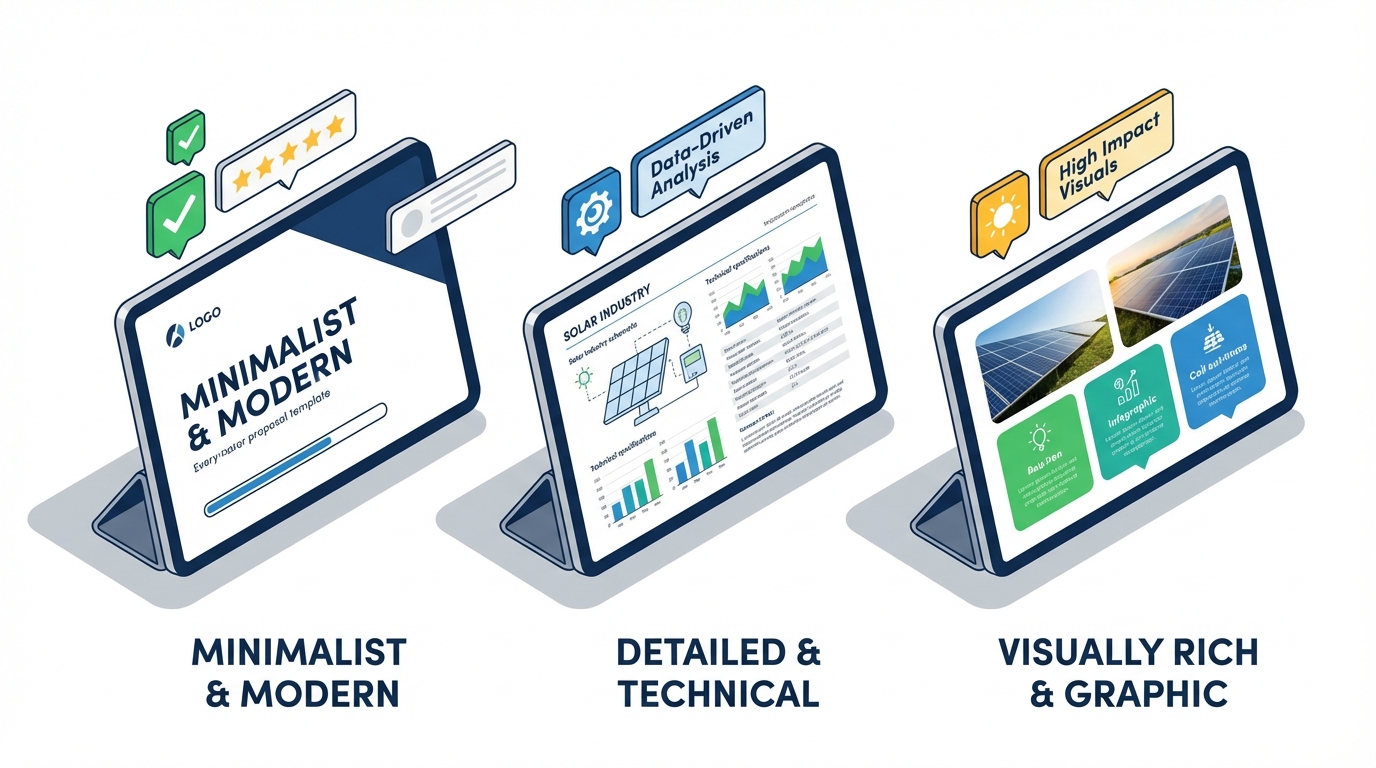
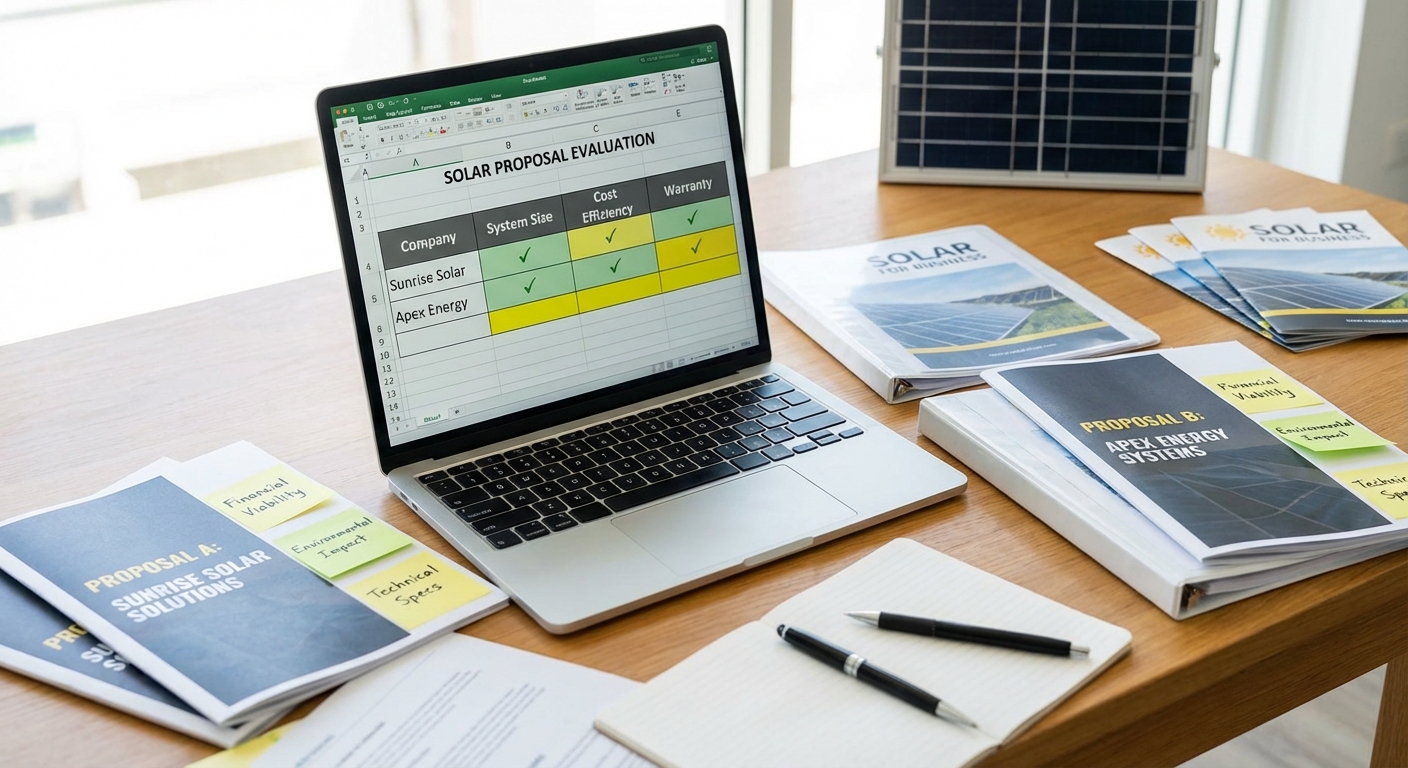
Create a feature comparison checklist that includes all the capabilities important to your business. Essential features might include: customization options, pricing table automation, technical specification sections, brand customization, mobile responsiveness, delivery methods (email, WhatsApp, PDF download), integration capabilities, team collaboration tools, proposal tracking and analytics, template library size, and customer support quality. Rate each solution on a scale of 1-5 for each feature to create a quantitative comparison.
Conduct a thorough cost-benefit analysis that looks beyond the sticker price. Consider the total cost of ownership including subscription fees, implementation costs, training time, and ongoing maintenance. Then evaluate the benefits: time saved per proposal, increased conversion rates, higher proposal volumes, improved team productivity, and better client experience. A solution that costs more upfront but saves 10 hours per week and increases conversions by 15% delivers far better ROI than a cheap option that provides minimal efficiency gains.
For a detailed breakdown of what different pricing models include, review our guide on solar CRM software costs and value.
Implement a trial and testing methodology before committing to any solution. Most reputable proposal template providers offer free trials or demo accounts. Use these opportunities to create real proposals for actual projects, involve your sales team in the testing process, and gather feedback on usability and effectiveness. Test edge cases and complex scenarios to ensure the templates can handle your full range of project types.
Vendor evaluation criteria should extend beyond the product itself. Assess the company’s stability and track record, customer support responsiveness and quality, update frequency and product roadmap, user community and resources, and data security and privacy practices. A great product from an unreliable vendor can become a liability if support disappears or the company goes out of business.
Implementation and learning curve considerations are often overlooked but critically important. The most feature-rich proposal template system is worthless if your team won’t use it because it’s too complex. Evaluate how long it takes to get started, what training resources are available, how intuitive the interface is, and whether the system fits naturally into your existing workflows. Solutions that integrate with tools you already use, like QuickEst’s integration with Facebook Ads, Pabbly Connect, and phonebook systems, reduce friction and accelerate adoption.
Best Practices for Implementing Proposal Templates
Selecting the right proposal templates is only half the battle. Successful implementation requires thoughtful planning and ongoing optimization to maximize the value of your investment.
Setting up your template library should be your first priority after selecting a solution. Create templates for each major customer segment and project type you serve. Develop a residential template, a commercial template, and any specialized templates for unique offerings like agricultural solar or solar water pumping systems. Populate these templates with your best content, most compelling case studies, and strongest value propositions.
Training your sales team is essential for adoption and effectiveness. Schedule dedicated training sessions that cover not just how to use the templates, but why they’re structured the way they are and what makes them effective. Share best practices for customization, demonstrate how to adapt templates for different scenarios, and create quick-reference guides for common tasks. The goal is to make your team confident and competent with the new system.
Maintaining consistency across proposals protects your brand and ensures quality. Establish clear guidelines for when and how templates can be customized, designate someone to review and approve template modifications, and create a process for updating templates when products, pricing, or policies change. Consistency doesn’t mean rigidity, it means ensuring every proposal meets your quality standards regardless of who creates it.
Gathering client feedback and iterating transforms good templates into great ones. After deals close (or are lost), ask clients about their proposal experience. What information was most valuable? What was confusing? What was missing? Use this feedback to continuously refine your templates. Track which template versions have the highest conversion rates and analyze what makes them effective.
Measuring proposal performance metrics provides the data you need for optimization. Track key metrics including time to create and send proposals, proposal view rates and engagement, conversion rates by template type, average deal size by template, and time from proposal to decision. Modern proposal systems like QuickEst provide real-time analytics dashboards that make this tracking automatic, giving you visibility into what’s working and what needs improvement.
Common Mistakes to Avoid When Selecting Proposal Templates
Learning from common pitfalls can save you time, money, and frustration. Avoid these frequent mistakes when evaluating and implementing proposal templates.
Choosing based on price alone is perhaps the most costly mistake. The cheapest proposal template solution often delivers the least value, requiring more manual work, producing lower-quality results, and lacking the features that drive efficiency and conversions. Focus on ROI rather than upfront cost. A solution that costs ₹6,999 per user annually but saves 5 hours per week and increases conversions by 10% pays for itself many times over compared to a free template that provides minimal benefits.
Overlooking integration capabilities creates data silos and duplicate work. If your proposal templates don’t integrate with your CRM, you’ll manually transfer lead information into proposals, update deal stages separately, and lack visibility into the connection between proposals and sales outcomes. Choose solutions that offer seamless integration with your existing sales tools or provide comprehensive all-in-one platforms that eliminate the need for multiple systems.
Ignoring mobile and delivery options is increasingly problematic as more business communication moves to mobile devices. Your proposal templates should be mobile-responsive so clients can review them on smartphones and tablets. Delivery options should include modern channels like WhatsApp, which has become the primary business communication tool in India, alongside traditional email and PDF downloads.
Selecting overly complex or overly simple templates creates different problems. Overly complex templates with dozens of sections and extensive customization options overwhelm users and slow down proposal creation. Overly simple templates lack the depth and professionalism clients expect, making your company appear unsophisticated. Find the balance that matches your business needs and customer expectations.
Failing to test with real client scenarios before committing is a recipe for disappointment. Don’t rely on vendor demos that show ideal use cases. Test the templates with your actual projects, including edge cases and complex scenarios. Involve your sales team in the evaluation process, they’re the ones who will use the system daily and can identify practical limitations that might not be apparent in a demo.
The Future of Proposal Templates in Solar Sales
Understanding emerging trends helps you select proposal template solutions that will remain relevant and valuable as the industry evolves. Several developments are shaping the future of solar proposal templates in 2026 and beyond.
AI-powered proposal customization is beginning to transform how proposals are created. Advanced systems analyze client data, project parameters, and historical conversion patterns to automatically suggest optimal proposal content, pricing strategies, and messaging. These AI capabilities can identify which case studies resonate with specific customer types, recommend financing options based on client profiles, and even predict which proposals are most likely to convert based on engagement patterns.
Interactive and dynamic proposals represent a shift from static PDF documents to engaging digital experiences. These next-generation proposals include interactive pricing calculators that let clients adjust system sizes and see real-time cost changes, embedded videos explaining installation processes or showcasing completed projects, and clickable elements that expand to show additional detail without overwhelming the main proposal. While still emerging, these interactive formats show significantly higher engagement and conversion rates.
Integration with solar design software creates seamless workflows from initial design through proposal delivery. Rather than manually transferring system specifications from design tools into proposal templates, integrated systems automatically populate proposals with accurate technical data, system layouts, and performance projections directly from design software. This integration eliminates errors, saves time, and ensures consistency between what’s designed and what’s proposed.
Real-time pricing and inventory updates address one of the biggest challenges in solar sales: rapidly changing equipment costs and availability. Advanced proposal systems connect to supplier databases and pricing feeds to ensure proposals always reflect current costs and available inventory. This capability prevents the embarrassment of proposing equipment that’s out of stock or pricing that’s no longer valid.
Enhanced analytics and tracking provide deeper insights into proposal performance. Modern systems track not just whether proposals are opened, but how long clients spend on each section, which pages they revisit, and where they stop reading. This behavioral data helps you understand what resonates with clients and what needs improvement. Integration with CRM systems connects proposal engagement to eventual outcomes, revealing which proposal elements correlate with closed deals.
Making Your Decision: Choosing the Right Proposal Templates for Your Solar Business
After evaluating types, features, quality criteria, and implementation considerations, you’re ready to make an informed decision about proposal templates for your solar business. The right choice depends on your specific context, but several principles apply universally.
Prioritize solutions that balance speed with professionalism. In 2026’s competitive solar market, you need the ability to respond to inquiries within minutes, not days. Systems like QuickEst that enable 60-second proposal generation give you a significant competitive advantage by capturing client interest at its peak. However, speed is worthless if the resulting proposals look rushed or unprofessional. The best solutions deliver both rapid creation and polished results.
Choose integrated systems over standalone templates whenever possible. Proposal templates that exist in isolation from your broader sales process create inefficiency and data fragmentation. Integrated platforms that combine proposal generation with lead management, follow-up automation, and sales tracking provide a unified workflow that saves time and provides better visibility into your sales pipeline.
Consider your growth trajectory, not just your current needs. If you’re planning to scale your solar business, choose proposal templates that can grow with you. Solutions with team collaboration features, performance analytics, and flexible customization will serve you well as you add sales representatives and expand into new customer segments. Avoid the costly mistake of outgrowing your proposal system within a year and having to migrate to a new platform.
Test thoroughly before committing. Take advantage of free trials and demo accounts to evaluate proposal templates with real projects and actual team members. The best way to assess whether a solution fits your needs is to use it in realistic scenarios. Pay attention to how intuitive the system feels, how quickly you can create quality proposals, and whether the results meet your standards.
Don’t underestimate the value of support and training resources. Even the best proposal template system requires some learning curve. Vendors that provide comprehensive training materials, responsive customer support, and active user communities make implementation smoother and help you maximize the value of your investment.
The proposal templates you choose will directly impact your sales efficiency, conversion rates, and revenue growth. By following the evaluation framework outlined in this guide, you can select a solution that transforms your sales process and positions your solar business for success in 2026 and beyond.
Ready to experience the power of professional proposal templates combined with comprehensive CRM functionality? QuickEst enables solar businesses across India to create and send professional proposals within 60 seconds, automate follow-ups, and track sales performance in real-time. Whether you’re a solo installer or a growing EPC, our platform provides the proposal templates and sales tools you need to close more deals faster. Explore our FREE PLAN – ₹0 to get started immediately, or discover the advanced features available with our PRO PLAN – ₹6999 Per User / Year. Transform your solar sales process today and unlock your full revenue potential with proposal templates designed specifically for the Indian solar industry.
This blog post was written using thestacc.com