

In the competitive solar industry, generating leads is only half the battle. The real challenge lies in converting those leads into paying customers. With solar purchase decisions taking 3-6 months on average, most prospects need consistent, strategic communication before they’re ready to commit. This is where lead nurturing becomes your competitive advantage.
This case study explores how three successful solar companies—Sunnovative, Heaven Solar, and JJ Solar—transformed their sales performance using systematic lead nurturing strategies powered by CRM automation. Their results speak for themselves: higher conversion rates, shorter sales cycles, and significantly improved revenue per sales representative.
Whether you’re a solar EPC company struggling with follow-up consistency or a sales manager looking to maximize your team’s productivity, these real-world examples will show you exactly how to implement lead nurturing that converts.
The Lead Nurturing Challenge in Solar Sales
Solar sales present unique challenges that make lead nurturing absolutely essential. Unlike impulse purchases, solar installations represent significant financial commitments—often ranging from ₹2 lakhs to ₹20 lakhs or more for residential and commercial projects.

The typical solar prospect faces several hurdles during their decision journey. First, there’s price shock, the initial sticker price can seem overwhelming, even when ROI calculations prove the long-term value. Second, prospects experience decision paralysis when comparing multiple vendors, technologies, and financing options. Third, timing issues arise when prospects want solar but need to wait for budget approval, loan processing, or seasonal considerations.
According to industry research, solar companies lose approximately 60-70% of their leads due to inconsistent follow-up. When a sales representative manually tracks dozens or hundreds of leads, some inevitably slip through the cracks. A prospect who doesn’t receive timely follow-up will simply move on to a competitor who stays in touch.
The financial impact is staggering. If your average solar project generates ₹50,000 in profit and you’re losing 50 leads per month to poor follow-up, that’s ₹25 lakhs in lost revenue monthly—₹3 crores annually. This is where automated lead nurturing through a specialized solar CRM becomes not just helpful, but essential for business survival.
What Makes Lead Nurturing Essential for Solar Companies
Before diving into the case studies, let’s clarify what we mean by lead nurturing. It’s not simply following up with a prospect once or twice. Lead nurturing is a systematic approach to building relationships with potential customers at every stage of their buying journey, providing value and staying top-of-mind until they’re ready to purchase.
The key difference between basic follow-up and true nurturing lies in the strategy. Follow-up asks “Are you ready to buy yet?” Nurturing provides educational content, addresses concerns, demonstrates value, and builds trust over time. It’s the difference between pestering and helping.
Effective lead nurturing for solar companies includes four critical components. First, timing, reaching out at the right moments when prospects are most receptive. Second, personalization, tailoring messages based on prospect type, budget, location, and behavior. Third, value delivery, sharing helpful information like ROI calculators, subsidy updates, and customer success stories. Fourth, automation, using CRM technology to ensure consistent execution without overwhelming your sales team.
Without CRM automation, consistent lead nurturing is nearly impossible. Sales representatives juggling multiple responsibilities simply cannot remember to contact 50 different prospects at precisely the right time with personalized messages. This is why the solar companies in our case studies all implemented CRM systems specifically designed for their industry.
Case Study 1: Sunnovative’s Automated Follow-Up Sequence
Sunnovative, a growing solar EPC company serving residential and commercial clients across Maharashtra, faced a common problem in early 2025. Their sales team was generating plenty of leads through digital marketing and referrals, but conversion rates remained disappointingly low at just 8-10%.
The root cause was simple: inconsistent follow-up. Sales representatives would contact new leads immediately, but if the prospect wasn’t ready to buy right away, follow-up became sporadic. Some leads received a second contact after a week, others after a month, and many received no follow-up at all. Opportunities were slipping away simply because prospects forgot about Sunnovative while considering their options.
In March 2025, Sunnovative implemented QuickEst’s automated follow-up system and designed a structured lead nurturing sequence. The results over the following six months were remarkable: conversion rates jumped from 9% to 18%, the sales cycle shortened from 4.5 months to 3.2 months, and revenue per sales representative increased by 67%.
What changed? Everything about their approach to lead nurturing became systematic and automated.
The Anatomy of Their Winning Sequence
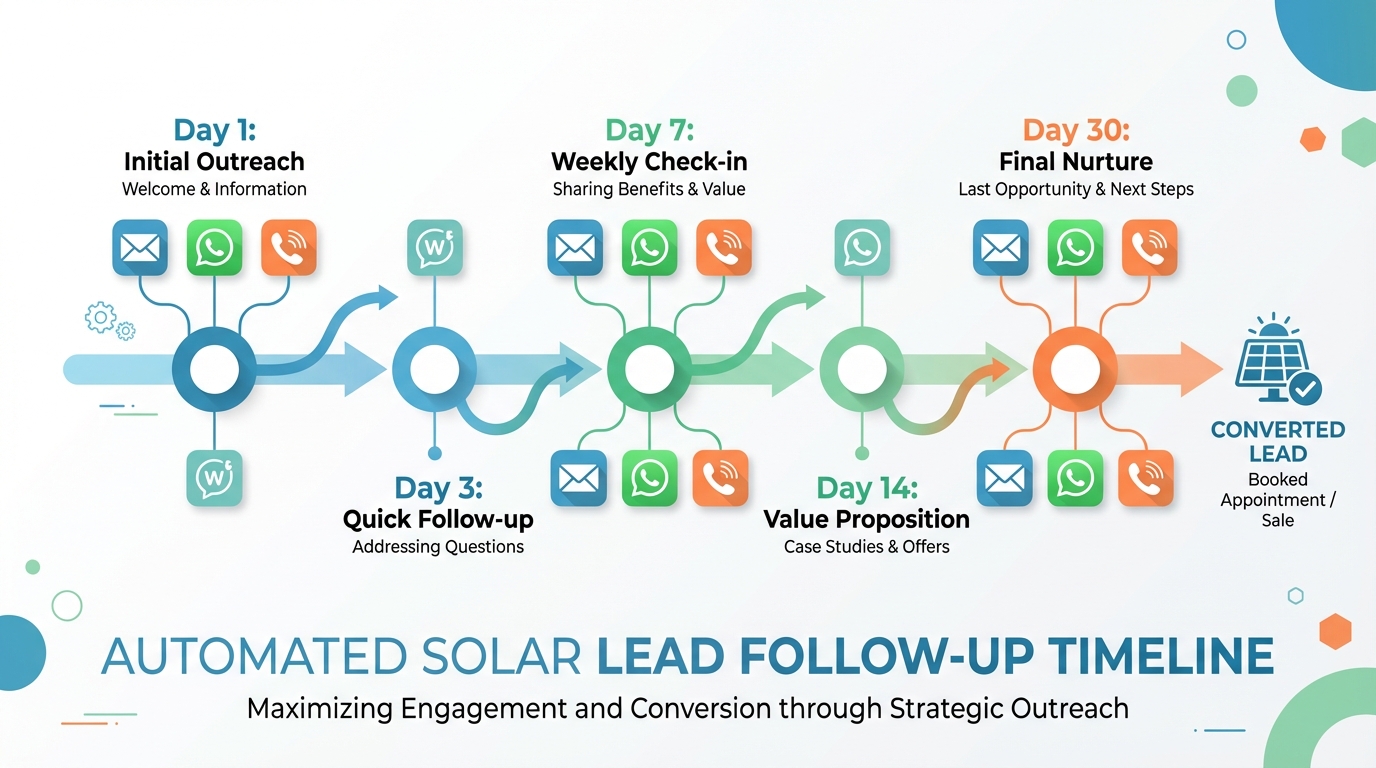
Sunnovative’s nurturing sequence consists of five key touchpoints spread strategically over 30 days, with additional re-engagement campaigns for leads that remain warm but uncommitted.
Day 1 (Immediate): Within 5 minutes of lead capture, the system automatically sends a WhatsApp message thanking the prospect for their inquiry and delivering a professional proposal generated through QuickEst’s 60-second proposal tool. This immediate response capitalizes on the prospect’s peak interest moment.
Day 3: An educational email arrives sharing a customer success story from a similar project (residential prospects receive residential case studies, commercial prospects receive commercial examples). This builds credibility and helps prospects visualize their own success.
Day 7: The sales representative receives an automated reminder to make a personal phone call. The CRM provides talking points based on the prospect’s specific inquiry details. This human touchpoint strengthens the relationship while the lead is still warm.
Day 14: A WhatsApp message delivers valuable content, either a subsidy update, an ROI calculator, or a financing options guide, depending on what the prospect viewed in their initial proposal. This demonstrates ongoing value without being pushy.
Day 30: A final check-in email asks if the prospect has any questions and offers a limited-time site survey at no cost. This creates a soft deadline and provides a low-commitment next step for prospects who are interested but hesitant.
For leads that engage with any of these touchpoints but don’t convert, Sunnovative has additional sequences that continue nurturing at a slower pace, monthly check-ins with seasonal content, subsidy updates, and new financing options. The key is that nothing is manual. The CRM handles all scheduling, sending, and tracking automatically.
Personalization happens at scale through custom fields in QuickEst. Each message pulls the prospect’s name, project type, location, and system size automatically. Conditional logic ensures residential prospects never receive commercial content and vice versa. The system even tracks which proposal sections each prospect viewed, allowing follow-up messages to address specific interests.
Case Study 2: Heaven Solar’s Personalized Communication Strategy
Heaven Solar, a solar installer serving both residential and commercial clients in Karnataka, had a different challenge. They were following up consistently, but their generic messaging wasn’t resonating. A residential homeowner concerned about upfront costs received the same communication as a commercial client focused on tax benefits. Conversion rates stagnated at 12%.
The breakthrough came when Heaven Solar implemented a sophisticated segmentation and personalization strategy using their CRM’s custom fields and tagging system. By treating different prospect types differently, they increased conversion rates to 22% within four months while simultaneously improving customer satisfaction scores.
Their approach to lead nurturing recognizes that not all solar prospects are created equal. A ₹3 lakh residential installation requires different messaging than a ₹50 lakh commercial rooftop project. A price-sensitive prospect needs different content than someone focused on environmental impact.
How They Segment and Personalize
Heaven Solar segments their leads across three primary dimensions: customer type (residential, commercial, industrial), budget tier (economy, standard, premium), and primary motivation (cost savings, environmental impact, energy independence, or tax benefits).
When a lead enters their system, the sales representative spends 30 seconds adding the appropriate tags based on the initial conversation. From that point forward, the CRM automatically delivers segment-specific nurturing content.
Residential prospects in the economy tier receive content focused on financing options, government subsidies, and long-term savings. Their proposals emphasize affordable system sizes and quick payback periods. Follow-up messages share stories of similar homeowners who started small and expanded later.
Commercial prospects in the premium tier receive content about tax depreciation benefits, corporate sustainability goals, and premium equipment warranties. Their proposals showcase larger systems with advanced monitoring capabilities. Follow-up messages include ROI analyses and references from similar businesses.
The CRM’s lead scoring system assigns points based on engagement behaviors. A prospect who opens three emails and views their proposal twice receives a higher score than someone who hasn’t engaged. High-scoring leads trigger immediate alerts to sales representatives for personal outreach, while lower-scoring leads continue automated nurturing.
Heaven Solar also uses QuickEst’s proposal automation to generate segment-specific proposals in under 60 seconds. When a residential prospect requests a quote, the system pulls from residential-focused templates with appropriate imagery, financing options, and messaging. Commercial prospects receive proposals with different layouts, technical specifications, and business-focused language.
This level of personalization was impossible with their previous manual process. Now, lead nurturing feels personal and relevant to each prospect, even though it’s largely automated. The result is higher engagement rates, more meaningful conversations, and significantly better conversion rates.
Case Study 3: JJ Solar’s Timing-Based Nurturing Approach
JJ Solar, operating across multiple states in North India, discovered that when they contacted prospects mattered just as much as what they said. Despite having good follow-up processes, their response rates were mediocre, only 25% of prospects answered calls or replied to messages.
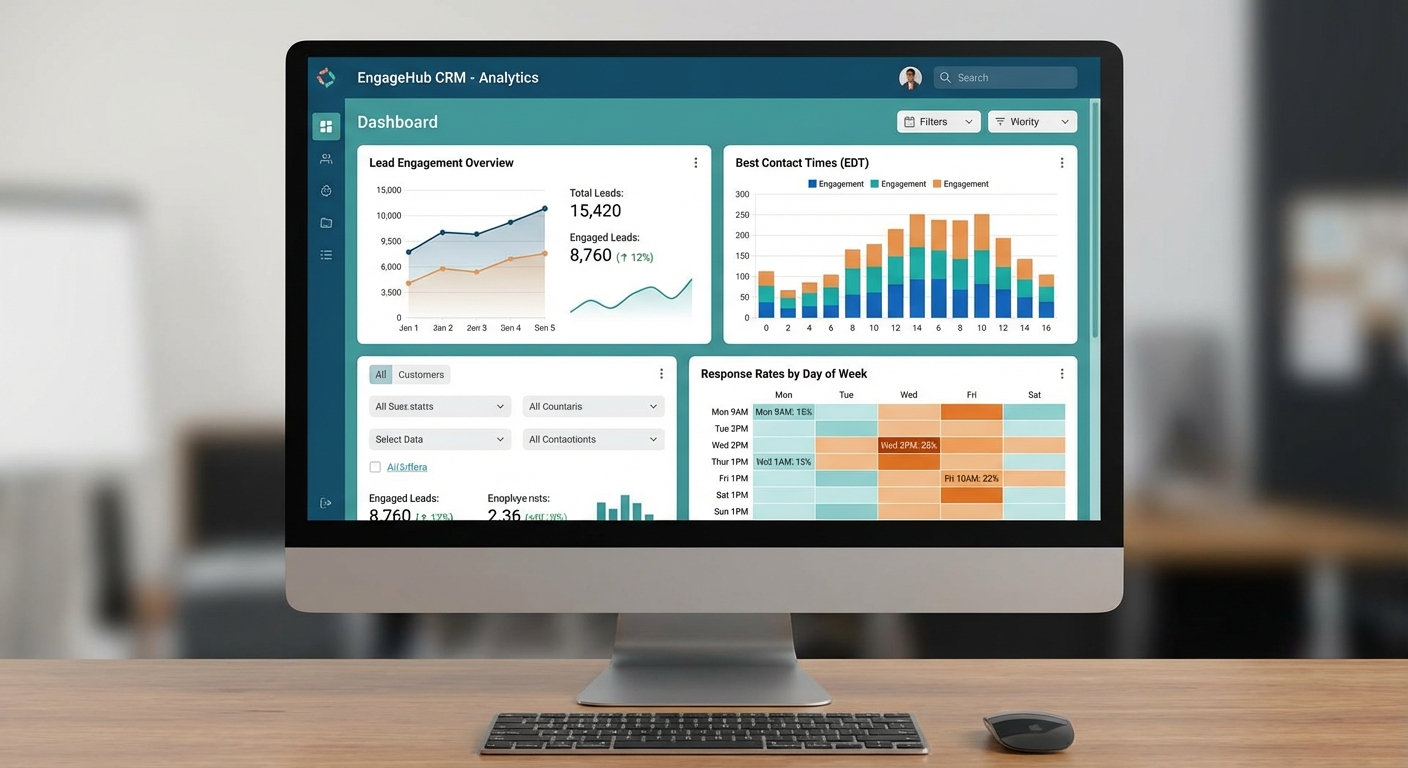
In mid-2025, JJ Solar conducted an analysis of their CRM data to identify patterns in prospect responsiveness. What they discovered transformed their entire lead nurturing approach and increased their response rates to 47% within three months.
The data revealed several critical timing insights. First, initial contact within 5 minutes of lead capture generated 8x higher response rates than contact after 30 minutes. Second, Tuesday through Thursday between 10 AM and 12 PM showed the highest answer rates for phone calls. Third, WhatsApp messages sent between 7 PM and 9 PM received 3x more responses than messages sent during business hours. Fourth, leads that went cold could be re-engaged successfully during specific seasonal windows.
Their Timing Framework
JJ Solar built their timing framework directly into their CRM automation. When a new lead arrives, the system immediately sends a WhatsApp message with a proposal, capitalizing on that critical 5-minute window when interest is highest. The sales representative receives an instant mobile notification to call the prospect right away.
For scheduled follow-ups, the CRM automatically queues phone call reminders for Tuesday through Thursday mornings when answer rates are highest. Email follow-ups are scheduled for early mornings (6-7 AM) when prospects check their inbox, while WhatsApp messages are queued for evening hours when people are relaxed and more likely to engage.
Seasonal timing plays a crucial role in JJ Solar’s strategy. In India, solar inquiries spike during summer months (March-May) when electricity bills are highest and again during festival seasons when people make major purchases. JJ Solar’s CRM automatically adjusts nurturing frequency during these high-intent periods, increasing touchpoints from monthly to weekly.
Conversely, during monsoon season when solar installation is less practical, the nurturing sequence shifts to educational content about planning ahead, subsidy updates, and pre-monsoon installation benefits. This keeps JJ Solar top-of-mind without pressuring prospects to buy during an inconvenient time.
For cold leads, prospects who showed initial interest but haven’t engaged in 60+ days, JJ Solar implements strategic re-engagement campaigns. These are triggered by external events: new government subsidy announcements, electricity tariff increases, or seasonal transitions. A prospect who went cold in July might receive a re-engagement message in October highlighting pre-winter installation benefits.
The CRM’s behavioral tracking capabilities enable real-time timing adjustments. When a prospect opens an email or views a proposal, the system immediately alerts the sales representative to call within the next hour while interest is elevated. This “strike while the iron is hot” approach has dramatically improved conversion rates for engaged prospects.
Common Lead Nurturing Tactics Across All Three Cases
While each company implemented lead nurturing differently based on their specific challenges, several common tactics emerged across all three case studies.
All three companies adopted a multi-channel approach, recognizing that different prospects prefer different communication methods. Their nurturing sequences combine email for detailed information, WhatsApp for quick updates and proposals, and phone calls for relationship building. The CRM tracks engagement across all channels, providing a complete view of each prospect’s journey.
Each company embraced a value-first content strategy. Rather than repeatedly asking “Are you ready to buy?”, their nurturing messages deliver genuine value: educational blog posts about solar technology, ROI calculators, subsidy update alerts, customer success stories, and answers to common questions. This positions them as helpful advisors rather than pushy salespeople.
Proposal automation proved critical for all three companies. Using QuickEst’s 60-second proposal generation, they can respond to inquiries immediately with professional, customized proposals. This speed creates a powerful first impression and prevents leads from going cold while waiting for quotes. The system tracks when prospects view proposals and which sections they spend time on, providing valuable intelligence for follow-up conversations.
All three companies rely heavily on real-time alerts for hot leads. When a prospect exhibits high-intent behaviors, viewing a proposal multiple times, clicking on financing information, or opening several emails in quick succession, the CRM immediately notifies the assigned sales representative. This enables timely personal outreach at the exact moment when prospects are most engaged.
Team collaboration features ensure smooth handoffs and prevent duplicate outreach. When a lead needs to be transferred from a junior sales representative to a senior closer, or from sales to the technical team for a site survey, the CRM maintains complete conversation history and ensures everyone knows who’s responsible for the next touchpoint.
The Technology Stack: CRM Features That Enable Lead Nurturing
The success stories above share a common foundation: robust CRM technology specifically designed for solar businesses. Generic CRMs can handle basic contact management, but effective lead nurturing requires specialized features.
Automated follow-up systems form the backbone of consistent nurturing. The CRM must be able to trigger emails, WhatsApp messages, and task reminders based on time delays, prospect behaviors, or external events. QuickEst’s automation engine allows solar companies to build complex sequences with conditional logic, if a prospect opens an email, send this; if they don’t, send that instead.
Lead scoring and prioritization help sales teams focus their limited time on the highest-potential opportunities. The system assigns points based on engagement (email opens, proposal views, website visits) and demographic fit (budget tier, project size, location). High-scoring leads surface to the top of the pipeline, ensuring they receive immediate attention.
Multi-channel integration is essential for modern lead nurturing. QuickEst integrates email, WhatsApp, and phone tracking in a single platform. Sales representatives don’t need to switch between multiple tools, all communication happens from one interface, and all interactions are automatically logged.
Proposal generation and tracking capabilities specifically designed for solar businesses set specialized CRMs apart from generic options. QuickEst’s proposal tool includes solar-specific templates, system sizing calculators, and subsidy information. The tracking feature shows exactly when prospects view proposals and which sections interest them most, providing valuable intelligence for follow-up conversations.
An analytics dashboard measures nurturing effectiveness across the entire sales team. Managers can see which sequences generate the highest response rates, which touchpoints lead to conversions, and where prospects typically drop off. This data-driven approach enables continuous optimization of lead nurturing strategies.
For companies serious about scaling their solar business, CRM integration capabilities become increasingly important. The ability to connect with Facebook Ads for automatic lead capture, Pabbly Connect for workflow automation, and other business tools creates a seamless technology ecosystem that maximizes efficiency.
Measuring Lead Nurturing Success: Key Metrics
Implementing lead nurturing is only valuable if you can measure its impact. The three companies in our case studies track several key performance indicators to quantify their success and identify optimization opportunities.
Response rate to nurturing touchpoints measures how many prospects engage with your emails, WhatsApp messages, and calls. A healthy response rate for email is 20-30%, while WhatsApp typically achieves 40-60%. Low response rates indicate your messaging isn’t resonating or your timing is off.
Lead-to-opportunity conversion rate tracks what percentage of raw leads become qualified opportunities (prospects who have engaged meaningfully and shown genuine purchase intent). Before implementing systematic nurturing, this rate typically sits at 15-25%. After optimization, top performers achieve 35-45%.
Sales cycle length measures the average time from initial inquiry to closed deal. Effective lead nurturing should shorten this cycle by keeping prospects engaged and moving them through decision stages more quickly. The companies in our case studies reduced their sales cycles by 25-40%.
Cost per acquisition calculates how much you spend on marketing and sales to acquire each customer. When lead nurturing improves conversion rates, your cost per acquisition drops significantly because you’re converting more of the leads you’ve already paid to generate.
Customer lifetime value from nurtured versus non-nurtured leads reveals an often-overlooked benefit. Customers who go through a thorough nurturing process tend to be more satisfied, refer more business, and have higher retention rates than those who were rushed through the sales process.
QuickEst’s analytics dashboard tracks all these metrics automatically, providing real-time visibility into nurturing performance. Sales managers can identify which representatives are following the nurturing process effectively and which need coaching. They can also see which sequences perform best and replicate that success across the team.
Implementing Lead Nurturing in Your Solar Business
Ready to implement lead nurturing that converts? Here’s a practical roadmap based on the successful approaches from our case studies.

Step 1: Audit your current follow-up process. Track what happens to leads currently. How many touchpoints does the average lead receive? How long between contacts? What percentage of leads receive no follow-up after the initial contact? This baseline data will help you measure improvement and identify the biggest gaps.
Step 2: Map your customer journey and identify touchpoints. Document the typical path from initial inquiry to closed sale. What questions do prospects ask at each stage? What concerns arise? What information do they need? This journey map reveals where nurturing touchpoints will be most valuable.
Step 3: Create segment-specific nurturing sequences. Don’t try to build one sequence for all prospects. Start with 2-3 segments (perhaps residential versus commercial, or budget tiers) and create tailored sequences for each. Define the timing, channel, and message for each touchpoint. Aim for 5-7 touchpoints over 30-45 days initially.
Step 4: Set up CRM automation and templates. This is where follow-up automation technology becomes essential. Configure your CRM to execute the sequences automatically. Create email templates, WhatsApp message templates, and call scripts that sales representatives can personalize quickly. Set up lead scoring rules and notification triggers for high-intent behaviors.
Step 5: Test, measure, and optimize. Launch your nurturing sequences and monitor performance closely for the first 60 days. Track response rates, conversion rates, and feedback from both prospects and sales representatives. Identify what’s working and what isn’t. Make incremental improvements based on data, not assumptions.
Common pitfalls to avoid include over-automation (nurturing should feel personal, not robotic), inconsistent messaging across channels, neglecting to update sequences based on performance data, and failing to train sales representatives on how to handle leads that respond to automated touchpoints.
Timeline expectations matter. You’ll see improved response rates within the first 2-3 weeks as consistency improves. Conversion rate improvements typically appear within 60-90 days as leads move through complete nurturing sequences. Sales cycle reduction becomes measurable after 4-6 months when you have sufficient data to compare before and after.
When evaluating CRM platforms for lead nurturing, consider factors beyond just features. Scalability matters, can the system grow with your business? Ease of use is critical, will your sales team actually use it? Industry-specific capabilities make a huge difference, does it understand solar sales? And of course, pricing must align with your budget and expected ROI.
Start Converting More Solar Leads Today
The three case studies we’ve explored, Sunnovative’s automated sequences, Heaven Solar’s personalized segmentation, and JJ Solar’s timing-based approach, demonstrate that systematic lead nurturing isn’t optional for solar companies that want to compete effectively in 2026. It’s a fundamental requirement for converting prospects in an industry with long sales cycles and significant purchase consideration.
The common thread across all three success stories is clear: CRM automation enables consistency and personalization at scale that’s impossible with manual processes. When every lead receives timely, relevant, valuable communication throughout their decision journey, conversion rates improve dramatically. Sales cycles shorten. Revenue per sales representative increases. And your solar business gains a sustainable competitive advantage.
The technology to implement world-class lead nurturing is more accessible than ever. QuickEst provides solar-specific CRM capabilities including automated follow-up sequences, 60-second proposal generation, multi-channel communication, lead scoring, and comprehensive analytics, all designed specifically for solar EPCs, installers, and sales teams.
Whether you’re a small solar installer handling 20 leads per month or a large EPC managing hundreds of opportunities, the principles remain the same. Consistent, personalized, value-driven communication converts more prospects into customers. The question isn’t whether to implement lead nurturing, but how quickly you can get started.
Take the first step toward transforming your solar sales performance. QuickEst offers a free plan that lets you experience automated lead nurturing capabilities without any financial commitment. For growing teams ready to scale, the Pro Plan at ₹6,999 per user per year provides comprehensive features including unlimited automated sequences, advanced analytics, and priority support. Start converting more of the leads you’ve worked hard to generate, your future revenue depends on the lead nurturing system you implement today.
Ready to see how automated lead nurturing can transform your solar business? Contact us to schedule a personalized demo and discover how QuickEst can help you achieve results similar to the companies featured in these case studies.
This blog post was written using thestacc.com