
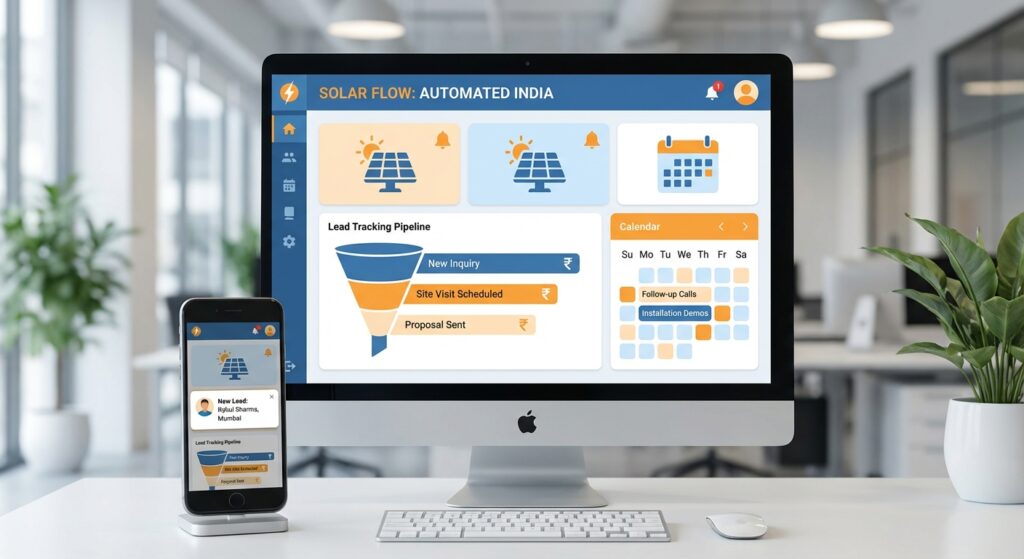
In India’s rapidly growing solar market, every lead represents a significant opportunity. Yet solar companies across the country face a persistent challenge: missed follow-ups that cost them valuable sales. Research shows that 80% of sales require five follow-up calls after the initial meeting, but 44% of sales representatives give up after just one follow-up. For solar businesses in India dealing with high-value installations and lengthy decision cycles, this gap translates directly into lost revenue.
Follow-up automation India solutions are transforming how solar companies nurture leads, close deals, and maximize their sales potential. This comprehensive service guide explores everything you need to know about automated follow-up systems designed specifically for India’s solar industry, from core components and implementation strategies to best practices that drive measurable results.
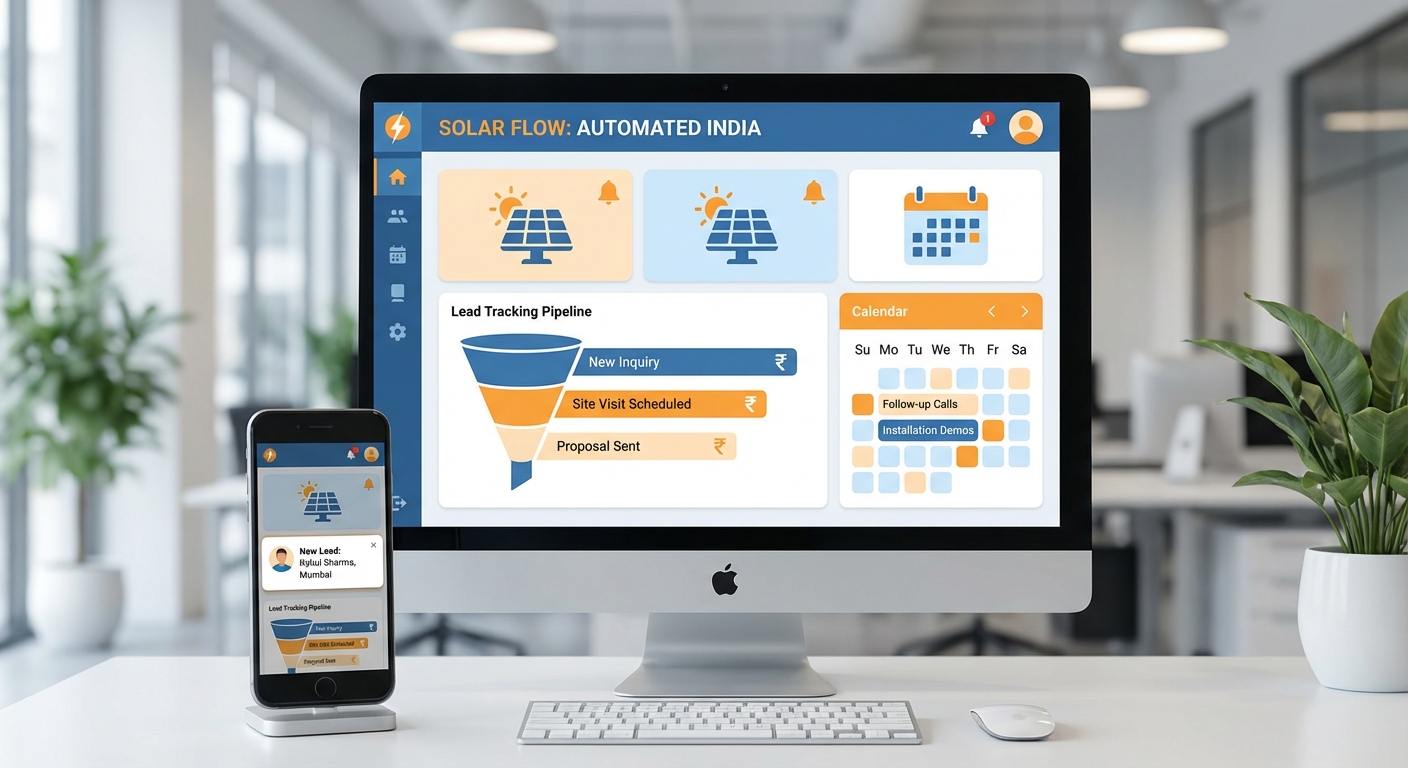
What Is Follow-Up Automation and Why Solar Companies in India Need It
Follow-up automation is a systematic approach to maintaining consistent communication with potential customers through scheduled, triggered messages delivered automatically via email, WhatsApp, SMS, or other channels. For solar businesses, this means every lead receives timely reminders, proposal follow-ups, and nurturing messages without requiring manual intervention from your sales team.
The solar industry in India faces unique challenges that make follow-up automation India systems particularly valuable. Solar installations represent significant investments for residential and commercial customers, with decision cycles often spanning weeks or months. During this period, potential customers research options, compare quotes, seek financing, and consult with family or business partners. Without systematic follow-up, your solar company risks losing these opportunities to competitors who stay top-of-mind.
Consider the typical scenario: Your sales representative sends a solar proposal to a promising lead. The prospect expresses interest but needs time to review the details. Days pass, your rep gets busy with new leads, and the follow-up falls through the cracks. By the time someone remembers to check in, the customer has already signed with another solar company that maintained consistent communication.
Automated follow-up systems eliminate this problem entirely. The moment your team sends a proposal through platforms like QuickEst, the system automatically schedules follow-up reminders at optimal intervals. Whether it’s a gentle check-in three days after proposal delivery, a reminder about financing options a week later, or an escalation to a senior team member after two weeks of no response, every step happens automatically and consistently.
The business impact is substantial. Solar companies implementing follow-up automation India solutions typically see conversion rate improvements of 20-30%, reduced sales cycle lengths, and significantly higher team productivity. Sales representatives can focus their energy on high-value activities like consultations and site visits, while the automation system handles the repetitive but essential task of staying connected with every lead in the pipeline.
Core Components of Follow-Up Automation India Systems
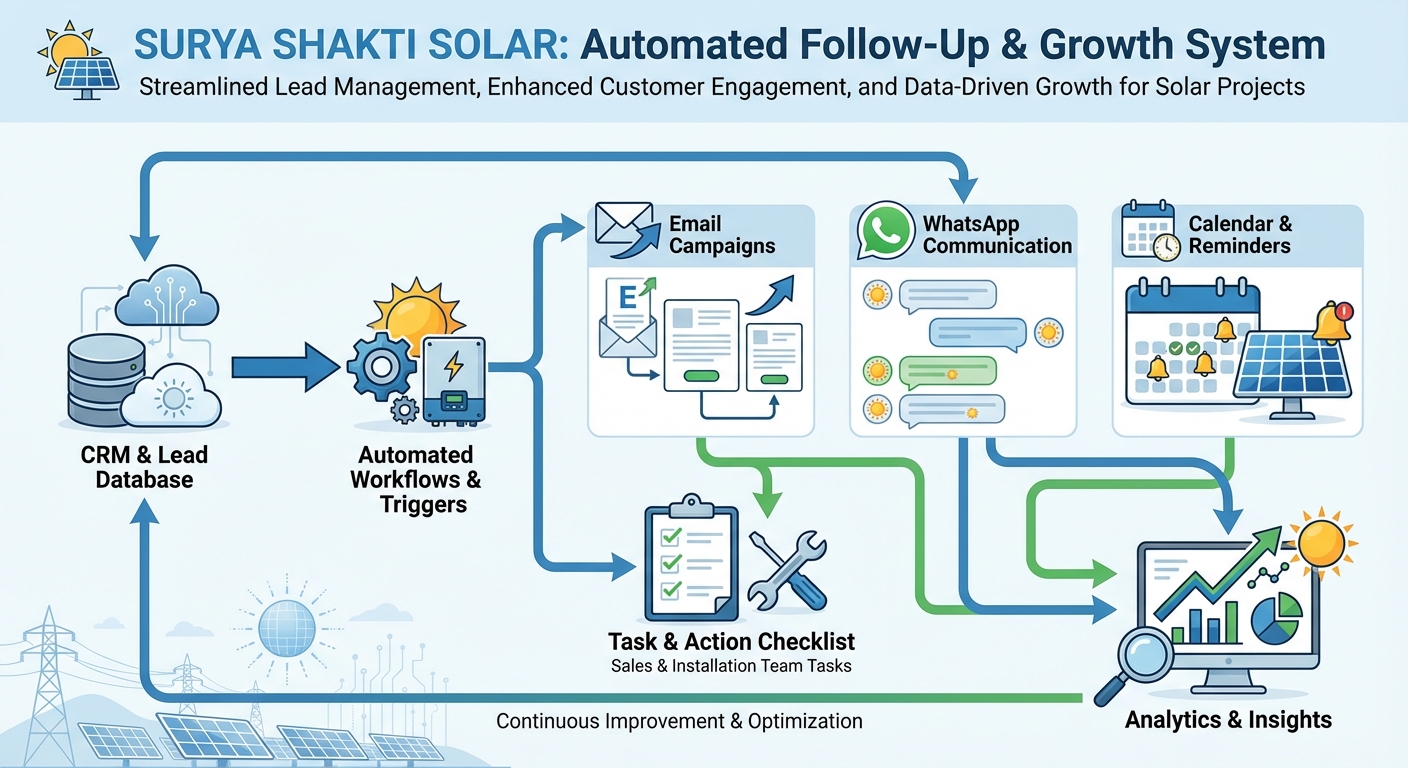
Understanding what makes up a comprehensive follow-up automation India platform helps solar companies evaluate solutions and implement them effectively. Modern systems designed for the Indian solar market integrate several key components that work together seamlessly.
Automated Communication Sequences
At the heart of any follow-up automation system are pre-configured communication sequences that trigger based on specific customer actions or time intervals. For solar businesses, this might include a welcome sequence when a new lead enters your system, a proposal follow-up sequence after sending a quote, or a re-engagement sequence for leads that have gone cold.
QuickEst’s automated follow-up system allows solar companies to create customized sequences that reflect their unique sales process. You can set up messages to go out via email or WhatsApp at precisely the right moments, ensuring no lead ever feels forgotten while avoiding the appearance of being too pushy.
Multi-Channel Delivery Systems
Indian customers increasingly prefer WhatsApp for business communication, making multi-channel capability essential for follow-up automation India solutions. Effective systems integrate email, WhatsApp, SMS, and even task notifications for phone follow-ups, allowing your team to reach customers through their preferred channels.
The ability to send professional solar proposals within 60 seconds via WhatsApp, as QuickEst enables, combined with automated follow-up messages through the same channel, creates a seamless customer experience that matches how Indians actually communicate in 2026.
Customizable Templates and Personalization
While automation handles the timing and delivery, the content must still feel personal and relevant. Quality follow-up automation systems provide template libraries specifically designed for solar businesses, covering common scenarios like proposal reminders, financing information, installation scheduling, and customer testimonials.
Advanced personalization features allow these templates to automatically insert customer names, specific proposal details, project timelines, and other relevant information, ensuring each automated message feels tailored to the individual recipient rather than generic and robotic.
Lead Scoring and Prioritization
Not all leads deserve identical follow-up treatment. Sophisticated follow-up automation India platforms incorporate lead scoring mechanisms that track engagement signals like email opens, proposal views, website visits, and response rates. This data helps the system adjust follow-up frequency and intensity, while also alerting sales representatives when high-value leads show strong buying signals.
For solar companies managing dozens or hundreds of leads simultaneously, this prioritization ensures your team focuses their personal attention on the opportunities most likely to convert, while automation maintains consistent communication with everyone else.
Team Collaboration and Task Management
Follow-up automation doesn’t replace human interaction; it enhances it. Effective systems include task assignment features that notify team members when automated sequences require personal intervention. For example, after three automated follow-ups without response, the system might create a task for a senior sales representative to make a personal phone call.
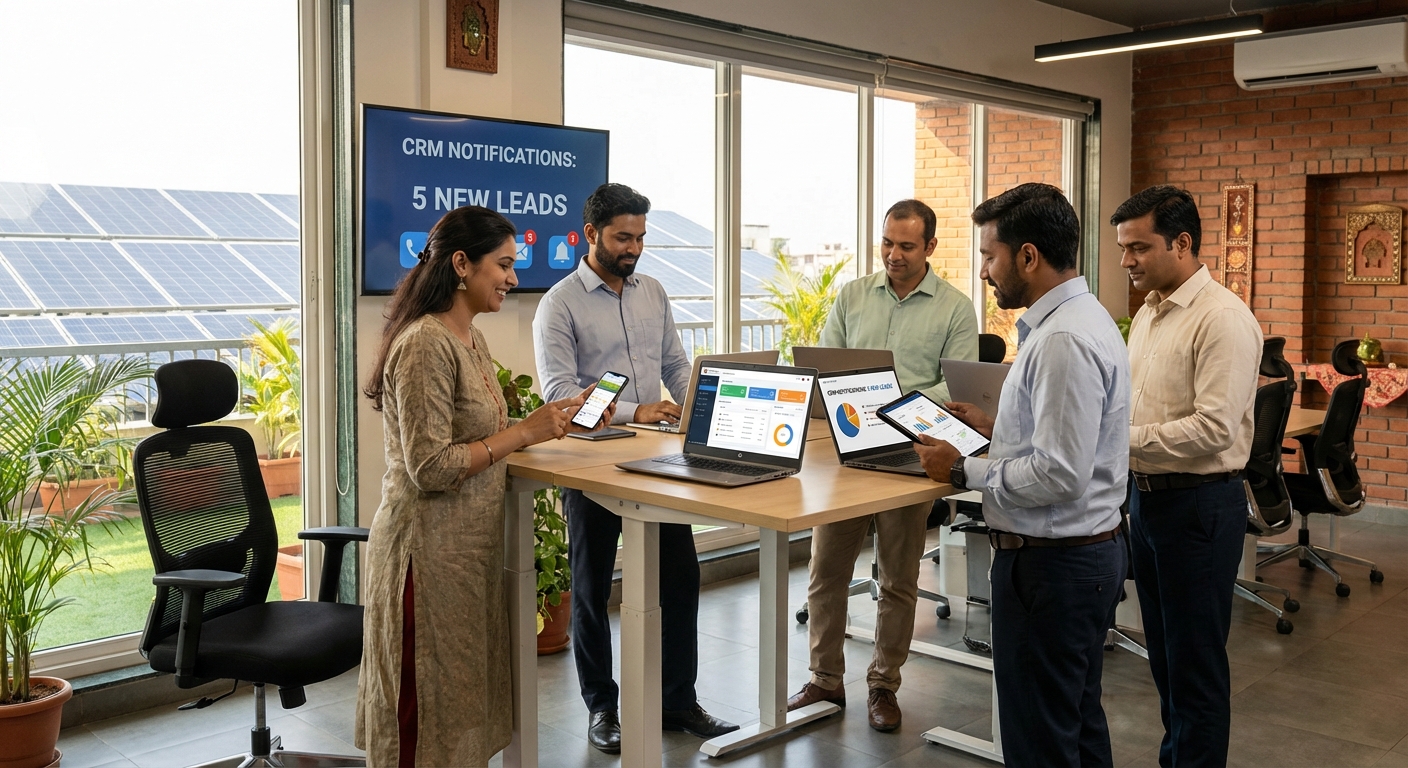
QuickEst’s team collaboration tools ensure everyone knows who’s responsible for which leads, what actions have been taken, and what needs to happen next, preventing duplicate outreach and ensuring seamless handoffs between team members.
Analytics and Performance Tracking
Comprehensive dashboards provide real-time visibility into follow-up performance. Solar companies can track metrics like follow-up completion rates, response rates by channel, conversion rates at each stage, and overall pipeline health. This data-driven approach allows continuous optimization of follow-up sequences based on what actually works with your specific customer base.
How Follow-Up Automation Works: The Complete Process
Understanding the end-to-end workflow of follow-up automation India systems helps solar companies implement them effectively and set realistic expectations. Here’s how the process typically unfolds from initial lead capture through conversion.
Step 1: Lead Capture and Initial Contact Logging
The automation journey begins when a new lead enters your system. This might happen through your website contact form, a Facebook Ads integration, a manual entry by a sales representative after a phone call, or a bulk import from an Excel spreadsheet. Modern solar CRM India platforms like QuickEst capture essential information including contact details, project type, location, and initial interest level.
The moment this lead is logged, the follow-up automation system activates. Based on the lead source and type, the appropriate follow-up sequence is automatically assigned. A hot lead from a website inquiry might trigger an immediate response sequence, while a cold lead from a trade show might enter a longer-term nurturing sequence.
Step 2: Trigger Setup Based on Customer Actions or Time Intervals
Follow-up automation India systems use two primary trigger types: time-based triggers and action-based triggers. Time-based triggers send messages at predetermined intervals, such as three days after proposal delivery or one week after the last contact. Action-based triggers respond to customer behavior, like opening an email, viewing a proposal, or clicking a link.
For solar businesses, a typical sequence might look like this: Send proposal immediately, follow up with a WhatsApp message 48 hours later asking if they have questions, send an email with customer testimonials after five days, and create a task for a phone call after ten days if there’s no response. Each step is configured once and then executes automatically for every lead.
Step 3: Automated Message Delivery via Email and WhatsApp
When a trigger condition is met, the system automatically sends the pre-configured message through the designated channel. For email follow-ups, the message is sent from your company email address with proper formatting and any attachments. For WhatsApp follow-ups, messages are delivered through integrated WhatsApp Business APIs, maintaining the conversational tone that Indian customers prefer.
The system tracks delivery status, ensuring messages actually reach recipients and logging any delivery failures for manual review. This reliability is crucial for solar companies where a single missed follow-up could mean losing a high-value installation contract.
Step 4: Response Tracking and Engagement Monitoring
As automated messages go out, the system continuously monitors customer engagement. Did they open the email? Did they click on the proposal link? Did they respond with questions? Each interaction is logged in the lead’s profile, building a comprehensive engagement history.
This tracking serves multiple purposes. It helps sales representatives understand where each lead stands in their decision process, it provides data for lead scoring algorithms, and it determines what happens next in the automation sequence. A lead who opens every email but hasn’t responded might receive different follow-up content than a lead who hasn’t engaged at all.
Step 5: Escalation Rules and Team Handoffs
Smart follow-up automation India platforms include escalation logic that recognizes when automated outreach isn’t working and human intervention is needed. After a certain number of automated attempts without response, the system might escalate the lead to a senior sales representative, create a task for a personal phone call, or move the lead into a different nurturing sequence.
Conversely, when a lead shows strong buying signals, such as viewing a proposal multiple times or responding with specific questions, the system can immediately notify the assigned sales representative to take personal action while the lead is hot.
Step 6: Performance Analytics and Optimization
Throughout the entire process, the system collects performance data that solar companies can use to refine their approach. Which follow-up messages generate the highest response rates? What timing intervals work best? Which channels do customers prefer? This continuous feedback loop allows your follow-up automation to become more effective over time.
QuickEst’s real-time sales analytics dashboard provides visibility into these metrics, helping solar businesses make data-driven decisions about their follow-up strategies rather than relying on guesswork.
Implementation Steps for Solar Companies
Successfully deploying follow-up automation India systems requires thoughtful planning and execution. Solar companies that follow a structured implementation approach see faster time-to-value and higher adoption rates among their sales teams.
1. Assess Your Current Follow-Up Process and Gaps
Begin by documenting your existing follow-up process. How many touchpoints do leads typically receive? What’s the average time between follow-ups? What percentage of leads fall through the cracks? Survey your sales team to understand their pain points and identify where manual processes are failing.
This assessment creates a baseline for measuring improvement and helps you identify which aspects of follow-up automation will deliver the most value for your specific situation. A solar company struggling with inconsistent follow-up timing might prioritize automated scheduling, while one with good consistency but poor conversion might focus on message optimization.
2. Choose the Right Automation Platform for Solar Businesses
Not all CRM and automation platforms are created equal, especially for India’s solar market. Look for solutions specifically designed for solar businesses with features like solar proposal generation, WhatsApp integration, mobile accessibility for field teams, and local support. Generic CRM platforms like Salesforce or Zoho CRM require extensive customization to match solar-specific workflows, while purpose-built solutions like QuickEst work out of the box.
Consider factors like CRM pricing structures, ease of use, integration capabilities with your existing tools, and the quality of customer support. For detailed guidance on evaluating options, review our complete buyer’s checklist for solar CRM features.
3. Set Up Follow-Up Sequences and Timing Intervals
With your platform selected, design your follow-up sequences based on your sales process and customer journey. Start with a few core sequences such as new lead welcome, post-proposal follow-up, and re-engagement for cold leads. For each sequence, determine the optimal number of touchpoints, timing between messages, and channels to use.
Research suggests that the first follow-up should occur within 24-48 hours of initial contact, with subsequent follow-ups spaced 3-5 days apart for active leads. However, test different intervals with your specific customer base to find what works best. The beauty of automation is that you can easily adjust timing based on performance data.
4. Create Effective Message Templates for Solar Leads
Develop a library of message templates that address common scenarios in your solar sales process. Each template should have a clear purpose, whether it’s answering frequently asked questions, sharing customer success stories, explaining financing options, or simply checking in to see if the prospect needs anything.
Write templates in a conversational, helpful tone that reflects your brand voice. Avoid overly salesy language that might turn off prospects. Include personalization fields so each message automatically inserts the recipient’s name, project details, and other relevant information. Test your templates with a small group before rolling them out broadly.
5. Train Your Sales Team on the Automation System
Technology only delivers value when people use it effectively. Invest time in training your sales team on how the follow-up automation system works, what it does automatically, and when they need to take manual action. Address concerns about automation replacing personal relationships by emphasizing how it frees them up for higher-value activities.
Create simple documentation and quick reference guides that team members can consult when questions arise. Designate a system champion within your team who becomes the go-to expert and can help colleagues troubleshoot issues. For comprehensive implementation guidance, see our step-by-step CRM implementation guide.
6. Test and Refine Your Automated Workflows
Before launching follow-up automation to your entire lead database, run pilot tests with a subset of leads. Monitor the results closely: Are messages being delivered successfully? Are customers responding positively? Are there any technical glitches or content issues?
Use this testing phase to refine your sequences, adjust timing, and improve message content. Gather feedback from both customers and sales representatives. Once you’re confident the system is working smoothly, gradually expand to your full lead base while continuing to monitor performance and make incremental improvements.
Best Practices for Follow-Up Automation in India’s Solar Market
Implementing follow-up automation India systems effectively requires understanding the unique characteristics of the Indian solar market and customer preferences. These best practices help solar companies maximize the impact of their automation efforts.
Optimize Follow-Up Timing for Indian Solar Customers
Timing matters significantly in follow-up effectiveness. Research on Indian business communication patterns suggests that mid-morning (10 AM – 12 PM) and early evening (5 PM – 7 PM) generate the highest engagement rates for business-to-consumer solar sales. For commercial solar projects, mid-week days (Tuesday through Thursday) typically outperform Mondays and Fridays.
Configure your follow-up automation India system to send messages during these optimal windows. Most quality platforms allow you to set delivery time preferences so automated messages don’t go out at inconvenient hours like early morning or late night, which could annoy prospects rather than engage them.
Balance Automation with Personalization
The biggest risk with follow-up automation is creating an impersonal, robotic experience that turns off potential customers. Combat this by building personalization into every automated message. Use the prospect’s name, reference specific details from previous conversations, mention their project type and location, and tailor content to their stage in the buying journey.
Additionally, ensure your automation system includes triggers for human intervention at key moments. When a prospect responds to an automated message with questions, make sure a real person follows up promptly rather than sending another automated response. The goal is to use automation to ensure consistency while preserving the personal touch that builds trust.
Embrace Multi-Channel Communication
Indian customers use multiple communication channels, with WhatsApp being particularly dominant for business interactions. Effective follow-up automation India strategies incorporate email for formal communications like proposals and contracts, WhatsApp for quick check-ins and reminders, and phone calls for high-value conversations.
Don’t rely exclusively on a single channel. If a prospect doesn’t respond to email follow-ups, try reaching out via WhatsApp. If automated messages across both channels aren’t working, create a task for a personal phone call. QuickEst’s multi-channel capabilities ensure you can reach customers wherever they’re most responsive.
Segment Leads for Targeted Follow-Up Sequences
Not all solar leads are the same, and your follow-up approach should reflect these differences. Create distinct automation sequences for residential versus commercial projects, for different geographic regions with varying solar incentives, for leads at different budget levels, and for leads from different sources like website inquiries versus trade show contacts.
Segmentation allows you to tailor message content, adjust follow-up frequency, and personalize offers based on what’s most relevant to each group. A residential customer interested in rooftop solar needs different information than a commercial client evaluating a large-scale installation, and your automated follow-ups should reflect these distinct needs.
Comply with Indian Data Protection and Communication Regulations
As you implement follow-up automation India systems, ensure compliance with relevant regulations including the Information Technology Act and the Telecom Commercial Communications Customer Preference Regulations. This means obtaining proper consent before adding contacts to automated sequences, providing clear opt-out mechanisms in every message, and respecting customer preferences about communication frequency and channels.
Reputable platforms like QuickEst include built-in compliance features such as unsubscribe links, consent tracking, and do-not-contact list management. Make sure your team understands these requirements and that your automation workflows respect customer communication preferences.
Continuously Test and Optimize Message Content
Follow-up automation provides an excellent opportunity for systematic A/B testing. Try different subject lines, message lengths, calls-to-action, and content approaches to see what resonates best with your audience. Test one variable at a time so you can clearly identify what drives improvement.
For example, you might test whether a follow-up message focused on cost savings performs better than one emphasizing environmental benefits. Or whether a short, casual WhatsApp message generates more responses than a longer, more detailed email. Use the performance data from your automation system to continuously refine your approach based on real results rather than assumptions.
Key Features to Look for in Follow-Up Automation India Solutions
When evaluating follow-up automation platforms for your solar business, certain features are essential for success in the Indian market. Prioritize solutions that offer these capabilities.
WhatsApp Business Integration
Given WhatsApp’s dominance in Indian business communication, seamless WhatsApp integration is non-negotiable. Look for platforms that allow you to send automated WhatsApp messages, track delivery and read receipts, and manage conversations within the same system where you handle email follow-ups and CRM activities. QuickEst’s WhatsApp integration enables solar companies to send proposals and follow-ups through customers’ preferred channel, significantly improving response rates.
Mobile Accessibility for Field Sales Teams
Solar sales representatives spend significant time in the field conducting site visits and meeting customers. Your follow-up automation system must be fully accessible via mobile apps for both iOS and Android, allowing team members to view lead status, respond to customer inquiries, and update information from anywhere. Mobile accessibility ensures your automation system supports rather than constrains your team’s workflow.
Customizable Reminder Schedules and Frequency Controls
Every solar business has unique sales cycles and customer preferences. Your automation platform should allow complete customization of follow-up schedules, including the number of touchpoints, timing between messages, channels used at each stage, and escalation rules. Avoid rigid, one-size-fits-all systems that don’t adapt to your specific needs.
Integration with Solar Proposal Tools
Follow-up automation is most powerful when tightly integrated with your proposal generation process. When a sales representative sends a solar proposal, the follow-up sequence should trigger automatically without requiring manual setup. Look for platforms that combine proposal creation and follow-up automation in a single workflow, like QuickEst’s integrated approach that generates professional proposals in 60 seconds and immediately initiates automated follow-up sequences.
Team Collaboration and Task Management Features
Effective follow-up requires coordination across your sales team. Your automation platform should include features for assigning leads to specific team members, creating tasks when manual intervention is needed, tracking who has contacted each lead, and preventing duplicate outreach. These collaboration tools ensure seamless teamwork even as automation handles routine communications. Learn more about effective team coordination in our guide to sales pipeline management for solar companies.
Comprehensive Reporting and ROI Tracking
To justify your investment in follow-up automation India solutions and continuously improve performance, you need robust analytics. Look for platforms that provide detailed reports on follow-up completion rates, response rates by channel and message type, conversion rates at each stage, time saved through automation, and overall impact on sales velocity and revenue.
QuickEst’s real-time analytics dashboard gives solar companies complete visibility into their follow-up performance, making it easy to identify what’s working and where there’s room for improvement.
Measuring Success: ROI and Performance Metrics
Implementing follow-up automation India systems represents an investment of time and resources. To ensure you’re getting value and to identify optimization opportunities, track these key performance indicators.
Follow-Up Completion Rate
This fundamental metric measures what percentage of leads receive the intended follow-up communications. Before automation, many solar companies find their completion rate is shockingly low, often below 50%. After implementing automation, this should approach 100%, ensuring every lead gets consistent attention regardless of how busy your sales team is.
Response and Engagement Rates
Track what percentage of automated follow-ups generate customer responses or engagement actions like opening emails, viewing proposals, or clicking links. Benchmark these rates over time and across different message types to understand what content resonates with your audience. Typical email open rates for B2B solar sales range from 20-30%, while WhatsApp messages often see significantly higher engagement in the Indian market.
Conversion Rate by Follow-Up Stage
Analyze how many leads convert to customers after each follow-up touchpoint. You might discover that most conversions happen after the third or fourth follow-up, validating the importance of persistent, systematic communication. This data helps you optimize the length and structure of your follow-up sequences.
Sales Cycle Length
Measure the average time from initial contact to closed deal before and after implementing follow-up automation. Many solar companies find that consistent, timely follow-up reduces sales cycle length by 15-25% because leads don’t go cold during gaps in communication and decision-making momentum is maintained.
Time Saved and Productivity Gains
Calculate how many hours per week your sales team saves by automating routine follow-up tasks. If each sales representative was spending 10 hours weekly on manual follow-ups and that’s reduced to 2 hours of reviewing automation performance and handling escalations, that’s 8 hours per person per week freed up for higher-value activities like consultations and site visits.
Revenue Impact
Ultimately, the most important metric is revenue impact. Track the increase in closed deals and total revenue after implementing follow-up automation India systems. Most solar companies see a 20-30% increase in conversion rates, which translates directly to substantial revenue growth. For a solar business closing ₹50 lakhs in monthly sales, a 25% improvement means an additional ₹12.5 lakhs per month, or ₹1.5 crores annually.
Common Challenges and How to Overcome Them
While follow-up automation delivers significant benefits, solar companies often encounter challenges during implementation and ongoing use. Understanding these obstacles and their solutions helps ensure success.
Challenge: Over-Automation Feeling Impersonal
Some solar companies worry that automated follow-ups will feel robotic and damage customer relationships. This concern is valid if automation is implemented poorly, but it’s easily addressed through thoughtful design.
Solution: Build personalization into every automated message using customer names, project details, and contextual information. Write templates in a conversational, helpful tone rather than formal business language. Most importantly, design your automation to recognize when human intervention is needed and seamlessly hand off to a real person at those moments. When done well, customers appreciate the consistent attention rather than feeling like they’re interacting with a robot.
Challenge: Integration with Existing Systems
Solar companies often use multiple tools for different aspects of their business, such as separate systems for design, CRM, accounting, and marketing. Getting these systems to work together can be technically challenging.
Solution: Choose follow-up automation platforms with robust integration capabilities. QuickEst integrates with popular tools like Facebook Ads for lead capture, Pabbly Connect for workflow automation, and phonebook systems for contact management. For more complex integration needs, consult our guide on solar CRM integration in India. Alternatively, consider all-in-one platforms that combine multiple functions in a single system, reducing the need for complex integrations.
Challenge: Team Adoption and Resistance to Change
Sales representatives sometimes resist automation, fearing it will replace their role or complicate their workflow. This resistance can undermine implementation efforts if not addressed proactively.
Solution: Involve your sales team in the planning and design process from the beginning. Explain how automation will make their jobs easier by handling tedious tasks and allowing them to focus on relationship-building and closing deals. Provide thorough training and ongoing support. Celebrate early wins and share success stories showing how automation has helped team members close more deals. When sales representatives see automation as a tool that empowers them rather than replaces them, adoption improves dramatically.
Challenge: Managing Opt-Outs and Communication Preferences
Not every lead wants to receive automated follow-ups, and respecting customer preferences is both legally required and good business practice. Managing opt-outs and communication preferences can become complex as your lead database grows.
Solution: Use a follow-up automation India platform with built-in preference management features. Every automated message should include a clear, easy way for recipients to opt out or adjust their communication preferences. The system should automatically honor these preferences across all channels and sequences. QuickEst’s preference management ensures compliance while maintaining positive customer relationships.
Challenge: Maintaining Message Relevance Over Time
Market conditions, product offerings, and customer needs change over time. Automated messages that were effective six months ago might become outdated or irrelevant.
Solution: Schedule regular reviews of your automated follow-up sequences, at least quarterly. Update message content to reflect current offerings, pricing, incentives, and market conditions. Monitor performance metrics to identify messages that are underperforming and need refreshing. Assign someone on your team responsibility for keeping automation content current and relevant.
Getting Started with Follow-Up Automation for Your Solar Business
If you’re ready to transform your solar company’s follow-up process and stop losing deals to inconsistent communication, here’s how to get started with follow-up automation India solutions.
Immediate Steps to Implement Automation
Begin by documenting your current follow-up process and identifying the biggest gaps. Are leads falling through the cracks? Is follow-up timing inconsistent? Are certain lead sources getting neglected? Understanding your specific pain points helps you prioritize which automation features will deliver the most immediate value.
Next, evaluate platforms designed specifically for solar businesses in India. Look for solutions that combine follow-up automation with other essential features like proposal generation, lead management, and sales analytics. Purpose-built platforms like QuickEst require minimal setup and customization compared to generic CRM systems that need extensive configuration.
QuickEst’s Automated Follow-Up System Overview
QuickEst delivers comprehensive follow-up automation India capabilities designed specifically for solar companies. The platform enables you to create customized follow-up sequences that trigger automatically when you send proposals, capture new leads, or identify specific customer behaviors. Messages are delivered via email and WhatsApp, matching how Indian customers prefer to communicate.
The system includes pre-built templates for common solar sales scenarios, which you can customize to match your brand voice and specific offerings. Real-time tracking shows you exactly which leads have received follow-ups, who’s engaging with your messages, and where manual intervention is needed. Mobile apps for iOS and Android ensure your field sales team stays connected and can respond to customer inquiries from anywhere.
Integration with QuickEst’s proposal generation means the entire workflow is seamless: create a professional solar proposal in 60 seconds, send it via WhatsApp or email, and automatically initiate a follow-up sequence without any additional steps. This integrated approach eliminates the gaps where leads typically fall through the cracks.
Flexible Plans for Every Solar Business
QuickEst offers options for solar companies at every stage. The FREE PLAN – ₹0 provides essential follow-up automation features, allowing you to test the platform and experience the benefits before committing to a paid plan. This is ideal for smaller solar businesses or those new to automation who want to validate the approach with their specific customer base.
For solar companies ready to unlock the full power of follow-up automation India systems, the PRO PLAN – ₹6999 Per User / Year delivers advanced features including unlimited follow-up sequences, comprehensive analytics, team collaboration tools, and priority support. At less than ₹600 per month per user, the ROI is compelling when you consider the revenue impact of even a few additional closed deals.
Implementation Timeline and Support Resources
Most solar companies can implement basic follow-up automation within 1-2 weeks, starting with simple sequences and gradually expanding to more sophisticated workflows. QuickEst provides implementation support, training resources, and ongoing customer success assistance to ensure you get maximum value from the platform.
The key is to start simple, measure results, and continuously refine your approach based on performance data. You don’t need to automate everything on day one. Begin with your highest-priority follow-up scenario, such as post-proposal follow-up, prove the value, and then expand to additional use cases.
Take the Next Step Today
Every day without systematic follow-up automation is a day your solar company is losing opportunities to competitors who maintain consistent communication with their leads. The Indian solar market is growing rapidly, and the companies that leverage technology to maximize their sales efficiency will capture the largest share of this expanding opportunity.
Don’t let another valuable lead slip away due to missed follow-ups. Explore how QuickEst’s follow-up automation India solution can transform your solar business’s sales process, improve conversion rates, and free your team to focus on what they do best: building relationships and closing deals. Contact us to see the platform in action and discover how automated follow-up systems can drive measurable growth for your solar company in 2026 and beyond.
The solar industry in India is at an inflection point, with massive growth ahead for companies that can efficiently convert leads into customers. Follow-up automation India systems provide the systematic, consistent communication that turns interest into action and proposals into signed contracts. By implementing these solutions today, your solar business positions itself to seize every opportunity and maximize its potential in this dynamic market.