Choosing the right CRM software can make or break your solar business’s sales performance. In India’s rapidly growing solar market, where competition intensifies daily and customer expectations continue to rise, solar installation companies need more than just a generic customer relationship management tool—they need a specialized solution that understands the unique challenges of the solar industry.
This comprehensive solar CRM comparison evaluates the top platforms available to Indian solar businesses in 2026, including QuickEst, Salesforce, Zoho CRM, and OpenSolar. We’ll examine each solution’s proposal generation capabilities, pricing structures, solar-specific features, mobile accessibility, and integration options to help you make an informed decision that drives real ROI for your solar installation company.
Why Solar Businesses in India Need Specialized CRM Software
The Indian solar industry faces distinct challenges that generic CRM platforms simply weren’t designed to address. Solar installation companies and EPCs deal with complex sales cycles involving technical specifications, customized proposals, site assessments, and multiple stakeholder approvals. Without the right tools, these complexities translate into lost opportunities and revenue.
Consider the typical pain points that plague solar sales teams across India:
- Proposal generation bottlenecks: Creating customized solar proposals manually can take hours or even days, causing prospects to lose interest or choose faster competitors
- Missed follow-ups: Without automated reminders and systematic follow-up workflows, potential customers slip through the cracks—studies suggest that 80% of sales require five or more follow-ups, yet most sales teams give up after just two attempts
- Pipeline visibility gaps: Sales managers struggle to track team performance, forecast revenue, or identify bottlenecks without real-time analytics
- Disorganized lead management: Leads from multiple sources—website forms, Facebook ads, referrals, trade shows—get scattered across spreadsheets, WhatsApp chats, and email inboxes
- Mobile accessibility limitations: Field sales teams need to create proposals and update lead status on-site, but many CRM platforms lack robust mobile functionality
The cost of these inefficiencies is substantial. A solar company losing just three qualified leads per month due to slow proposal generation or poor follow-up could be sacrificing ₹15-30 lakhs in annual revenue. When you factor in the CRM ROI potential—with studies showing that CRM systems can increase sales productivity by up to 34% and improve forecast accuracy by 42%—the business case for the right solar CRM becomes compelling.
For solar businesses operating in India’s competitive market, specialized CRM software addresses these challenges by providing industry-specific workflows, solar proposal templates, WhatsApp integration for customer communication, and mobile-first design that empowers sales teams to work efficiently from anywhere.
Key Criteria for Solar CRM Selection in 2026
Before diving into our detailed solar CRM comparison, it’s essential to establish the evaluation criteria that matter most for Indian solar installation companies. Not all CRM platforms are created equal, and the right choice depends on your specific business needs, team size, and growth objectives.
Here are the critical factors to consider during your CRM selection process:
Proposal Generation Speed and Automation: In the solar industry, speed wins deals. The ability to generate professional, accurate proposals within minutes—not hours or days—can be the difference between closing a sale and losing to a competitor. Look for platforms that offer pre-built solar proposal templates, automated pricing calculations, and instant delivery via email or WhatsApp.
Solar-Specific Features vs. General CRM Platforms: Generic CRM systems require extensive customization to handle solar-specific workflows like system sizing, panel specifications, subsidy calculations, and ROI projections. Purpose-built solar CRM platforms come with these features out-of-the-box, dramatically reducing implementation time and costs.
Mobile Accessibility: Your sales team doesn’t work from a desk—they’re meeting customers at sites, attending trade shows, and conducting field assessments. A robust mobile app with full CRM functionality (not just a limited mobile view) is non-negotiable for modern solar sales operations.
Integration Capabilities: Your CRM shouldn’t exist in isolation. Seamless integration with lead generation tools (Facebook Ads, Google Ads), communication platforms (WhatsApp, email), accounting software, and other business tools creates a unified workflow that eliminates manual data entry and reduces errors.
Pricing Models and Total Cost of Ownership: Look beyond the advertised monthly fee. Consider implementation costs, training expenses, add-on features, per-user charges, and ongoing support fees. Some platforms that appear affordable initially can become expensive as your team grows or you need additional functionality.
Implementation Time and Learning Curve: Time is money. A CRM that takes six months to implement and requires extensive training may cost you more in lost productivity than you save in licensing fees. Evaluate how quickly your team can get up and running with each platform.
QuickEst: Purpose-Built Solar CRM for Indian Markets
QuickEst (Quickest CRM) has emerged as a specialized solution designed specifically for the Indian solar industry, addressing the unique challenges faced by solar installation companies, EPCs, and sales teams. Unlike general-purpose CRM platforms that require extensive customization, QuickEst comes pre-configured with solar-specific workflows and features.
Core Capabilities:
The platform’s standout feature is its 60-second proposal generation capability. Sales teams can create professional, branded solar proposals in under a minute and deliver them instantly via WhatsApp or email—a critical advantage in India’s mobile-first market where customers expect immediate responses. The proposal templates include all essential elements: system specifications, pricing breakdowns, ROI calculations, and payment terms.
QuickEst’s automated follow-up system ensures no lead falls through the cracks. Sales representatives can set customizable reminders, schedule automated email sequences, and track all customer interactions in one centralized location. This systematic approach to lead management India helps solar companies maintain consistent communication throughout the sales cycle.
The real-time sales analytics dashboard provides instant visibility into pipeline health, conversion rates, team performance, and revenue forecasts. Sales managers can identify bottlenecks, coach team members based on data, and make informed decisions about resource allocation.
Mobile-First Design:
With dedicated iOS and Android apps, QuickEst enables field sales teams to manage their entire workflow from smartphones or tablets. Representatives can capture leads on-site, create proposals during customer meetings, update deal status, and access customer history—all without returning to the office.
Integration Ecosystem:
QuickEst integrates with Facebook Ads for automatic lead capture, Pabbly Connect for workflow automation, and phonebook systems for seamless contact management. The platform also supports bulk lead import from Excel spreadsheets, making migration from existing systems straightforward.
Security and Data Protection:
Understanding the sensitivity of customer data and business information, QuickEst implements TLS 1.2 encryption for data transmission and 256-bit AES encryption for data storage, meeting enterprise-grade security standards.
Pricing Structure:
QuickEst offers transparent pricing with two main options: a FREE PLAN – ₹0 for small teams or businesses just starting with CRM software, and a PRO PLAN – ₹6999 Per User / Year that unlocks advanced features like unlimited proposals, team collaboration tools, and priority support. This straightforward pricing model eliminates hidden costs and makes budgeting predictable.
Best Suited For:
QuickEst is ideal for small to medium-sized solar installation companies, solar EPCs, and dedicated solar sales teams in India who prioritize speed, efficiency, and solar-specific functionality. It’s particularly valuable for businesses that need to generate proposals quickly, manage leads systematically, and empower mobile sales teams—without the complexity and cost of enterprise CRM platforms.
Pros and Cons of QuickEst
Advantages:
- Industry-specific design: Built exclusively for solar businesses with pre-configured workflows, templates, and features that require minimal customization
- Exceptional speed: 60-second proposal generation dramatically accelerates sales cycles and improves response times
- WhatsApp integration: Delivers proposals through India’s most popular communication platform, meeting customers where they already engage
- Affordable pricing: Transparent, predictable costs with options for businesses of all sizes, including a free plan for getting started
- Quick implementation: Minimal setup time means teams can start seeing value within days, not months
- Mobile-optimized: Full-featured mobile apps enable truly mobile sales operations
Limitations:
- Solar industry focus: Not suitable for businesses operating across multiple industries who need a general-purpose CRM
- Newer platform: While feature-rich, QuickEst doesn’t have the decades-long track record of enterprise solutions like Salesforce
- Integration ecosystem: While growing, the integration library is smaller than established platforms with thousands of third-party connections
Salesforce: Enterprise CRM Giant
Salesforce stands as the world’s leading CRM platform, commanding significant market share across industries globally. For solar businesses considering enterprise-grade solutions, Salesforce offers unparalleled customization capabilities and a vast ecosystem of add-ons and integrations.
Core Capabilities:
Salesforce provides a comprehensive suite of tools covering every aspect of customer relationship management: lead tracking, opportunity management, contact management, email integration, reporting, and workflow automation. The platform’s strength lies in its flexibility—virtually any business process can be configured within Salesforce with enough time and expertise.
For sales automation India operations, Salesforce offers advanced features like Einstein AI for predictive lead scoring, automated task creation, and intelligent recommendations. The platform’s reporting capabilities are extensive, allowing businesses to create custom dashboards and analyze data from virtually any angle.
Solar-Specific Considerations:
Salesforce is not purpose-built for the solar industry, which means solar companies must invest significantly in customization. Creating solar proposal functionality typically requires implementing Salesforce CPQ (Configure, Price, Quote)—a separate add-on with its own licensing costs—and then customizing it with solar-specific fields, calculations, and templates.
Implementation and Learning Curve:
Salesforce implementations for solar businesses typically take 3-6 months and often require hiring Salesforce consultants or dedicating internal IT resources. The platform’s complexity means team members need substantial training before they can use it effectively, which can impact adoption rates among sales teams.
Pricing Structure:
Salesforce operates on a per-user, per-month subscription model with multiple tiers. The Essentials plan starts at approximately $25/user/month, but solar businesses typically need the Professional ($75/user/month) or Enterprise ($150/user/month) tiers to access necessary features. Add-ons like CPQ, advanced analytics, and additional storage increase costs further. For a 10-person sales team, annual costs can easily exceed ₹10-15 lakhs.
Best Suited For:
Salesforce makes sense for large solar enterprises with dedicated IT teams, complex organizational structures, and budgets to support extensive customization and ongoing maintenance. Companies already using Salesforce for other business units may find value in extending it to their solar operations.
Pros and Cons of Salesforce
Advantages:
- Highly customizable: Can be configured to match virtually any business process or workflow requirement
- Robust ecosystem: Thousands of third-party integrations and add-ons available through AppExchange
- Advanced features: AI-powered insights, sophisticated automation, and enterprise-grade reporting capabilities
- Scalability: Can support organizations from small teams to global enterprises with thousands of users
- Market leader: Established platform with extensive documentation, training resources, and consultant availability
Limitations:
- High cost: Premium pricing with per-user fees, add-on costs, and implementation expenses that can strain budgets
- Complex setup: Requires significant time, expertise, and resources to implement and customize for solar businesses
- Not solar-specific: Lacks out-of-the-box solar proposal templates, industry workflows, and solar-specific features
- Steep learning curve: Team members need extensive training, which can delay adoption and reduce initial productivity
- Overkill for small teams: Many features go unused by small to medium solar companies, resulting in poor value for money
Zoho CRM: Versatile Platform for Growing Businesses
Zoho CRM positions itself as an affordable, feature-rich alternative to enterprise platforms, offering a middle ground between specialized solutions and complex enterprise systems. Part of the larger Zoho ecosystem of business applications, Zoho CRM has gained significant traction among Indian businesses across industries.
Core Capabilities:
Zoho CRM provides comprehensive functionality including lead management, contact management, deal tracking, email integration, workflow automation, and reporting. The platform offers good customization options through custom fields, modules, and layouts, allowing businesses to tailor it to their specific needs.
The platform’s sales pipeline visualization helps teams track deals through various stages, while automation features can handle routine tasks like lead assignment, follow-up reminders, and email notifications. Zoho’s AI assistant, Zia, provides conversational AI capabilities and predictive analytics.
Solar-Specific Considerations:
Like Salesforce, Zoho CRM is a general-purpose platform that requires customization for solar businesses. While you can create custom fields for solar-specific data (system size, panel types, installation costs), the platform doesn’t include pre-built solar proposal templates or industry-specific workflows. Solar companies typically need to integrate third-party tools or develop custom solutions for proposal generation.
Integration Ecosystem:
A significant advantage of Zoho CRM is its integration with other Zoho applications (Zoho Books for accounting, Zoho Campaigns for email marketing, Zoho Desk for customer support) and numerous third-party platforms. This creates opportunities for building comprehensive business systems, though it requires managing multiple subscriptions.
Pricing Structure:
Zoho CRM offers tiered pricing starting with a free plan for up to 3 users, then Standard (₹800/user/month), Professional (₹1,400/user/month), and Enterprise (₹2,400/user/month) plans. This makes it more accessible than Salesforce, though costs increase as you need advanced features and add-ons.
Best Suited For:
Zoho CRM works well for growing solar businesses that need a general-purpose CRM with good customization options and affordable pricing. It’s particularly suitable for companies operating across multiple business lines (solar plus other services) or those already invested in the Zoho ecosystem.
Pros and Cons of Zoho CRM
Advantages:
- Affordable pricing: More budget-friendly than enterprise platforms with a free tier for small teams
- Good feature set: Comprehensive CRM functionality covering most business needs
- Extensive integrations: Connects with numerous third-party applications and other Zoho products
- Customization options: Flexible platform that can be tailored to specific business requirements
- Indian presence: Strong support and presence in India with local data centers
Limitations:
- Not solar-specific: Requires customization and doesn’t include industry-specific proposal templates or workflows
- Proposal generation gaps: Lacks built-in solar proposal creation; requires third-party tools or custom development
- General-purpose platform: Designed for all industries, not optimized for solar sales processes
- Feature complexity: Some advanced features require higher-tier plans, increasing costs
- Learning curve: While more accessible than Salesforce, still requires training for effective use
OpenSolar: Design-Focused Solar Platform
OpenSolar takes a different approach to the solar CRM market by positioning itself primarily as a solar design and engineering platform with integrated CRM capabilities. This makes it unique among the platforms in this solar CRM comparison, as it prioritizes technical design workflows over pure sales management.
Core Capabilities:
OpenSolar’s strength lies in its sophisticated solar design tools. The platform enables users to create detailed system designs with 3D modeling, shade analysis, energy production calculations, and equipment specifications. These technical capabilities are integrated with proposal generation, allowing companies to create visually impressive proposals that include detailed system designs and performance projections.
The CRM functionality includes lead tracking, opportunity management, and customer communication tools, though these features are secondary to the design capabilities. The platform aims to provide an end-to-end workflow from initial customer inquiry through design, proposal, and project management.
Solar-Specific Features:
OpenSolar is genuinely solar-specific, with deep understanding of solar industry workflows. The platform includes equipment databases, financial modeling tools, and utility rate calculations. For solar companies that emphasize technical design and engineering in their sales process, OpenSolar provides capabilities that general CRM platforms can’t match.
Pricing and Implementation:
OpenSolar’s pricing reflects its comprehensive feature set, with costs typically higher than pure CRM solutions but potentially lower than combining separate design and CRM tools. Implementation requires training on both the design and CRM aspects of the platform.
Best Suited For:
OpenSolar is ideal for solar companies where technical design is a central part of the sales process—particularly those handling complex commercial installations, custom residential systems, or projects requiring detailed engineering analysis. It’s less suitable for companies that prioritize sales speed and simplicity over technical design capabilities.
Pros and Cons of OpenSolar
Advantages:
- Excellent design tools: Industry-leading solar design and engineering capabilities with 3D modeling and shade analysis
- Technical proposals: Creates highly detailed, professional proposals with comprehensive system specifications
- Integrated workflow: Combines design, proposal, and CRM in one platform, reducing tool switching
- Solar-specific: Built exclusively for the solar industry with deep domain expertise
- Visual impact: Proposals with 3D renderings and detailed visualizations impress customers
Limitations:
- CRM features secondary: Sales management and lead tracking capabilities are less developed than pure CRM platforms
- Higher cost: Premium pricing reflects comprehensive feature set, which may exceed budgets for sales-focused teams
- Complexity: Design features add learning curve for sales teams who don’t need advanced engineering tools
- May be overkill: Companies focused primarily on sales efficiency may not need extensive design capabilities
- Implementation time: Learning both design and CRM aspects requires more training than simpler platforms
Feature-by-Feature Solar CRM Comparison
Now that we’ve examined each platform individually, let’s compare them directly across the criteria that matter most for Indian solar businesses. This side-by-side analysis will help you evaluate which solution best matches your specific requirements and priorities.
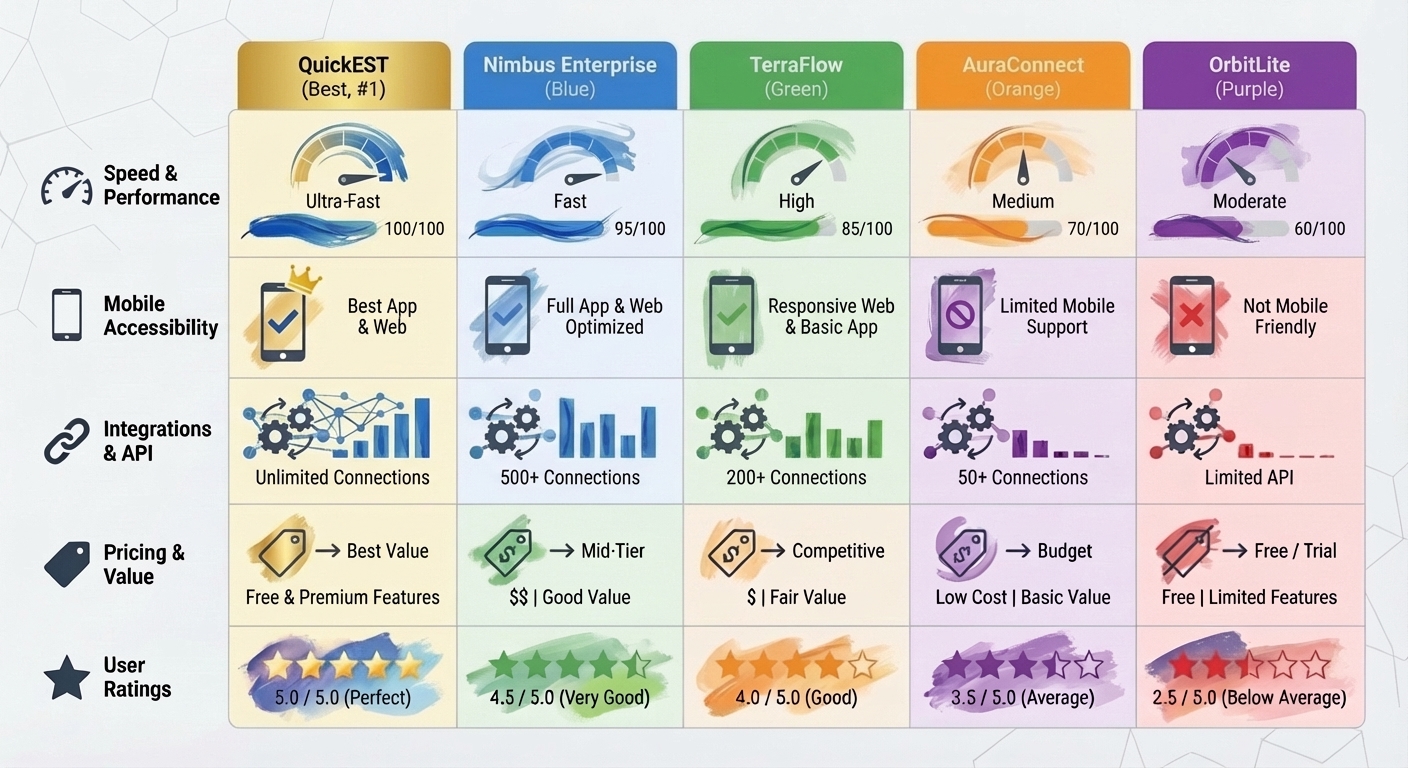
Proposal Generation Speed
In the competitive solar market, proposal automation speed directly impacts win rates. Customers often contact multiple solar companies simultaneously, and the first to deliver a professional proposal has a significant advantage.
QuickEst: Delivers on its promise of 60-second proposal generation. Sales teams can create professional, branded proposals in under a minute using pre-built solar templates. Proposals can be instantly delivered via WhatsApp or email, meeting customers’ expectations for immediate responses. This speed advantage is particularly valuable for high-volume sales operations.
Salesforce: Proposal generation requires implementing Salesforce CPQ (Configure, Price, Quote), a separate add-on that must be customized for solar-specific calculations and templates. Once configured, proposals can be generated relatively quickly, but the initial setup is time-consuming and expensive. Typical proposal creation time: 10-30 minutes depending on customization.
Zoho CRM: Does not include native proposal generation functionality. Solar companies must either integrate third-party proposal tools, use Zoho’s separate Zoho Invoice application, or create proposals manually in external tools. This fragmented approach slows down the sales process. Typical proposal creation time: 30-60 minutes using workarounds.
OpenSolar: Offers strong proposal generation capabilities integrated with design tools. Proposals include detailed system designs, 3D renderings, and technical specifications. However, the design-first approach means proposal creation takes longer than pure CRM solutions. Typical proposal creation time: 15-45 minutes depending on design complexity.
Winner: QuickEst for pure speed; OpenSolar for technical detail and visual impact.
Solar-Specific Features
Generic CRM platforms require extensive customization to handle solar industry workflows, while purpose-built solutions come ready to use.
QuickEst: Purpose-built for solar with industry-specific templates, workflows, and features out-of-the-box. Includes solar proposal templates, WhatsApp integration for customer communication (critical in India), and sales processes designed around solar sales cycles. Minimal customization required.
Salesforce: General-purpose platform requiring significant customization for solar workflows. Solar-specific features must be built through custom fields, objects, and processes. While ultimately flexible, this requires substantial investment in configuration and ongoing maintenance.
Zoho CRM: General-purpose platform with customization capabilities. Solar companies can create custom fields and modules for solar-specific data, but proposal templates, solar calculations, and industry workflows must be built from scratch or integrated from external tools.
OpenSolar: Highly solar-specific with deep industry expertise. Includes equipment databases, solar design tools, shade analysis, financial modeling, and utility rate calculations. However, the focus is more on engineering than sales management.
Winner: QuickEst for sales-focused solar features; OpenSolar for technical and engineering capabilities.
Mobile Accessibility and User Experience
Field sales teams need full CRM functionality on mobile devices, not just limited mobile views of desktop applications.
QuickEst: Dedicated iOS and Android apps with full functionality. Sales teams can capture leads, create proposals, update deal status, and access customer history from smartphones. Mobile-first design ensures excellent user experience on smaller screens.
Salesforce: Offers Salesforce Mobile app with comprehensive functionality, though the interface can be complex on smaller screens. Mobile experience is good but reflects the platform’s overall complexity. Requires stable internet connection for optimal performance.
Zoho CRM: Provides mobile apps for iOS and Android with good functionality. The mobile experience is solid, though some advanced features are better accessed on desktop. Generally user-friendly for field sales teams.
OpenSolar: Mobile capabilities are more limited due to the design-focused nature of the platform. While basic CRM functions work on mobile, the design tools require desktop or tablet for effective use. Less suitable for purely mobile sales operations.
Winner: QuickEst for mobile-first design; Salesforce for comprehensive mobile functionality.
Integration Capabilities and CRM Integration India
Your CRM should connect seamlessly with other business tools to create unified workflows and eliminate manual data entry.
QuickEst: Integrates with Facebook Ads for lead capture, Pabbly Connect for workflow automation, and phonebook systems. Supports bulk lead import from Excel. The integration ecosystem is growing but currently more limited than established platforms.
Salesforce: Offers the most extensive integration ecosystem with thousands of pre-built connections through AppExchange. Can integrate with virtually any business application through APIs. This flexibility comes at the cost of complexity in managing multiple integrations.
Zoho CRM: Strong integration capabilities with other Zoho applications and numerous third-party tools. The Zoho ecosystem approach allows building comprehensive business systems. Good API access for custom integrations.
OpenSolar: Integrates with common solar industry tools and some general business applications. The integration focus is more on solar-specific tools (equipment databases, utility APIs) than general business software.
Winner: Salesforce for breadth; Zoho CRM for ecosystem integration; QuickEst for solar-specific integrations.
Pricing and CRM ROI Considerations
Understanding the total cost of ownership—including licensing, implementation, training, and ongoing maintenance—is critical for calculating CRM ROI.
QuickEst Pricing:
- Free Plan: ₹0 for basic features and small teams
- Pro Plan: ₹6,999 per user per year (approximately ₹583/user/month)
- Transparent pricing with no hidden costs
- Quick implementation (days, not months) minimizes opportunity cost
- Minimal training required reduces onboarding costs
Salesforce Pricing:
- Essentials: ~₹2,000/user/month (limited features)
- Professional: ~₹6,000/user/month (typical for solar businesses)
- Enterprise: ~₹12,000/user/month (advanced features)
- CPQ add-on: Additional ₹6,000-10,000/user/month
- Implementation costs: ₹5-15 lakhs depending on complexity
- Ongoing consultant fees for customization and maintenance
Zoho CRM Pricing:
- Free: Up to 3 users with basic features
- Standard: ₹800/user/month
- Professional: ₹1,400/user/month
- Enterprise: ₹2,400/user/month
- Additional costs for Zoho Invoice, Zoho Campaigns, and other add-ons
- Moderate implementation and customization costs
OpenSolar Pricing:
- Pricing varies based on features and usage
- Generally higher than pure CRM solutions but lower than separate design + CRM tools
- Implementation requires training on both design and CRM aspects
ROI Calculation for Indian Solar Businesses:
When evaluating CRM pricing and ROI, consider these factors:
- Time savings: If QuickEst’s 60-second proposals save each sales rep 2 hours per day compared to manual methods, that’s 40+ hours per month per rep—equivalent to hiring an additional team member
- Improved conversion rates: Faster response times and systematic follow-ups typically improve conversion rates by 15-30%
- Reduced lost opportunities: Automated follow-ups and organized lead management prevent leads from falling through cracks
- Implementation costs: A CRM that takes 6 months to implement costs you 6 months of potential productivity gains
- Adoption rates: Complex systems with low adoption rates deliver poor ROI regardless of features
For a typical 5-person solar sales team in India, QuickEst’s annual cost of approximately ₹35,000 (5 users × ₹6,999) compared to Salesforce’s ₹3.6-7.2 lakhs (5 users × ₹6,000-12,000/month × 12 months) represents a 10-20x cost difference. Even accounting for Salesforce’s additional capabilities, most small to medium solar businesses will achieve better ROI with purpose-built, affordable solutions.
Winner: QuickEst for cost-effectiveness and ROI for small to medium solar businesses; Salesforce for large enterprises with complex needs.
Which Solar CRM is Right for Your Business?
After examining each platform’s strengths and limitations, the right choice depends on your specific business context, priorities, and resources. Here’s a decision framework to guide your CRM selection:
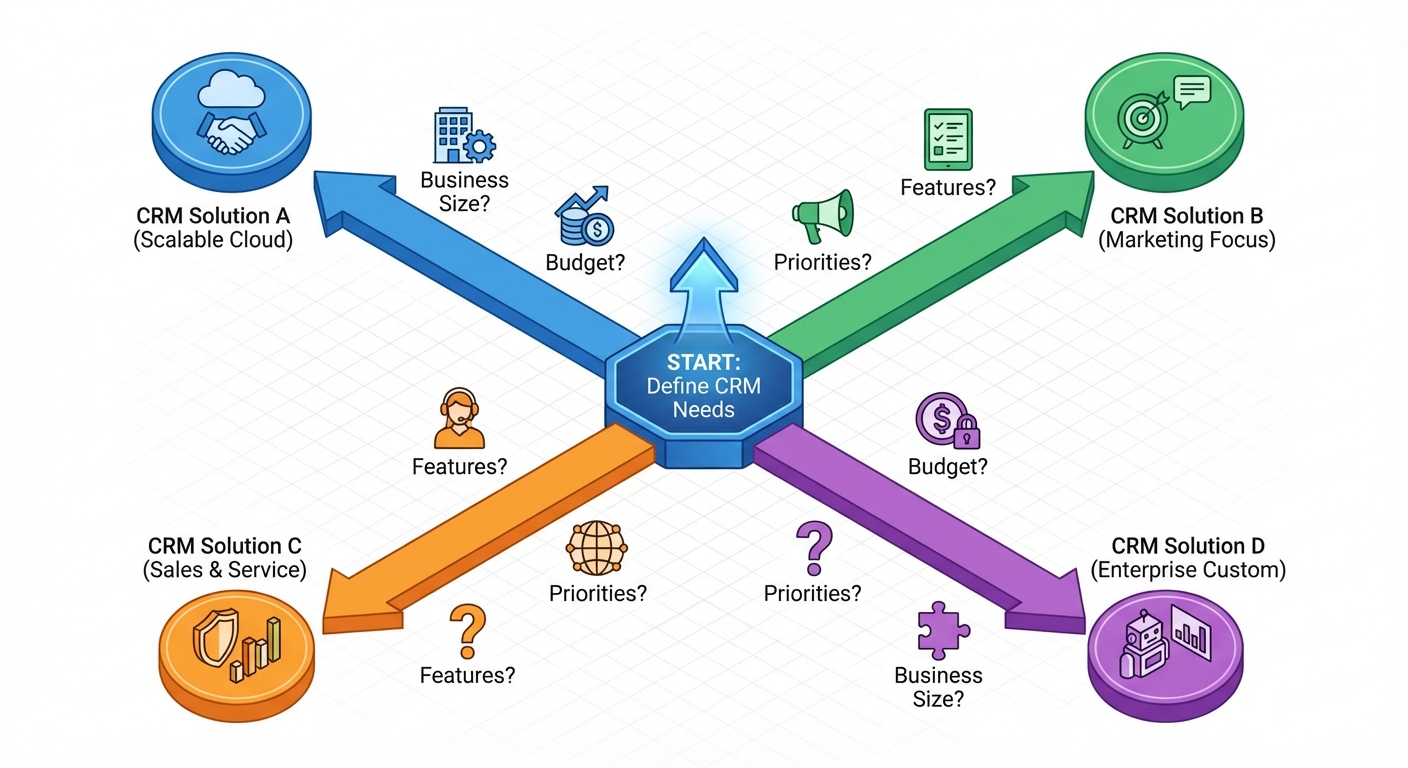
Choose QuickEst if you are:
- A small to medium-sized solar installation company or EPC in India
- Prioritizing sales speed and proposal generation efficiency
- Looking for solar-specific features without extensive customization
- Operating with budget constraints and need predictable, affordable pricing
- Running a mobile sales team that needs full functionality on smartphones
- Seeking quick implementation and minimal training requirements
- Focused primarily on residential or small commercial solar installations
- Needing WhatsApp integration for customer communication
QuickEst delivers the best value for solar businesses that need to move fast, close deals efficiently, and empower their sales teams without breaking the budget. The FREE PLAN – ₹0 allows you to test the platform risk-free, while the PRO PLAN – ₹6999 Per User / Year provides enterprise-grade features at a fraction of the cost of traditional CRM platforms.
Choose Salesforce if you are:
- A large solar enterprise with 50+ employees and dedicated IT resources
- Operating across multiple business units or industries beyond solar
- Requiring extensive customization and complex workflow automation
- Already using Salesforce for other parts of your business
- Needing advanced AI capabilities and predictive analytics
- Willing to invest 6-12 months in implementation and customization
- Having budget for ongoing consultant support and platform maintenance
Choose Zoho CRM if you are:
- A growing business operating across multiple industries (solar plus other services)
- Already invested in the Zoho ecosystem (Zoho Books, Zoho Campaigns, etc.)
- Needing a general-purpose CRM with good customization options
- Looking for middle-ground pricing between specialized and enterprise solutions
- Comfortable with moderate customization and setup requirements
- Not requiring solar-specific proposal generation as a core feature
Choose OpenSolar if you are:
- A solar company where technical design is central to your sales process
- Handling complex commercial installations or custom residential systems
- Needing detailed engineering analysis, shade studies, and 3D modeling
- Willing to invest in learning comprehensive design tools
- Prioritizing proposal visual impact and technical detail over speed
- Looking to consolidate design and CRM tools into one platform
CRM Implementation Best Practices for Solar Companies
Selecting the right CRM is only half the battle—successful CRM implementation India requires careful planning and execution. Follow these best practices to maximize your investment and ensure smooth adoption:
Data Migration and Lead Import Strategies:
Before launching your new CRM, clean and organize your existing customer data. Remove duplicates, standardize formats, and ensure data accuracy. Most platforms, including QuickEst, support bulk lead import from Excel spreadsheets, making migration straightforward. Start with a small data set to test the import process before migrating your entire database.
Team Training and Adoption:
User adoption is the biggest predictor of CRM success. Invest time in training your team on the new platform, focusing on the features they’ll use daily. Create simple process documentation and quick-reference guides. Consider designating “CRM champions” within your team who can help colleagues and provide feedback on workflows.
For platforms like QuickEst with intuitive interfaces, training can be completed in a few hours. More complex systems like Salesforce may require days or weeks of training. Factor this into your implementation timeline and budget.
Integration with Existing Tools:
Map out your current workflow and identify integration points with existing tools. Connect your CRM to lead generation sources (Facebook Ads, website forms), communication platforms (email, WhatsApp), and other business systems. These integrations eliminate manual data entry and ensure information flows seamlessly across your tech stack.
Measuring Success Metrics:
Define clear success metrics before implementation so you can measure ROI objectively. Key performance indicators for solar CRM systems include:
- Average proposal generation time (target: under 5 minutes)
- Lead response time (target: under 1 hour)
- Lead-to-customer conversion rate (track improvement over time)
- Sales cycle length (days from first contact to closed deal)
- Follow-up completion rate (percentage of scheduled follow-ups completed)
- Pipeline visibility and forecast accuracy
- Sales team productivity (deals per rep per month)
Common Pitfalls to Avoid:
- Over-customization: Resist the urge to customize every aspect of your CRM. Start with standard workflows and only customize what’s truly necessary
- Skipping training: Inadequate training leads to poor adoption and underutilization of features
- Ignoring mobile needs: Ensure your CRM works well on mobile devices since sales teams work in the field
- Lack of executive buy-in: CRM adoption requires support from leadership who model proper usage
- Choosing based on features alone: The most feature-rich platform isn’t always the best fit—consider usability, implementation time, and total cost
Frequently Asked Questions About Solar CRM Software
What is the best CRM for solar businesses in India?
The best CRM depends on your specific needs, but for most small to medium-sized solar installation companies in India, QuickEst offers the optimal combination of solar-specific features, affordability, and ease of use. Its 60-second proposal generation, WhatsApp integration, and mobile-first design address the unique challenges of the Indian solar market. Larger enterprises with complex needs may benefit from Salesforce’s extensive customization, while companies prioritizing technical design should consider OpenSolar.
How much does solar CRM software cost in India?
Solar CRM pricing varies significantly based on features and scale. QuickEst offers a free plan and a pro plan at ₹6,999 per user per year (approximately ₹583/month). Zoho CRM ranges from ₹800-2,400 per user per month. Salesforce costs ₹6,000-12,000+ per user per month, plus implementation costs of ₹5-15 lakhs. When evaluating software costs, consider total cost of ownership including implementation, training, and ongoing maintenance—not just the monthly subscription fee.
Can I integrate my solar CRM with WhatsApp for sending proposals?
Yes, QuickEst specifically includes WhatsApp integration for instant proposal delivery, which is particularly valuable in India where WhatsApp is the dominant communication platform. This feature allows sales teams to send professional solar proposals directly to customers’ WhatsApp within 60 seconds. Other platforms like Salesforce and Zoho CRM may require third-party integrations or workarounds to achieve similar functionality.
How long does CRM implementation take for a solar company?
Implementation time varies dramatically by platform. QuickEst can be implemented in days with minimal setup required, allowing teams to start generating proposals almost immediately. Zoho CRM typically requires 2-4 weeks for basic setup and customization. Salesforce implementations for solar businesses usually take 3-6 months and often require hiring consultants. Consider implementation time as part of your ROI calculation—a CRM that takes 6 months to implement delays your productivity gains by half a year.
What ROI can I expect from solar CRM software?
Solar companies typically see 15-30% improvement in conversion rates after implementing proper CRM systems with automated follow-ups and faster proposal generation. Time savings from proposal automation can add 10-20 hours per week per sales rep. For a typical 5-person solar sales team, these improvements can translate to 5-10 additional closed deals per month. If your average deal value is ₹3 lakhs, that’s ₹15-30 lakhs in additional monthly revenue—far exceeding the cost of even premium CRM solutions. Most solar businesses achieve positive ROI within 3-6 months of implementation.
Do I need different CRMs for residential and commercial solar projects?
No, a good solar CRM should handle both residential and commercial projects within the same platform. QuickEst, for example, supports both project types with appropriate templates and workflows. However, if you focus heavily on large commercial projects requiring extensive engineering analysis, you might benefit from OpenSolar’s design-focused approach. Most solar companies find that a single, flexible CRM platform serves all their project types more efficiently than managing multiple systems.
Can I try solar CRM software before committing to a paid plan?
Yes, most platforms offer trial periods or free plans. QuickEst provides a FREE PLAN – ₹0 that allows you to test core features before upgrading. Zoho CRM offers a free tier for up to 3 users. Salesforce typically provides 30-day trials. Take advantage of these trial periods to test the platform with your actual sales team and workflows before making a financial commitment. Pay attention to ease of use, proposal generation speed, and mobile functionality during your trial.
Making Your Solar CRM Decision
Choosing the right CRM software is one of the most impactful decisions you’ll make for your solar business’s sales operations. The right platform will accelerate your sales cycles, improve conversion rates, and empower your team to work more efficiently. The wrong choice can waste months of time, thousands of rupees, and frustrate your sales team.
This comprehensive solar CRM comparison has examined the leading platforms available to Indian solar businesses in 2026. While each solution has its strengths, the optimal choice depends on your specific context:
- Small to medium solar companies prioritizing speed, affordability, and solar-specific features will find the best value in QuickEst
- Large enterprises with complex needs and IT resources may justify the investment in Salesforce
- Multi-industry businesses or those invested in the Zoho ecosystem should consider Zoho CRM
- Companies where technical design is central to sales should evaluate OpenSolar
For most solar installation companies and EPCs in India, QuickEst delivers the optimal combination of functionality, ease of use, and value. Its purpose-built design for the solar industry, 60-second proposal generation, WhatsApp integration, and transparent pricing at ₹6999 per user per year address the specific challenges of the Indian solar market without the complexity and cost of enterprise platforms.
Don’t let analysis paralysis delay your decision. The cost of continuing with inefficient manual processes—lost deals, missed follow-ups, and frustrated sales teams—far exceeds the investment in proper CRM software. Start with QuickEst’s FREE PLAN – ₹0 to experience how specialized solar CRM software can transform your sales operations, or contact us to discuss which plan best fits your business needs.
Your competitors are already leveraging CRM technology to close deals faster and more efficiently. The question isn’t whether to implement solar CRM software—it’s which platform will give you the competitive advantage to dominate your market in 2026 and beyond.