
When your solar CRM system goes down at 3 PM on a Tuesday—right when your sales team is closing deals worth lakhs—every minute of downtime translates directly into lost revenue. For solar installation companies across India, the quality of CRM support India providers offer isn’t just a nice-to-have feature; it’s the lifeline that keeps your sales operations running smoothly and your team productive.
In 2026, as solar businesses increasingly rely on cloud-based CRM platforms to manage leads, generate proposals, and track sales performance, the support infrastructure behind these systems has become just as critical as the features themselves. Yet many solar companies make the mistake of focusing solely on functionality during vendor selection, only to discover later that poor support can cripple even the most feature-rich platform.
This comprehensive guide walks you through everything you need to know about CRM support India in 2026—from response time benchmarks and service level agreements to local language support and timezone considerations. Whether you’re evaluating vendors for the first time or reassessing your current provider, you’ll learn exactly what support standards to demand and how to ensure your solar business gets the technical assistance it deserves.
Why CRM Support India Matters for Solar Businesses

The solar industry operates on tight margins and time-sensitive opportunities. When a residential customer requests a quote for a rooftop installation, your ability to respond within hours—not days—often determines whether you win or lose that business. This is where CRM support India becomes mission-critical.
Consider this scenario: Your sales representative is meeting with a commercial client who wants to see a detailed proposal for a 100 kW solar installation. The rep opens your CRM to generate the proposal, but the system throws an error. Without immediate support, that meeting ends with an awkward promise to “send it later,” while your competitor who has reliable support sends their proposal before your rep even leaves the building.
The cost of CRM downtime extends far beyond individual deals. When your lead management system is unavailable, new inquiries from Facebook ads or website forms pile up unattended. Your automated follow-up sequences stop running, meaning prospects who were warming up to your offering suddenly hear nothing from your team. Sales managers lose visibility into pipeline metrics just when they need to make critical resource allocation decisions.
Research shows that B2B sales teams lose an average of 4-6 hours of productivity per month due to CRM technical issues. For a solar company with a five-person sales team, that’s 25-30 hours of lost selling time monthly—equivalent to nearly a full week of work. When you calculate the revenue impact based on your average deal size and sales cycle, poor CRM support India can easily cost your business several lakhs annually.
Beyond the immediate financial impact, inadequate support damages team morale and adoption rates. Sales professionals who repeatedly encounter technical roadblocks without quick resolution start finding workarounds, often reverting to spreadsheets and manual processes that defeat the entire purpose of implementing a CRM. This creates data silos, reduces forecast accuracy, and ultimately undermines your investment in sales technology.
Understanding CRM Support India: Service Level Expectations in 2026
The landscape of CRM support India has evolved significantly over the past few years. What was once considered premium support, same-day email responses and business-hours phone access, has become the baseline expectation for professional-grade CRM platforms serving the Indian market.
In 2026, quality CRM support encompasses multiple dimensions. First, there’s availability: the hours during which you can reach a human support agent. Second, there’s responsiveness: how quickly the support team acknowledges your issue and provides an initial response. Third, there’s resolution capability: whether the support team can actually solve your problem or merely escalate it indefinitely.
Most CRM vendors structure their support offerings in tiers. Basic or free plans typically include email support with 24-48 hour response times and access to self-service documentation. Standard paid plans usually add live chat support during business hours with 4-8 hour response commitments. Premium or enterprise plans often include phone support, dedicated account managers, and response times measured in minutes rather than hours.
The Indian market has unique characteristics that shape support expectations. Solar companies here expect support teams to understand the local business context, the importance of festival seasons for residential sales, the complexities of state-level solar policies, and the nuances of working with government tenders. Generic, script-reading support agents who lack this context often create more frustration than they resolve.
Another key expectation in 2026 is proactive support. Leading CRM vendors don’t just wait for problems to arise; they monitor system performance, notify customers of potential issues before they impact operations, and provide regular updates about new features and best practices. This shift from reactive troubleshooting to proactive partnership represents the new standard for CRM support India.
Response Times: What Solar Companies Should Demand
Response time commitments form the backbone of any support agreement, but understanding what these numbers actually mean requires looking beyond the marketing materials. When a vendor promises “4-hour response time,” are they measuring from when you submit a ticket or when a human reviews it? Does this apply to all issues or only critical outages? Is it 4 hours during business days or calendar hours including weekends?
For solar businesses evaluating CRM support India providers, here are the response time benchmarks you should expect in 2026 based on issue severity:
Critical Issues (system completely down, no workaround available): These demand immediate attention because they halt all sales operations. Expect initial response within 30-60 minutes during business hours, with active troubleshooting beginning immediately. For vendors offering premium support, 24/7 coverage for critical issues should be standard, with response times under 2 hours even outside business hours.
High-Priority Issues (major feature broken, significant impact on operations): These affect important functionality but don’t completely stop work. Reasonable response times are 2-4 hours during business hours. For example, if your proposal generation feature is broken but you can still access leads and manage contacts, this falls into high-priority territory.
Medium-Priority Issues (minor feature problems, workaround available): These are inconveniences rather than emergencies. Response times of 8-12 business hours are acceptable. An example might be a reporting dashboard showing incorrect data, but you can still export raw data and create reports manually.
Low-Priority Issues (questions, feature requests, minor bugs): These include general inquiries and non-urgent matters. Response times of 24-48 business hours are standard. Questions about how to use a specific feature or requests for custom report templates typically fall here.
It’s crucial to distinguish between first response time and resolution time. First response time measures how quickly someone acknowledges your issue and confirms they’re working on it. Resolution time measures how long until the problem is actually fixed. A vendor might respond within an hour but take three days to resolve the issue, this is why both metrics matter.
When evaluating vendors, ask for their average resolution times by issue category, not just response times. Also inquire about their escalation process: if the first-level support agent can’t resolve your issue within a certain timeframe, how quickly does it get escalated to senior technical staff or engineering teams?
Support Channels Available for CRM Support India
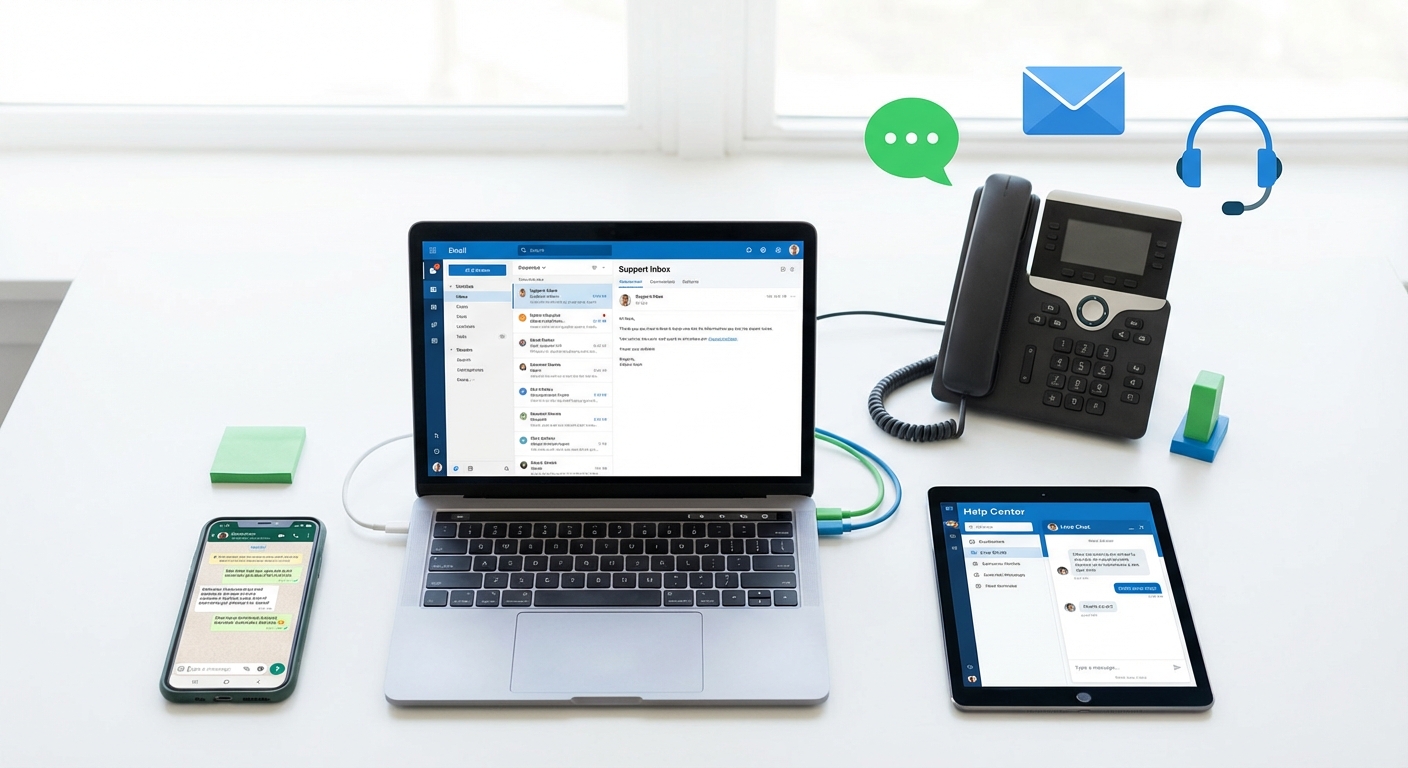
The channels through which you can access CRM support India significantly impact your experience and resolution speed. Different channels suit different types of issues, and the best CRM vendors offer multiple options to match your needs.
Phone Support: Direct Human Connection
Phone support remains the gold standard for urgent, complex issues that require real-time troubleshooting. When your sales team is stuck and needs immediate guidance, a 10-minute phone call often accomplishes what would take hours through email exchanges. Look for vendors with India-based phone support during IST business hours, ideally with toll-free numbers. The quality of phone support depends heavily on whether agents can actually solve problems or merely create tickets for others to handle later.
Email Support: Detailed Documentation
Email works well for non-urgent issues that benefit from detailed explanation and screenshot documentation. It creates a written record of the problem and solution, which helps if similar issues arise later. However, email support can become frustrating when it turns into a slow back-and-forth of clarifying questions. The best email support teams ask comprehensive diagnostic questions upfront and provide detailed solutions rather than generic troubleshooting steps.
Live Chat Support: Real-Time Convenience
Live chat has become increasingly popular for CRM support India because it combines the immediacy of phone support with the convenience of not leaving your desk. You can share screenshots instantly, copy-paste error messages, and multitask while waiting for responses. The key is whether the chat connects you to knowledgeable agents or AI chatbots that can only handle basic questions. Quality live chat support should be available during business hours with wait times under 5 minutes.
WhatsApp Support: The Indian Advantage
WhatsApp has emerged as a uniquely effective support channel in India, where the platform dominates business communication. Forward-thinking CRM vendors now offer WhatsApp support, allowing you to send quick questions, share screenshots, and receive guidance through an app your team already uses constantly. This channel works particularly well for field sales representatives who need support while meeting clients. The informal nature of WhatsApp also tends to produce more conversational, helpful interactions than formal email tickets.
Self-Service Portals and Knowledge Bases
Comprehensive documentation, video tutorials, and searchable knowledge bases empower you to solve common issues without waiting for support responses. The best self-service resources include step-by-step guides with screenshots, video walkthroughs of key features, and troubleshooting flowcharts. When evaluating vendors, test their knowledge base: search for common questions and see if you can find clear, actionable answers quickly. Poor documentation that’s outdated or hard to navigate indicates a vendor that doesn’t invest in support infrastructure.
Video Call Support for Complex Issues
For complicated technical problems or training needs, video call support allows screen sharing and real-time guidance. This channel is particularly valuable during initial implementation when your team is learning the system. Some vendors offer scheduled video calls with customer success managers, while others provide on-demand video support for premium customers. This personalized approach can dramatically reduce the learning curve and prevent recurring issues.
Service Level Agreements (SLAs): What to Look For
A Service Level Agreement defines the support commitments your CRM vendor makes and the consequences if they fail to meet those commitments. For solar businesses investing in CRM technology, understanding and negotiating SLAs is crucial to ensuring you receive the CRM support India quality your operations depend on.
Uptime Guarantees specify the percentage of time the CRM system will be operational. Industry-standard SLAs promise 99.5% to 99.9% uptime, which translates to 3-4 hours of acceptable downtime per month at the lower end, or less than 45 minutes monthly at the higher end. Anything below 99% uptime is unacceptable for business-critical systems. Verify whether scheduled maintenance windows count against uptime guarantees and how the vendor notifies customers of planned downtime.
Response Time Commitments should be clearly defined by issue severity, as discussed earlier. The SLA should specify exactly what constitutes each severity level and what response times apply. Vague language like “we strive to respond promptly” has no enforcement mechanism. Look for specific commitments like “Critical issues: 1-hour first response during business hours” with clear definitions of business hours in IST.
Escalation Procedures outline what happens when first-level support can’t resolve your issue. A good SLA specifies escalation timeframes, for example, if a high-priority issue isn’t resolved within 8 hours, it automatically escalates to senior technical staff and account management. The SLA should also provide direct escalation contacts for critical situations, so you’re not stuck in an endless ticket queue when your business is impacted.
Support Availability details should specify the exact hours when each support channel is available. “Business hours support” could mean 9 AM to 5 PM or 8 AM to 8 PM, the difference matters when you have urgent issues. Clarify whether support is available on weekends and Indian public holidays, and what reduced service levels apply during these times.
Compensation for SLA Breaches is where many SLAs fall short. Some vendors offer service credits (discounts on future bills) if they miss their commitments, while others provide no compensation at all. While credits don’t undo the damage of downtime, they at least create financial incentive for the vendor to meet their commitments. Review the calculation method for credits and any caps on maximum compensation.
When reviewing SLA documents, watch for exclusions and limitations. Many SLAs exclude issues caused by third-party integrations, internet connectivity problems, or user error. While some exclusions are reasonable, overly broad language can render the SLA meaningless. Also check whether the SLA applies to all customers or only premium plan subscribers, basic plan users often receive no formal SLA at all.
Local Language Support and Cultural Considerations
While English serves as the business language for most solar companies in India, the quality of CRM support India improves dramatically when support teams understand local languages, cultural context, and business practices.
Many solar businesses operate in tier-2 and tier-3 cities where team members may be more comfortable communicating in Hindi or regional languages. When a sales representative encounters a technical issue and needs quick help, being able to explain the problem in their preferred language reduces frustration and speeds resolution. Leading CRM vendors serving the Indian market now offer support in Hindi and major regional languages, at least for phone and chat channels.
Beyond language, cultural understanding matters significantly. Support agents who understand Indian business culture recognize why certain features matter more here, like the importance of WhatsApp integration for client communication, or why proposal templates need to accommodate GST calculations and state-specific solar subsidies. Generic support teams trained on global best practices often miss these nuances, providing technically correct but contextually irrelevant guidance.
The communication style also differs. Indian business culture tends toward relationship-building and context-rich communication, while Western support models often emphasize efficiency and brevity. Support teams that understand this balance, being efficient without being abrupt, and thorough without being verbose, create better customer experiences.
Solar industry expertise represents another dimension of cultural fit. Support agents who understand the solar business can provide more relevant guidance. When you explain that you need to generate 50 proposals quickly because a government subsidy deadline is approaching, an agent with solar industry knowledge immediately understands the urgency and context. Generic CRM support teams might treat this as a routine request without appreciating the business implications.
When evaluating vendors, ask where their support team is located and what languages they speak. India-based support teams typically provide better cultural alignment than offshore teams, though this isn’t universal. Request a test support interaction during your trial period to assess language capabilities and cultural understanding firsthand.
Timezone Coverage for CRM Support India
Timezone alignment might seem like a minor consideration, but it profoundly impacts your support experience. For solar companies operating across India, having CRM support India available during Indian Standard Time business hours is non-negotiable.
Standard business hours in India typically run from 9 AM to 6 PM IST, Monday through Friday. Your CRM support should be fully staffed and responsive during these hours, as this is when your sales team is most active and when technical issues have the greatest business impact. Some vendors offer extended hours from 8 AM to 8 PM IST to accommodate early starters and late workers.
Weekend support availability varies significantly among vendors. While most technical issues can wait until Monday, solar businesses often work weekends, especially when pursuing residential customers who are only available outside their own work hours. At minimum, your CRM should offer email support on weekends with Monday morning response commitments. Premium support packages might include weekend phone or chat support, at least for critical issues.
Holiday coverage presents another consideration. India observes numerous public holidays that don’t align with Western calendars. During Diwali, Holi, or regional festivals, your business might be closed, but you need to know whether your CRM vendor’s support team is also unavailable. Vendors with India-based support teams typically align their holiday schedules with Indian holidays, while global vendors might offer reduced support during these periods.
The distinction between India-dedicated and global support teams matters here. Some vendors route all support requests to a global team that operates 24/7 but isn’t specifically focused on Indian customers. Others maintain India-specific support teams that work IST hours and understand local context. The latter model typically provides better experiences for Indian solar companies, even if the former offers technically longer coverage hours.
After-hours emergency support is worth considering for larger solar businesses where CRM downtime has severe consequences. Some vendors offer emergency hotlines for critical issues outside business hours, with higher-tier support engineers on call. While you’ll hopefully never need this, knowing it exists provides peace of mind.
During vendor evaluation, explicitly ask about IST coverage hours for each support channel. Test their support during different times of day to verify actual availability matches their claims. Also inquire about their holiday schedule and how they handle support during major Indian festivals.
Evaluating Vendor Support Quality Before Purchase

The time to assess CRM support India quality is before you commit to a vendor, not after you’ve migrated your data and trained your team. Here’s how to thoroughly evaluate support during your selection process.
Ask Pointed Questions During Demos: Don’t let sales representatives gloss over support with generic assurances. Ask specific questions: What are your response time commitments by issue severity? Where is your support team located? What languages do they speak? What’s your average resolution time for common issues like integration problems or data import errors? Can you provide examples of how you’ve handled critical support situations for other solar companies? Sales teams that can’t answer these questions in detail often represent vendors with weak support infrastructure.
Test Support During Trial Period: Most CRM vendors offer free trials or demo periods. Use this time to intentionally test their support. Submit a support ticket with a genuine question and measure response time and quality. Try different channels, email, chat, phone, to see which work best. Ask a complex question that requires technical knowledge to answer, not just a generic “how do I reset my password” query. The support experience during your trial is typically the best you’ll receive, so if it’s disappointing now, it will likely worsen after purchase.
Review Documentation Thoroughly: Spend time in the vendor’s knowledge base and help documentation. Is it comprehensive and well-organized? Can you find answers to common questions quickly? Are there video tutorials for key features? Is the documentation current, or does it reference outdated interface elements? Poor documentation indicates a vendor that doesn’t invest in customer success, which correlates strongly with poor support quality.
Read Customer Reviews with Focus on Support: When researching vendors, specifically look for reviews mentioning support experiences. General product reviews matter, but support quality often only becomes apparent after months of use. Check multiple review platforms and look for patterns. If multiple reviewers mention slow response times or unhelpful support agents, that’s a red flag. Pay special attention to reviews from other solar companies or Indian businesses, as their experiences will most closely match yours.
Request References from Existing Customers: Ask vendors to connect you with 2-3 current customers, preferably solar companies in India. When speaking with references, focus your questions on support: How responsive is the support team? Have you experienced any critical issues, and how were they handled? Do you feel the vendor is invested in your success? Would you choose this vendor again knowing what you know now about their support? References provided by the vendor will naturally be positive, but even satisfied customers will usually give honest assessments of support quality if asked directly.
Check for Red Flags: Certain warning signs indicate poor support infrastructure. These include: no phone support available at any tier, response time commitments only for enterprise plans, support only available in English with no local language options, support team located in a timezone with no overlap with IST, no clear SLA documentation, or support only available through a ticketing system with no human interaction options. Any of these should prompt serious reconsideration.
Evaluate Onboarding Support: The implementation and onboarding phase is when you’ll need the most support. Ask vendors about their onboarding process: Is there dedicated implementation support? Do you get training sessions? Is there a customer success manager assigned during the first few months? How do they handle data migration? Vendors that provide structured onboarding support typically maintain that support quality long-term, while vendors that leave you to figure things out alone during implementation will likely be absent when you need help later.
Technical Support vs. Customer Success: Understanding the Difference
Quality CRM support India encompasses two distinct but complementary functions: technical support and customer success. Understanding the difference helps you evaluate what vendors offer and what your solar business needs.
Technical Support focuses on fixing problems. When something breaks, doesn’t work as expected, or generates errors, technical support troubleshoots and resolves the issue. This is reactive support, you encounter a problem, report it, and they fix it. Technical support agents need deep product knowledge and problem-solving skills. They handle questions like “Why isn’t my proposal template loading?” or “How do I fix this integration error?”
Customer Success focuses on helping you achieve your business goals with the CRM. This is proactive support, customer success managers reach out to ensure you’re getting value, suggest features you’re not using that could help, provide best practices, and help optimize your workflows. They handle questions like “How can we improve our lead conversion rate?” or “What’s the best way to structure our sales pipeline for commercial solar projects?”
Many CRM vendors, especially at lower price points, offer only technical support. You can get help when things break, but you’re on your own for strategic guidance. Premium vendors include customer success management, assigning a dedicated contact who learns your business and proactively helps you succeed.
Onboarding Support bridges these two categories. During implementation, you need both technical help (importing data, configuring integrations, setting up user permissions) and strategic guidance (designing your sales process, creating proposal templates, establishing reporting dashboards). Vendors that provide comprehensive onboarding support, whether through dedicated implementation specialists or detailed guided setup processes, dramatically reduce time-to-value and prevent many future support issues.
Training Resources represent another form of proactive support. Beyond fixing immediate problems, does the vendor help your team become more proficient? Look for vendors offering regular webinars, certification programs, video tutorial libraries, and best practice guides. Solar companies that invest time in training reduce their support needs over time because team members can solve common issues independently.
Ongoing Education about new features and capabilities keeps your team current. CRM platforms evolve constantly, adding new features and improving existing ones. Vendors with strong customer success programs notify you about relevant updates, explain how new features could benefit your solar business, and provide guidance on adoption. Without this proactive communication, you might pay for features you don’t even know exist.
When evaluating vendors, ask explicitly about both technical support and customer success. What’s included at each pricing tier? Is there a dedicated customer success manager, or is success support only available for enterprise customers? How do they help customers beyond just fixing technical issues? The answers reveal whether the vendor sees support as a cost center to minimize or an investment in customer retention and success.
Common CRM Support Issues Solar Companies Face
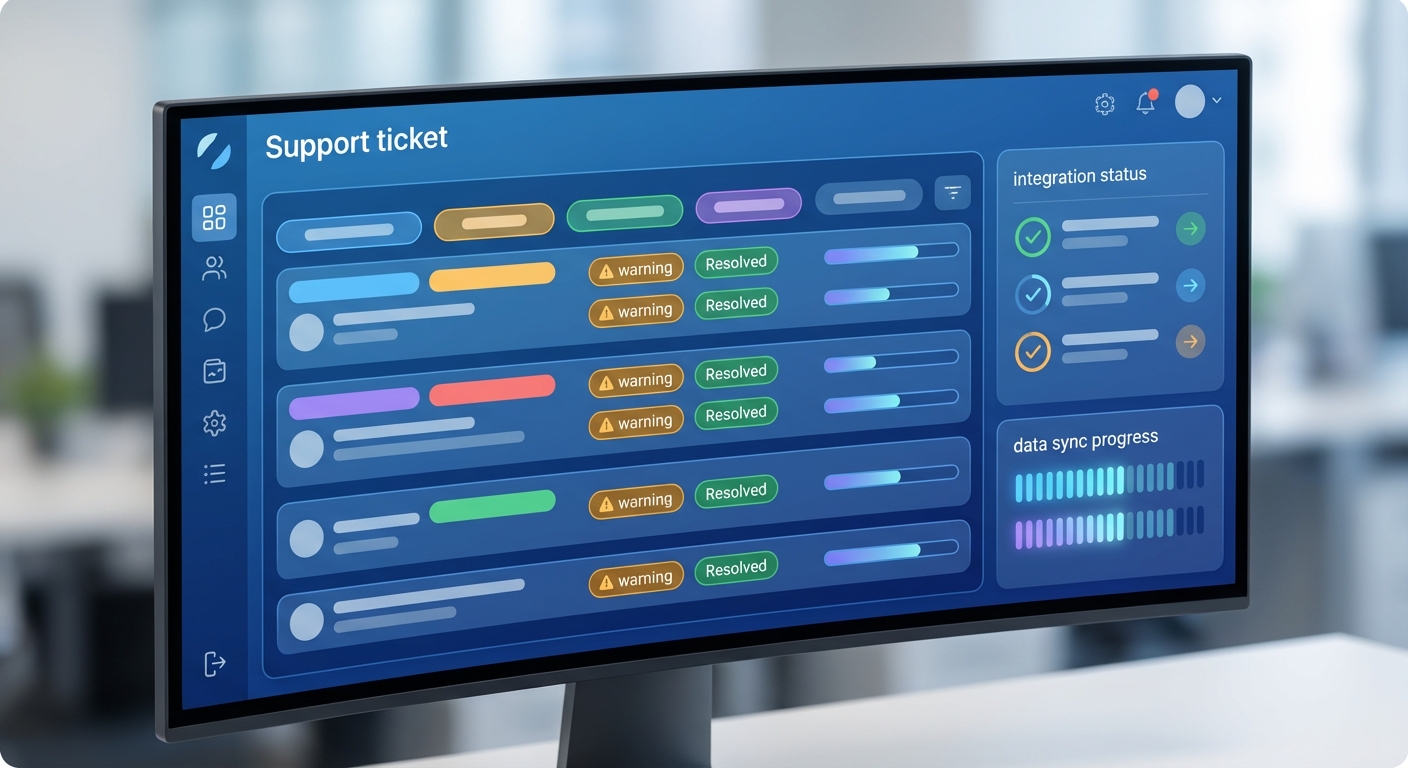
Understanding the typical support issues solar companies encounter helps you evaluate whether a vendor’s CRM support India team can handle your real-world needs. Here are the most common scenarios and what quality support looks like for each.
Integration Problems with Existing Tools: Solar companies often need their CRM to connect with accounting software, WhatsApp Business API, Facebook Lead Ads, or other tools. Integration issues are among the most complex support requests because they involve multiple systems. Quality support teams can diagnose whether the problem lies with the CRM, the third-party tool, or the connection between them, and guide you through resolution even when it requires coordinating with another vendor’s support team.
Data Import and Migration Challenges: Moving existing customer data from spreadsheets or another CRM into your new system frequently causes issues. Data formatting problems, duplicate records, missing fields, or import errors can derail implementation. Good support teams provide clear data templates, validate your data before import, and help clean up issues after import. They understand that your existing data is messy and work with you to get it into the system rather than simply saying “your data format is wrong.”
User Access and Permission Issues: As your team grows and changes, you’ll need to add users, adjust permissions, and manage access levels. Questions arise: How do I give someone access to leads but not proposals? Can field sales reps access the system from mobile devices? How do I remove access for a departed employee? Support teams should provide clear guidance on permission structures and help you configure access that matches your organizational structure and security requirements.
Proposal Generation Errors and Template Problems: For solar companies, proposal generation is a critical CRM function. Issues with templates not loading, calculations showing incorrect values, or proposals failing to send via WhatsApp or email directly impact your ability to close deals. Support teams need to respond urgently to these issues and have the technical capability to troubleshoot template logic, formula errors, and delivery problems quickly.
Mobile App Synchronization Issues: Field sales representatives rely on mobile access to update leads, check customer information, and generate proposals on-site. When mobile apps don’t sync properly with the main system, it creates data inconsistencies and frustration. Quality support teams can diagnose whether sync issues stem from app bugs, connectivity problems, or configuration errors, and provide solutions that work for field teams.
Reporting and Analytics Troubleshooting: Sales managers depend on accurate reports and dashboards to make decisions. When reports show unexpected data, filters don’t work correctly, or dashboards won’t load, it undermines confidence in the system. Support teams should help you understand what the data represents, troubleshoot discrepancies, and create custom reports when standard options don’t meet your needs.
Performance and Speed Issues: If your CRM becomes slow or unresponsive, it frustrates users and reduces adoption. Performance issues can stem from various causes, server problems, browser compatibility, large data volumes, or inefficient workflows. Effective support teams diagnose the root cause rather than offering generic advice like “clear your cache,” and work toward permanent solutions rather than temporary workarounds.
When evaluating CRM support India vendors, ask how they handle these specific scenarios. Request examples of how they’ve resolved similar issues for other solar companies. The specificity and confidence of their answers indicate whether their support team has real expertise or just follows scripts.
QuickEst’s Approach to CRM Support India
QuickEst has built its support infrastructure specifically around the needs of solar businesses and B2B service companies in India, recognizing that quality CRM support India is fundamental to customer success.
The platform offers multiple support channels to match different needs and urgency levels. Email support is available to all users, with response time commitments based on plan tier. Live chat support during business hours provides real-time assistance for questions and troubleshooting. For users who prefer direct conversation, phone support connects you with India-based support specialists who understand the solar industry context and can guide you through complex issues.
WhatsApp support represents a key differentiator for QuickEst, aligning with how Indian businesses actually communicate. Sales representatives can quickly send questions or screenshots through WhatsApp and receive guidance without switching between multiple platforms. This channel is particularly valuable for field teams who need support while meeting clients.
The onboarding process includes implementation assistance to help solar companies get started quickly. Rather than simply providing access and leaving you to figure things out, QuickEst guides new customers through initial setup, data import, template creation, and team training. This structured onboarding reduces the learning curve and prevents many common support issues from arising in the first place.
QuickEst maintains a comprehensive knowledge base with articles, video tutorials, and step-by-step guides covering common questions and workflows. The documentation is regularly updated to reflect the current interface and features, ensuring you can find accurate self-service answers when you need them. Video walkthroughs demonstrate key features like proposal generation, lead management, and follow-up automation, allowing you to learn at your own pace.
For solar companies evaluating CRM pricing and support options, QuickEst offers transparent information about what support is included at each tier. The platform’s focus on the solar industry means support agents understand common workflows, terminology, and challenges specific to solar installation businesses, providing more relevant and actionable guidance than generic CRM support teams.
The India-based support team operates during IST business hours, ensuring timezone alignment when your sales team is most active. This local presence also means support agents understand Indian business practices, solar market dynamics, and regulatory considerations that affect how you use the CRM.
Building a Support Relationship: Best Practices for Solar Companies
Getting the most from CRM support India isn’t just about choosing the right vendor, it’s also about how you interact with support teams. These best practices help you receive faster, more effective assistance.
Write Effective Support Tickets: When submitting support requests, provide comprehensive information upfront. Include what you were trying to do, what you expected to happen, what actually happened, and any error messages you received. Vague tickets like “the system isn’t working” lead to back-and-forth clarification that delays resolution. Specific tickets like “When I try to generate a proposal for lead ID 12345, I get error message ‘Template not found’ even though the template exists in my library” give support agents the information they need to start troubleshooting immediately.
Document Issues with Screenshots: Visual documentation dramatically improves support efficiency. Take screenshots showing the problem, including any error messages, and annotate them to highlight the specific issue. For workflow problems, consider recording a short screen video showing the steps you’re taking and where the problem occurs. Most support teams can resolve issues much faster when they can see exactly what you’re experiencing.
Establish Internal Support Contacts: Designate one or two people in your organization as primary CRM administrators who handle support interactions. This creates consistency in how issues are reported and ensures institutional knowledge about past problems and solutions. When multiple team members submit separate tickets about the same issue, it creates confusion and duplicated effort. Centralized support coordination prevents this.
Create Escalation Paths: Define internal processes for when to escalate issues. Not every problem requires immediate escalation to vendor support, many can be solved by your internal CRM administrator. But critical issues that halt sales operations should be escalated immediately with appropriate urgency. Having clear internal escalation criteria ensures important issues get the attention they deserve without overwhelming support teams with non-urgent requests.
Maintain Good Vendor Relationships: Treat support agents professionally and respectfully, even when frustrated by technical issues. Support teams are more likely to go above and beyond for customers who are pleasant to work with. Building rapport with your customer success manager or regular support contacts can result in faster responses and more personalized assistance. Remember that support agents want to help you succeed, they’re your partners, not adversaries.
Leverage Support for Strategic Advice: Don’t limit support interactions to just fixing broken things. Ask for best practices, workflow optimization suggestions, and guidance on using features more effectively. Questions like “What’s the most efficient way to manage leads from multiple sources?” or “How do other solar companies structure their proposal templates?” tap into the support team’s broader knowledge and can provide valuable insights beyond technical troubleshooting.
Provide Feedback: When support interactions go well or poorly, let the vendor know. Positive feedback reinforces good practices and helps support agents feel valued. Constructive criticism about slow responses or unhelpful guidance gives vendors the opportunity to improve. Many vendors send post-support surveys, take a moment to complete them honestly, as this feedback shapes future support quality.
Keep Records: Maintain a log of support interactions, including ticket numbers, issues reported, and resolutions provided. This documentation helps if similar issues recur and provides evidence if you need to escalate concerns about support quality. It also helps during internal training, allowing you to share solutions with team members who might encounter the same problems.
The Future of CRM Support India: 2026 and Beyond
The landscape of CRM support India continues to evolve rapidly, with several trends shaping what solar companies can expect in the coming years.
AI-Powered Chatbots and Automated Support: Artificial intelligence is increasingly handling first-level support inquiries. Modern AI chatbots can understand natural language questions, search knowledge bases, and provide relevant answers instantly. For common questions like “How do I reset my password?” or “Where do I find my sales reports?”, AI support provides immediate answers without waiting for human agents. However, the key is seamless escalation to human support when AI can’t resolve the issue. The best implementations use AI to handle routine questions, freeing human agents to focus on complex problems requiring expertise and judgment.
Predictive Support: Advanced CRM platforms are beginning to identify potential issues before they impact customers. By monitoring system performance, usage patterns, and error rates, predictive support systems can alert customers to problems proactively. For example, if the system detects that your data is approaching storage limits, it might notify you before you encounter errors. Or if an integration is showing signs of instability, support might reach out to investigate before it fails completely. This shift from reactive to predictive support prevents problems rather than just fixing them.
Video Tutorials and Interactive Learning: Static documentation is giving way to interactive learning experiences. Modern support resources include video tutorials, interactive product tours, and guided workflows that teach by doing rather than just reading. For solar companies implementing new CRM systems, these resources dramatically reduce the learning curve and support burden. Look for vendors investing in comprehensive video libraries and interactive onboarding experiences.
Community-Driven Support Forums: Peer-to-peer support through user communities is becoming more prevalent. When solar companies can ask questions and share solutions with other solar companies using the same CRM, they often get more relevant, practical advice than from generic support documentation. Vendors that foster active user communities create additional support channels that complement official support teams. These communities also provide valuable feedback that shapes product development.
Integration with WhatsApp Business API: As WhatsApp continues to dominate business communication in India, deeper integration with WhatsApp Business API is transforming support delivery. Beyond just offering WhatsApp as a support channel, advanced implementations allow automated support notifications, status updates on support tickets, and even interactive troubleshooting through WhatsApp conversations. This meets Indian businesses where they already communicate, reducing friction in accessing support.
Personalized Support Experiences: CRM vendors are increasingly using data about how you use their platform to personalize support. If the system knows you’re a solar company that primarily serves residential customers, support interactions can be tailored to that context. Recommendations, documentation, and troubleshooting can focus on features and workflows relevant to your specific use case rather than generic guidance that may not apply.
These trends point toward a future where CRM support India becomes more proactive, personalized, and accessible. For solar companies, this means less time dealing with technical issues and more time focusing on what matters, growing your business and serving your customers.
Take Control of Your CRM Support Experience
The quality of CRM support India you receive directly impacts your solar business’s sales efficiency, team productivity, and ultimately, your bottom line. As you’ve learned throughout this guide, support encompasses far more than just fixing broken features, it includes response times, communication channels, service level agreements, cultural alignment, and proactive customer success.
When evaluating CRM vendors, don’t let impressive feature lists distract you from asking hard questions about support infrastructure. Test their responsiveness during trial periods. Read customer reviews focusing on support experiences. Verify that their support team understands the Indian market and solar industry. Ensure their timezone coverage, language capabilities, and communication channels match your team’s needs.
Remember that the cheapest CRM option often becomes the most expensive when you factor in the cost of poor support, lost deals, frustrated team members, and hours of productivity wasted troubleshooting issues without adequate help. Investing in a CRM vendor with strong support infrastructure pays dividends through smoother operations, faster issue resolution, and a team that actually uses the system effectively.
For solar installation companies ready to experience CRM support that truly understands the Indian solar market, QuickEst offers comprehensive support infrastructure designed specifically for your needs. Whether you’re just starting your CRM journey or looking to switch from a vendor with inadequate support, QuickEst provides the responsive, knowledgeable assistance that keeps your sales operations running smoothly.
Explore QuickEst’s support capabilities and see how the right CRM support India partner can transform your sales operations. Start with the FREE PLAN – ₹0 to experience the support quality firsthand, or choose the PRO PLAN – ₹6999 Per User / Year for full access to advanced features and priority support. Your sales team deserves CRM technology backed by support that actually supports your success. Learn more about CRM implementation and discover the essential CRM features that matter most for solar businesses, or contact us to discuss your specific support requirements and how QuickEst can meet them.
This blog post was written using thestacc.com