
When you’re running a solar installation business in India, every rupee counts. You need tools that help you close deals faster, but you also need to understand exactly what you’re paying for. Proposal pricing can make or break your software budget, especially when you’re scaling your sales team or trying to improve conversion rates.
The solar CRM and proposal software market in 2026 offers more options than ever before, but the pricing structures can be confusing. Some vendors charge per user, others offer flat rates, and many hide critical fees in the fine print. For solar businesses across India, from small installers in Pune to large EPCs in Delhi, understanding proposal pricing isn’t just about finding the cheapest option. It’s about finding the right balance between features, scalability, and cost-effectiveness.
This comprehensive guide breaks down everything you need to know about proposal pricing in 2026. You’ll learn how different pricing models work, what hidden costs to watch for, and how to calculate the right budget for your team size. Whether you’re evaluating your first CRM or considering a switch, this guide will help you make an informed decision that supports your solar business growth.

Understanding Proposal Pricing Models in the Solar Industry
The landscape of proposal pricing has evolved significantly over the past few years. Solar businesses in India are moving away from manual proposal creation using Excel spreadsheets and Word documents toward specialized software that automates the entire process. This shift has created a diverse market with varying pricing approaches.
In 2026, most solar proposal software falls into one of three categories: per-user pricing, flat-rate pricing, or tiered subscription models. Each approach has distinct advantages depending on your team structure, sales volume, and growth trajectory. Understanding these models is the first step toward making a smart investment.
For solar companies in India, proposal pricing matters more than ever because margins are tightening and competition is intensifying. The right proposal software can reduce your sales cycle from weeks to days, but only if the pricing model aligns with your business operations. A small solar installer with three sales representatives has very different needs than a large EPC managing 50+ team members across multiple locations.
The solar industry has unique requirements that generic CRM platforms often miss. You need solar-specific proposal templates, accurate system sizing calculations, integration with equipment databases, and the ability to send proposals via WhatsApp, which is the preferred communication channel for many Indian customers. These specialized features influence proposal pricing structures and explain why solar-focused solutions often provide better value than general-purpose tools.
1. Break Down the Core Proposal Pricing Models
Let’s examine the three primary pricing models you’ll encounter when evaluating proposal software for your solar business. Each model has specific use cases where it makes the most financial sense.
Per-User Pricing: What You’re Actually Paying For
Per-user pricing is the most common model in the solar CRM space. You pay a fixed monthly or annual fee for each team member who needs access to the system. In 2026, typical per-user costs for solar proposal software range from ₹3,000 to ₹15,000 per user annually, depending on the feature set and vendor.
With per-user proposal pricing, you’re paying for individual access to the full platform. This usually includes the ability to create unlimited proposals, manage your own lead pipeline, access mobile apps, and use automation features like follow-up reminders. The advantage is predictability: you know exactly what your costs will be as you add or remove team members.
Per-user pricing makes the most sense when you have a clearly defined sales team where each member actively creates proposals and manages customer relationships. For example, if you have five solar sales representatives who each generate 20-30 proposals monthly, per-user pricing gives each person full access without restrictions on usage.
However, this model can become expensive as you scale. A solar EPC with 25 sales team members could pay ₹1,75,000 to ₹3,75,000 annually just for proposal software access. This is where understanding your actual usage patterns becomes critical. Some vendors offer role-based pricing where managers or support staff pay less than active sales representatives.
QuickEst offers transparent per-user proposal pricing at ₹6,999 per user annually, which includes full access to proposal generation, lead management, automated follow-ups, and real-time analytics. This straightforward approach eliminates confusion and helps solar businesses budget accurately.
Flat-Rate and Tiered Pricing Structures
Flat-rate pricing offers unlimited users for a fixed monthly or annual fee. This model works well for larger solar companies with extensive teams or businesses that need to provide access to support staff, project managers, and installers beyond just the sales team.
In 2026, flat-rate proposal pricing for solar software typically ranges from ₹50,000 to ₹3,00,000 annually, depending on feature complexity and support levels. The break-even point usually occurs around 8-12 users, after which flat-rate pricing becomes more economical than per-user models.
Tiered pricing structures offer different packages at various price points, each with specific feature limitations. A typical structure might include:
- Basic Tier: Essential proposal creation, limited templates, basic lead tracking (₹0 to ₹25,000 annually)
- Professional Tier: Advanced proposals, automation, integrations, mobile access (₹50,000 to ₹1,50,000 annually)
- Enterprise Tier: Custom features, dedicated support, API access, white-labeling (₹2,00,000+ annually)
The challenge with tiered proposal pricing is determining which tier actually meets your needs. Many solar businesses start with a basic tier only to discover they need automation features or integration capabilities that require upgrading. This can lead to unexpected cost increases mid-year.
When evaluating tiered pricing, focus on the features that directly impact your sales process. Can you send proposals via WhatsApp? Does it include automated follow-up sequences? Are solar-specific templates included? These capabilities matter more than generic CRM features for solar businesses.
2. Identify Hidden Fees and Additional Costs
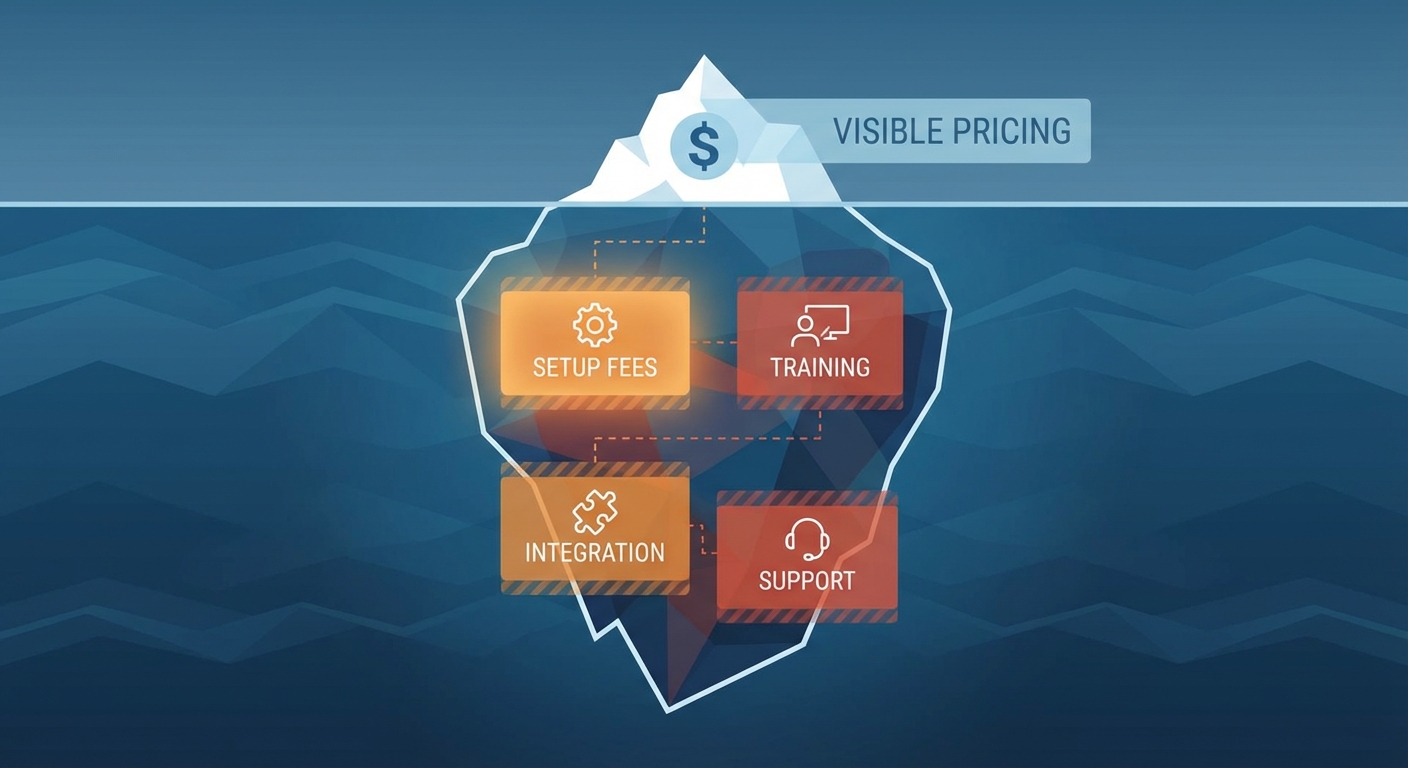
The advertised proposal pricing is rarely the total cost of ownership. Hidden fees can increase your actual spending by 30-50% or more. Understanding these additional costs upfront helps you budget accurately and avoid unpleasant surprises.
Setup and Implementation Fees
Many vendors charge one-time setup fees ranging from ₹10,000 to ₹1,00,000 depending on complexity. This covers initial configuration, data import, and system customization. Some providers include basic setup in their proposal pricing, while others treat it as a separate service.
For solar businesses, implementation can be particularly complex if you need custom proposal templates, integration with your existing equipment database, or migration from another CRM system. Ask vendors explicitly whether setup is included or if it’s an additional charge.
Training and Onboarding Costs
Your team needs to learn the new system, and training isn’t always free. Some vendors charge ₹5,000 to ₹25,000 for comprehensive training sessions, either in-person or virtual. Others include basic training videos but charge for personalized coaching or on-site training.
The hidden cost here isn’t just the training fee but also the productivity loss during the learning curve. Budget for 2-4 weeks of reduced efficiency as your sales team adapts to new workflows. Choosing software with intuitive interfaces and strong onboarding support minimizes this transition cost.
Integration Fees with Existing Tools
If you need your proposal software to connect with Facebook Ads for lead capture, accounting software for invoicing, or project management tools for installation tracking, integration fees can add up quickly. Some platforms charge ₹15,000 to ₹50,000 per custom integration.
Look for proposal software that includes pre-built integrations with popular tools. QuickEst, for example, offers built-in integration with Facebook Ads, Pabbly Connect, and phonebook systems without additional fees, which can save solar businesses significant integration costs.
Data Migration Charges
Moving your existing customer data, proposal history, and lead information from spreadsheets or another CRM can incur migration fees of ₹10,000 to ₹75,000. Some vendors include basic data import in their proposal pricing, while others charge based on the number of records or complexity of the migration.
QuickEst supports bulk lead import from Excel files, making it easier for solar companies to transition their existing customer databases without expensive migration services.
Premium Support Costs
Standard support typically includes email assistance with 24-48 hour response times. Premium support with phone access, dedicated account managers, or same-day response can cost an additional 20-40% of your annual subscription. For mission-critical sales operations, this might be worth the investment.
Storage Limits and Overage Charges
Some vendors impose storage limits on proposal documents, customer files, and system data. If you exceed these limits, overage charges can range from ₹500 to ₹5,000 per GB monthly. For solar businesses that store detailed system designs, site photos, and engineering documents, storage can become a significant hidden cost.
When comparing proposal pricing, ask specifically about storage limits and overage policies. Unlimited storage eliminates this concern entirely.
3. Calculate Your Budget Based on Team Size and Features
The right proposal pricing budget depends on your team size, sales volume, and required features. Here’s how to calculate what you should realistically expect to pay in 2026.
Small Solar Teams (1-5 Users)
Small solar installers and startups typically need basic proposal creation, lead tracking, and follow-up automation. Your annual budget should range from ₹0 to ₹50,000 depending on feature requirements.
At this scale, look for solutions that offer free tiers or low-cost entry points. QuickEst provides a free plan at ₹0 that allows small teams to start managing leads and creating proposals without upfront investment. This is ideal for testing the platform and proving ROI before committing to paid plans.
Essential features for small teams include professional proposal templates, mobile access for field sales, and basic automation. Avoid paying for enterprise features like advanced analytics or API access that you won’t use at this stage.
Mid-Size Solar Companies (6-20 Users)
Growing solar businesses need more sophisticated features including team collaboration, performance analytics, and integration capabilities. Budget ₹50,000 to ₹2,00,000 annually for this team size.
At this scale, proposal pricing becomes a significant line item in your operating budget. Focus on platforms that support your growth without forcing you into expensive enterprise tiers prematurely. Per-user pricing often works well here because you can add team members incrementally as you hire.
For a team of 10 users, QuickEst’s Pro Plan at ₹6,999 per user annually totals ₹69,990, which includes unlimited proposals, automated follow-ups, real-time analytics, and mobile access. This represents strong value compared to general-purpose CRM platforms that charge ₹10,000-15,000 per user without solar-specific features.
Mid-size teams should prioritize automated follow-up capabilities that help sales representatives stay organized and never miss opportunities. The ROI from improved follow-up alone often justifies the software investment.
Large Solar EPCs and Enterprises (20+ Users)
Large solar companies with extensive sales teams need enterprise-grade features including custom workflows, advanced security, dedicated support, and API access. Budget ₹2,00,000 to ₹10,00,000+ annually depending on team size and customization requirements.
At this scale, flat-rate or custom enterprise proposal pricing often provides better value than per-user models. Negotiate annual contracts for better rates and consider multi-year agreements if the platform meets your needs.
Large teams should evaluate total cost of ownership including implementation, training, ongoing support, and integration maintenance. A platform that costs more upfront but includes comprehensive support and seamless integrations may deliver better ROI than a cheaper option with hidden costs.
ROI Calculation Framework
To determine if proposal pricing fits your budget, calculate the expected return on investment. Consider these factors:
- Time savings: If proposal software reduces proposal creation time from 2 hours to 5 minutes, how many more proposals can each sales rep generate monthly?
- Conversion rate improvement: Professional proposals with faster delivery typically improve close rates by 15-30%
- Follow-up effectiveness: Automated reminders prevent missed opportunities, potentially recovering 10-20% of deals that would otherwise go cold
- Team productivity: Real-time analytics and lead management help sales managers optimize team performance
For most solar businesses, proposal software that costs ₹50,000-1,00,000 annually pays for itself if it helps close just 2-3 additional projects worth ₹2-3 lakhs each. The ROI calculation strongly favors investment in quality proposal tools.
4. Compare Monthly vs Annual Proposal Pricing
Most vendors offer both monthly and annual payment options, with significant savings for annual commitments. Understanding the trade-offs helps you choose the right payment structure for your cash flow situation.
Annual proposal pricing typically offers 15-25% savings compared to monthly billing. For example, a platform that costs ₹1,000 per user monthly (₹12,000 annually) might offer an annual plan at ₹9,000 per user, saving ₹3,000 per user. For a 10-person team, that’s ₹30,000 in annual savings.
The advantages of annual pricing include lower total cost, budget predictability, and often priority support or additional features. The disadvantage is the upfront cash commitment and reduced flexibility if your needs change or you’re unsatisfied with the platform.
Monthly billing offers flexibility and lower initial investment. This works well when you’re testing a new platform or if your team size fluctuates seasonally. However, you’ll pay a premium for this flexibility, typically 15-25% more over a full year.
For established solar businesses with stable teams, annual proposal pricing almost always makes financial sense. The savings are substantial, and most platforms offer 30-day money-back guarantees that mitigate the risk of annual commitments.
For startups or businesses with uncertain growth trajectories, starting with monthly billing allows you to validate the platform before committing to annual contracts. Once you’ve confirmed the software meets your needs and delivers ROI, switch to annual billing to capture the savings.
5. Evaluate What Drives Proposal Software Costs
Understanding what you’re actually paying for helps you evaluate whether proposal pricing represents good value. Several factors drive the cost of proposal software development and maintenance.

Technology Infrastructure and Development
Building and maintaining cloud infrastructure, ensuring 99.9% uptime, and providing fast performance requires significant investment. Vendors must pay for servers, databases, content delivery networks, and backup systems. These costs are reflected in subscription pricing.
Industry-Specific Features for Solar
Generic CRM platforms are cheaper because they serve multiple industries. Solar-specific proposal software costs more because it includes specialized features like solar system sizing calculators, equipment databases, financial modeling for solar ROI, and industry-specific proposal templates.
This specialization is exactly what makes platforms like QuickEst valuable for solar businesses. You’re paying for features that directly support your sales process rather than generic tools that require extensive customization. The ability to generate a professional solar proposal in 60 seconds and send it via WhatsApp is worth the investment for time-sensitive sales situations.
Integration Capabilities and API Development
Building and maintaining integrations with Facebook Ads, accounting software, project management tools, and other business systems requires ongoing development effort. Platforms with robust integration ecosystems invest heavily in API development and maintenance, which influences proposal pricing.
When evaluating costs, consider how much you’d pay for custom integration development if you chose a platform without pre-built connectors. The included integrations often represent thousands of rupees in saved development costs. Learn more about CRM integration options for solar businesses.
Mobile App Development and Maintenance
Native mobile apps for iOS and Android require separate development teams and ongoing maintenance for each platform. Vendors that offer robust mobile experiences invest significantly in mobile development, which is reflected in pricing.
For solar sales teams that work in the field, mobile access is essential. The ability to create proposals on-site during customer meetings or access lead information while traveling justifies the investment in platforms with strong mobile capabilities.
Security and Data Encryption Standards
Enterprise-grade security including TLS 1.2 encryption, 256-bit AES data encryption, secure data centers, and compliance with data protection regulations requires ongoing investment. Platforms that prioritize security may cost more but protect your customer data and business reputation.
For solar businesses handling sensitive customer financial information and project details, security should be non-negotiable. The cost of a data breach far exceeds any savings from choosing cheaper, less secure platforms.
Customer Support and Training Resources
Quality customer support, comprehensive documentation, training videos, and onboarding assistance require dedicated teams. Vendors that invest in customer success typically charge more but deliver better user experiences and faster time-to-value.
When comparing proposal pricing, evaluate the support included. Platforms with responsive support and extensive training resources help your team become productive faster, which improves ROI even if the subscription costs slightly more.
Continuous Updates and Feature Improvements
Software is never finished. Vendors must continuously add features, fix bugs, improve performance, and adapt to changing customer needs. Platforms with active development roadmaps and regular updates provide better long-term value, even if initial pricing is higher.
Ask vendors about their update frequency and feature roadmap. Platforms that regularly release improvements will serve your needs better as your business grows and the solar industry evolves.
6. Implement Cost-Saving Strategies for Solar Businesses
Smart solar businesses can reduce their proposal pricing costs without sacrificing essential features. Here are proven strategies to maximize value while minimizing expenses.
Start with Free or Trial Versions
Many platforms offer free tiers or trial periods that let you test functionality before committing. QuickEst provides a free plan at ₹0 that includes core proposal and lead management features, allowing solar businesses to start without financial risk.
Use trial periods to validate that the software actually solves your problems. Create real proposals, test the mobile app, and have your team use it for actual sales activities. This hands-on evaluation prevents expensive mistakes from choosing the wrong platform.
Negotiate Annual Contracts for Better Rates
Vendors prefer annual commitments because they provide predictable revenue. Use this to your advantage by negotiating discounts for annual or multi-year contracts. Many vendors will offer 10-20% additional discounts beyond their standard annual pricing if you ask.
If you’re bringing a larger team, negotiate volume discounts. A solar EPC with 20+ users has significant negotiating power and should expect better per-user rates than advertised pricing.
Right-Size Your User Count
Avoid paying for inactive users. Regularly audit who actually needs access to the proposal system. Support staff or installers who only need to view proposals occasionally might not require full user licenses.
Some platforms offer viewer-only or limited-access licenses at reduced rates. This allows you to provide visibility to your broader team without paying full per-user proposal pricing for everyone.
Leverage Included Integrations
Choose platforms with pre-built integrations for the tools you already use. Custom integration development can cost ₹25,000-1,00,000 per integration, while platforms with included connectors save you these expenses.
QuickEst includes integrations with Facebook Ads for lead capture, Pabbly Connect for workflow automation, and phonebook systems for contact management. These included integrations eliminate the need for expensive custom development.
Train Internal Champions
Designate 1-2 team members as platform experts who can train others and answer basic questions. This reduces your dependence on vendor support and minimizes premium support costs.
Internal champions also help you maximize feature utilization. Many businesses pay for features they never use simply because no one took time to learn them. Power users ensure you extract full value from your investment.
Bundle Features Instead of À La Carte
Platforms that charge separately for each feature (proposals, automation, analytics, mobile access) often cost more than bundled solutions. Look for comprehensive packages that include everything you need at a single price point.
QuickEst bundles proposal generation, lead management, automated follow-ups, analytics, and mobile access in a single subscription, eliminating the complexity and cost of à la carte pricing.
Consider India-Focused Solutions
International platforms often charge in dollars or euros, which can be expensive after currency conversion. India-focused solutions like QuickEst offer local pricing in rupees, local payment options, and features designed for the Indian solar market like WhatsApp integration.
Local platforms also provide better support during Indian business hours and understand the specific challenges of selling solar in India, from financing options to regional regulations. For a comprehensive comparison, review this guide on solar CRM software costs.
Real-World Proposal Pricing Examples for Solar Companies
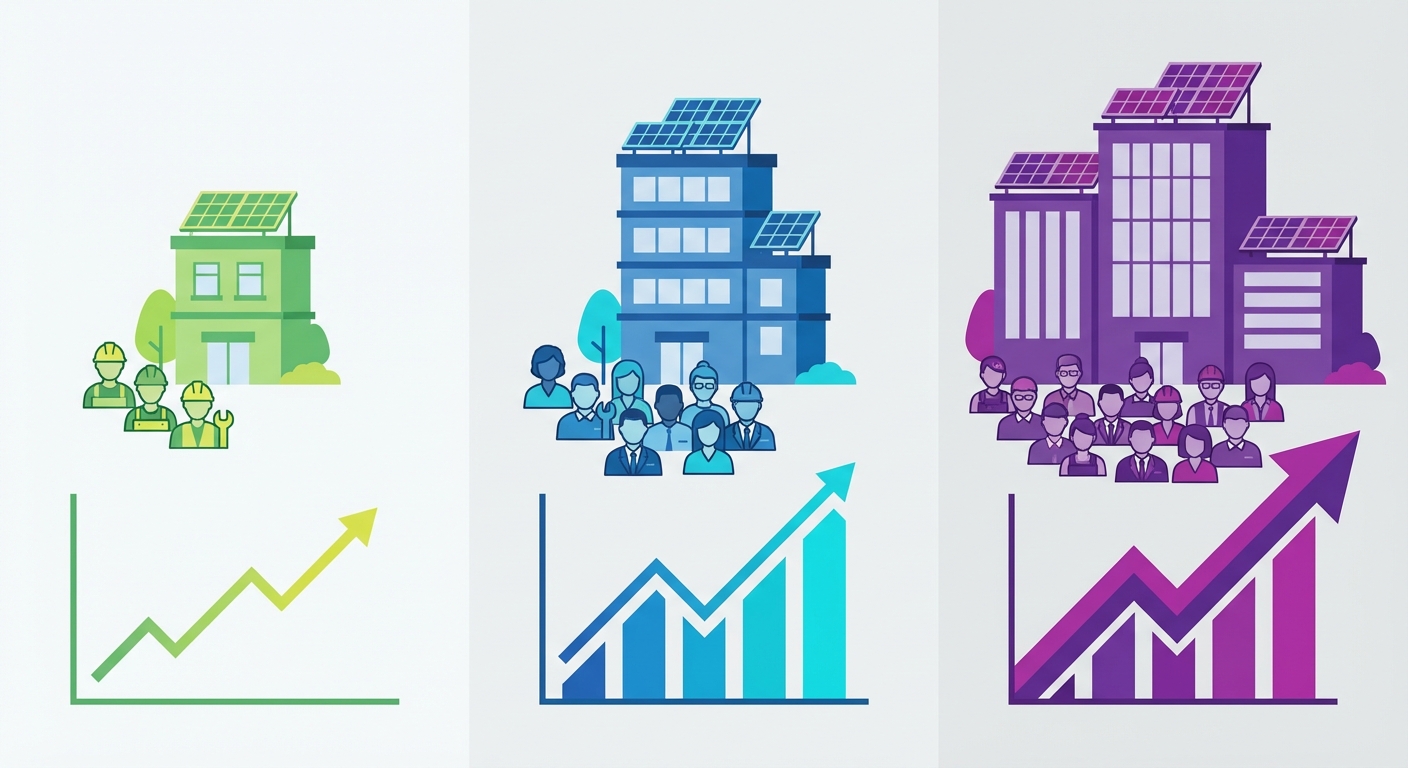
Let’s examine three real-world scenarios showing how different solar businesses approach proposal pricing and what they actually pay.
Case Study: Small Solar Installer (3 Users)
Sunlight Solar, a small installer in Jaipur with three sales representatives, started with QuickEst’s free plan to test the platform. After two months, they upgraded to the Pro Plan at ₹6,999 per user annually, totaling ₹20,997 for their team.
Their results included 40% faster proposal creation, 25% improvement in close rates due to professional proposals, and zero missed follow-ups thanks to automation. The software paid for itself within the first month by helping them close two additional projects worth ₹4 lakhs total.
Total annual cost including the subscription: ₹20,997. No hidden fees, no setup charges, no integration costs. Their advice: start with the free plan to prove value, then upgrade when you see results.
Case Study: Growing Solar EPC (12 Users)
GreenPower Solutions, a mid-size EPC in Pune with 12 sales and project management staff, evaluated several platforms before choosing QuickEst. Their annual cost at ₹6,999 per user totaled ₹83,988.
They invested an additional ₹15,000 in customized training for their team and ₹10,000 in custom proposal template design. Total first-year cost: ₹1,08,988.
The ROI was substantial. They reduced proposal creation time from 3 hours to 10 minutes, allowing each sales rep to handle 50% more leads. Their close rate improved from 18% to 26% due to faster response times and professional proposals. The platform helped them close an additional 15 projects in the first year, generating approximately ₹45 lakhs in additional revenue.
Their recommendation: budget for training and customization beyond just the subscription cost, but expect strong ROI if you fully utilize the platform’s capabilities.
Case Study: Large Solar Distributor (30+ Users)
SolarTech Distributors, a large B2B distributor serving solar installers across North India, needed a solution for their 35-person sales and support team. They negotiated a custom enterprise agreement with volume discounts.
Their annual cost: ₹2,10,000 (approximately ₹6,000 per user after volume discounts), plus ₹50,000 for implementation and custom integration with their ERP system. Total first-year investment: ₹2,60,000.
The platform transformed their operations. They standardized proposals across all sales representatives, improved lead tracking and follow-up consistency, and gained real-time visibility into sales performance across regions. Management could identify top performers and coach struggling team members using actual data.
Their advice for large teams: negotiate volume discounts aggressively, budget for proper implementation, and assign a dedicated internal administrator to manage the system and train users.
How QuickEst Pricing Compares
Compared to general-purpose CRM platforms that charge ₹10,000-15,000 per user annually without solar-specific features, QuickEst’s proposal pricing at ₹6,999 per user provides significant value. The platform includes everything solar businesses need: 60-second proposal generation, solar-specific templates, WhatsApp integration, automated follow-ups, mobile access, and real-time analytics.
International platforms like Salesforce or Zoho CRM require extensive customization to support solar proposals, often costing ₹50,000-2,00,000 in implementation fees plus ongoing customization costs. QuickEst works out-of-the-box for solar businesses, eliminating these expenses.
For solar companies evaluating options, QuickEst offers transparent pricing, no hidden fees, and features specifically designed for the Indian solar market. The free plan allows risk-free testing, while the Pro Plan at ₹6,999 per user annually provides comprehensive functionality at a competitive price point.
Making the Right Proposal Pricing Decision for Your Solar Business
Choosing the right proposal pricing model requires careful evaluation of your specific needs, budget constraints, and growth plans. Here are the key questions to ask before committing to any platform.
Key Questions to Ask Before Committing
- What’s included in the base price? Clarify exactly which features are included and which cost extra
- Are there setup or implementation fees? Get a complete picture of first-year costs
- What are the integration options and costs? Ensure the platform connects with your existing tools
- How does pricing scale as we grow? Understand costs at 5, 10, 20, and 50 users
- What support is included? Know what level of assistance you’ll receive
- Can we start with a trial or free tier? Test before committing financially
- What’s the cancellation policy? Understand your options if the platform doesn’t work out
- Are there any usage limits? Check for restrictions on proposals, storage, or API calls
Red Flags in Pricing Structures
Watch for these warning signs that indicate problematic proposal pricing:
- Unclear or vague pricing information on the website
- Requirement to contact sales for basic pricing details
- Long-term contracts required before you can test the platform
- Significant price increases after the first year
- Charges for basic features that should be included (like mobile access or email support)
- Per-proposal or per-transaction fees that make costs unpredictable
- Expensive mandatory add-ons or modules
How to Negotiate with Vendors
Don’t accept the first price offered. Most vendors have flexibility, especially for annual contracts or larger teams. Ask about volume discounts, startup discounts, or promotional pricing. If you’re switching from a competitor, mention it—vendors often offer migration incentives.
Request a pilot program where you can test with a small team before rolling out company-wide. This reduces risk and gives you leverage to negotiate better terms based on actual results.
Trial Period Best Practices
Use trial periods strategically. Create real proposals for actual customers, not just test data. Have your entire sales team use the platform for daily activities. Test mobile apps in field situations. Evaluate customer support by asking questions and measuring response times.
Document what works well and what doesn’t. Compare your experience against your requirements checklist. If the platform doesn’t meet your needs during the trial, move on—don’t convince yourself it will get better after you pay.
For a comprehensive evaluation framework, review this buyer’s checklist for solar CRM features.
Final Recommendations for Solar Companies in India
For most solar businesses in India, the ideal proposal pricing approach in 2026 is to start with a free or low-cost tier to validate fit, then commit to annual pricing once you’ve confirmed ROI. This minimizes risk while maximizing long-term savings.
Prioritize platforms built specifically for solar businesses rather than generic CRM tools. The solar-specific features, templates, and workflows will deliver better results and require less customization, ultimately providing better value even if the subscription costs slightly more.
Budget for the total cost of ownership including implementation, training, and integrations, not just the subscription fee. A platform that costs ₹50,000 annually with zero hidden fees provides better value than one that costs ₹30,000 but requires ₹40,000 in setup and integration expenses.
For small teams (1-5 users), start with QuickEst’s free plan at ₹0 to test the platform without financial commitment. For growing teams (6-20 users), the Pro Plan at ₹6,999 per user annually offers comprehensive features at competitive pricing. For large enterprises (20+ users), contact QuickEst to discuss volume discounts and custom enterprise solutions.
The right proposal software transforms your solar sales process, helping you close deals faster, follow up consistently, and scale your business efficiently. When you find a platform that delivers measurable ROI, the proposal pricing becomes an investment rather than an expense.
Take the Next Step
Understanding proposal pricing is just the first step. The real value comes from implementing a solution that fits your solar business needs and budget. Whether you’re a small installer looking to professionalize your proposals or a large EPC seeking to standardize processes across a growing team, the right platform makes a measurable difference in your sales results.
QuickEst is designed specifically for solar businesses in India, with transparent pricing, no hidden fees, and features that address the unique challenges of selling solar. From 60-second proposal generation to WhatsApp integration and automated follow-ups, every feature is built to help you close more deals faster.
Start with the free plan to experience how QuickEst can transform your sales process. Test it with real customers, create actual proposals, and measure the impact on your close rates and sales cycle time. When you’re ready to scale, upgrade to the Pro Plan for full access to advanced features and unlimited proposals. For enterprise needs or questions about proposal pricing for your specific situation, contact the QuickEst team for personalized guidance.
Your solar business deserves tools that help you compete and win in an increasingly competitive market. Make 2026 the year you invest in proposal software that delivers real ROI and supports your growth ambitions. The right proposal pricing decision today sets the foundation for your sales success tomorrow.
This blog post was written using thestacc.com