
Choosing the right CRM can make or break your solar business in India’s rapidly growing renewable energy market. With the Indian solar industry projected to reach unprecedented heights in 2026, solar installation companies, EPCs, and sales teams need powerful tools to manage leads, create proposals quickly, and close deals efficiently. But with dozens of CRM alternatives India available, how do you choose the platform that truly fits your business needs and budget?
This comprehensive guide compares the top solar CRM alternatives in India, analyzing QuickEst against established platforms like Salesforce, Zoho CRM, Pipedrive, and OpenSolar. We’ll break down the pros and cons of each solution, examine pricing considerations for the Indian market, evaluate solar-specific features, and help you determine which CRM best matches your business size, budget, and sales process requirements.

Why Solar Companies in India Need Specialized CRM Solutions
The solar industry in India operates differently from other sectors. Solar installation companies face unique challenges that generic CRM platforms often fail to address effectively. Understanding these challenges is the first step in selecting the right CRM alternatives India for your business.
Speed is critical in solar sales. When a potential customer expresses interest in solar installation, they’re often comparing multiple vendors simultaneously. The company that delivers a professional, accurate proposal first typically has a significant advantage. Generic CRMs weren’t built with this urgency in mind—they lack solar-specific proposal templates, pricing calculators, and the ability to generate quotes in minutes rather than hours.
Indian solar businesses also face distinct operational realities. Sales teams need mobile accessibility to create proposals on-site during customer visits. Integration with WhatsApp—India’s dominant communication platform—is essential for follow-ups and proposal delivery. Pricing models must accommodate the Indian market, where cost sensitivity is higher than in Western markets.
The cost of using the wrong CRM extends beyond subscription fees. Consider these hidden costs:
- Lost opportunities: Slow proposal generation means competitors beat you to the punch
- Customization expenses: Generic CRMs require extensive (and expensive) customization for solar workflows
- Training time: Complex platforms take weeks or months for teams to master, reducing productivity
- Integration challenges: Connecting generic CRMs with solar design tools and Indian communication channels requires technical expertise
- Poor adoption rates: If the CRM doesn’t fit your team’s workflow, they’ll resist using it, wasting your investment
The ROI of choosing the right solar CRM India solution is substantial. Companies that implement purpose-built solar CRMs report 30-50% faster proposal generation, 25-40% improvement in lead conversion rates, and significant time savings in administrative tasks. For a solar installation company closing 10-20 deals monthly, these improvements translate directly to revenue growth.
What to Look for in Solar CRM Alternatives
Before diving into specific platforms, let’s establish the evaluation criteria that matter most for solar businesses in India. Not all CRM features carry equal weight—some capabilities are essential, while others are nice-to-have additions.
Solar-Specific Proposal Generation: This is arguably the most critical feature for solar sales teams. The ideal CRM should enable you to create professional, branded solar proposals quickly—ideally within minutes. Look for platforms that include solar-specific templates, pricing calculators, system design visualization, and the ability to customize proposals with your branding. The proposal tool should generate documents that clearly communicate system specifications, financial benefits, payback periods, and installation timelines.
Lead Management and Pipeline Tracking: Effective lead management India capabilities help you capture leads from multiple sources (website forms, Facebook ads, referrals, trade shows), organize them systematically, and track their progress through your sales pipeline. The CRM should provide clear visibility into which stage each prospect occupies, what actions are needed next, and which leads are most likely to convert.
Mobile Accessibility: Your sales team doesn’t work exclusively from desks. They visit customer sites, attend trade shows, and conduct field surveys. A mobile-responsive CRM with dedicated iOS and Android apps enables your team to access customer information, create proposals, and update lead status from anywhere. This mobility is particularly important in India, where face-to-face sales interactions remain crucial.
Integration with Indian Communication Channels: WhatsApp dominates business communication in India. Your CRM should integrate seamlessly with WhatsApp for sending proposals, follow-up messages, and updates. Email integration is also essential, but WhatsApp capability is non-negotiable for the Indian market. Additionally, consider whether the CRM can import leads from your phonebook and integrate with Facebook Ads for lead capture.
Pricing Models Suitable for Indian Market: CRM pricing varies dramatically across platforms. Some charge per user per month, others offer tiered plans, and some have usage-based pricing. For Indian solar companies—especially small to mid-sized businesses—affordability matters. Look for transparent pricing without hidden fees, and consider whether the platform offers plans suitable for businesses at different growth stages.
Implementation and Training Requirements: Complex enterprise CRMs might offer extensive features, but if your team needs three months of training to use them effectively, you’re losing valuable selling time. Evaluate how quickly your team can get up and running, what training resources are available, and whether the platform offers local support in Indian time zones.
QuickEst: Purpose-Built Solar CRM for Indian Market
QuickEst (Quickest CRM) represents a new generation of solar CRM India solutions—platforms built specifically for the solar industry rather than adapted from generic business software. Designed with Indian solar installation companies in mind, QuickEst addresses the specific pain points that solar sales teams face daily.
The platform’s standout feature is its 60-second proposal generation capability. When a sales representative meets with a potential customer, they can create a professional, branded solar proposal on the spot using their mobile device. The proposal includes system specifications, financial projections, payback calculations, and installation details—all formatted professionally and ready to send via WhatsApp or email immediately.
QuickEst’s lead management system captures prospects from multiple sources and organizes them in a visual sales pipeline. The platform tracks every interaction, schedules follow-ups automatically, and ensures no opportunity falls through the cracks. The automated follow-up system sends customizable reminders and email templates at predetermined intervals, maintaining engagement without requiring manual effort from your sales team.
The real-time sales analytics dashboard provides visibility into team performance, conversion rates, pipeline value, and individual sales representative metrics. Management can identify bottlenecks, recognize top performers, and make data-driven decisions about resource allocation and sales strategy.
For team collaboration, QuickEst offers task assignment, progress monitoring, and shared access to customer information. Multiple team members can work on the same opportunity without duplicating effort or losing track of customer interactions.
The platform includes mobile apps for iOS and Android, ensuring your sales team can work effectively whether they’re in the office, at a customer site, or traveling between appointments. The mobile experience isn’t a stripped-down version—it includes full proposal generation, lead management, and communication capabilities.
Integration capabilities include Facebook Ads for lead capture, Pabbly Connect for workflow automation, and phonebook import for easy lead addition. The WhatsApp integration is particularly valuable for Indian businesses, enabling instant proposal delivery through customers’ preferred communication channel.
Security features include TLS 1.2 encryption and 256-bit AES data protection, ensuring customer information remains secure. The platform also supports bulk lead import from Excel, making migration from spreadsheets or other systems straightforward.
QuickEst offers two pricing tiers designed for the Indian market. The FREE PLAN – ₹0 provides essential CRM functionality for small teams or businesses just starting with CRM software. For growing businesses needing advanced features, the PRO PLAN – ₹6999 Per User / Year delivers comprehensive capabilities at a price point accessible to Indian solar companies.
Pros and Cons of QuickEst
Advantages:
- Solar-specific design: Every feature is built for solar sales workflows, eliminating the need for customization
- Rapid proposal generation: The 60-second proposal capability gives you a competitive edge in fast-moving sales situations
- WhatsApp integration: Native support for India’s dominant communication platform
- Affordable pricing: Pricing structure designed for Indian market realities, with options for businesses at different stages
- Quick implementation: Purpose-built design means faster onboarding and training compared to generic platforms
- Mobile-first approach: Full-featured mobile apps enable true field sales capability
- Automated follow-ups: Reduces manual work and ensures consistent customer engagement
Limitations:
- Focused niche: Designed specifically for solar businesses, so not suitable if you operate in multiple industries
- Newer platform: Less established than decades-old CRM giants, though this also means modern architecture and design
- Integration ecosystem: Smaller integration library compared to platforms like Salesforce, though covers essential needs
Ideal for: Small to mid-sized solar installation companies, solar EPCs, and solar sales teams in India who need fast proposal generation, mobile accessibility, and solar-specific workflows without enterprise complexity or pricing.
Salesforce: Enterprise-Grade CRM Platform
Salesforce is the world’s largest CRM platform, offering extensive capabilities that span far beyond basic customer relationship management. For large solar enterprises with significant IT resources and budgets, Salesforce provides a comprehensive solution that can be customized to virtually any business requirement.
The platform’s strength lies in its extensive feature set and scalability. Salesforce offers advanced automation, AI-powered insights through Einstein Analytics, complex workflow builders, and thousands of third-party integrations through the AppExchange marketplace. Large solar companies can build sophisticated sales processes, integrate with ERP systems, and create custom applications within the Salesforce ecosystem.
For solar businesses, Salesforce requires significant customization to address industry-specific needs. You’ll need to configure custom objects for solar projects, build proposal generation workflows (often using third-party apps), and create solar-specific reports and dashboards. This customization typically requires Salesforce developers or consultants, adding to implementation costs.
Salesforce’s pricing structure presents challenges for many Indian solar companies. Plans start at higher price points than specialized solar CRMs, and costs escalate quickly as you add users and require advanced features. For a 10-person sales team, annual Salesforce costs can easily reach several lakhs, not including implementation and customization expenses.
Implementation complexity is another consideration. Deploying Salesforce typically takes 3-6 months for mid-sized companies, longer for complex enterprise deployments. You’ll need dedicated project management, data migration expertise, and ongoing administration to maintain the system effectively.
Pros and Cons of Salesforce
Advantages:
- Comprehensive feature set: Virtually unlimited capabilities for complex business requirements
- Scalability: Grows with your business from small team to enterprise scale
- Extensive integrations: Thousands of third-party apps and integrations available
- Advanced analytics: Powerful reporting and AI-driven insights
- Established platform: Decades of development and refinement
- Global support: Extensive documentation, training resources, and consultant ecosystem
Limitations:
- High cost: Premium pricing that may be prohibitive for small to mid-sized Indian solar companies
- Complex implementation: Requires significant time, expertise, and resources to deploy effectively
- Customization required: Not solar-specific, so you’ll need to build or buy solar functionality
- Steep learning curve: Teams need substantial training to use effectively
- Ongoing administration: Requires dedicated Salesforce administrator for maintenance and optimization
Ideal for: Large solar enterprises with substantial IT budgets, dedicated technical resources, and complex requirements that justify the investment in customization and ongoing administration.
Zoho CRM: Versatile Platform with Indian Presence
Zoho CRM holds particular appeal for Indian businesses as it’s developed by Zoho Corporation, an Indian software company with strong local presence and understanding of the Indian market. The platform offers a middle ground between specialized solar CRMs and enterprise giants like Salesforce.
Zoho CRM provides a comprehensive feature set at more accessible pricing than Salesforce. The platform includes lead management, contact management, sales pipeline tracking, email integration, workflow automation, and reporting capabilities. Zoho’s Blueprint feature allows you to design custom sales processes, which can be adapted for solar-specific workflows.
The platform’s Indian market presence means local support, data centers in India for faster performance, and pricing in rupees. Zoho understands Indian business practices and has designed features that resonate with local companies. The company also offers extensive training resources and customer support in Indian time zones.
For solar businesses, Zoho CRM requires configuration to address industry-specific needs. You can create custom fields for solar project details, build proposal templates using Zoho Writer integration, and design solar-specific reports. However, unlike purpose-built solar CRMs, you’ll need to invest time in this configuration and may not achieve the same level of solar-specific optimization.
Zoho’s pricing tiers range from free plans for very small teams to enterprise plans with advanced features. The mid-tier plans offer good value for Indian solar companies, providing essential CRM functionality at reasonable costs. However, solar-specific features like rapid proposal generation aren’t native to the platform.
Integration with other Zoho products (Zoho Books for accounting, Zoho Campaigns for marketing, Zoho Desk for customer support) creates a comprehensive business software ecosystem. If you’re already using other Zoho products, the CRM integrates seamlessly.
Pros and Cons of Zoho CRM
Advantages:
- Affordable pricing: More accessible than Salesforce while offering robust features
- Indian company: Local support, understanding of Indian market, data centers in India
- Good feature set: Comprehensive CRM capabilities suitable for most business needs
- Customization options: Flexible platform that can be adapted to various industries
- Zoho ecosystem: Integrates with other Zoho products for comprehensive business management
- Scalability: Plans available for businesses at different growth stages
Limitations:
- Generic platform: Not solar-specific, requires configuration for solar workflows
- No native proposal generation: Lacks built-in solar proposal creation tools
- Configuration time: Requires investment to set up solar-specific processes
- Learning curve: Extensive features mean more training required
- WhatsApp integration: Requires third-party tools or workarounds for native WhatsApp functionality
Ideal for: Mid-sized solar companies with diverse business needs beyond just sales, those already using other Zoho products, and businesses that value local support and Indian market understanding.
Pipedrive: Sales-Focused CRM Solution
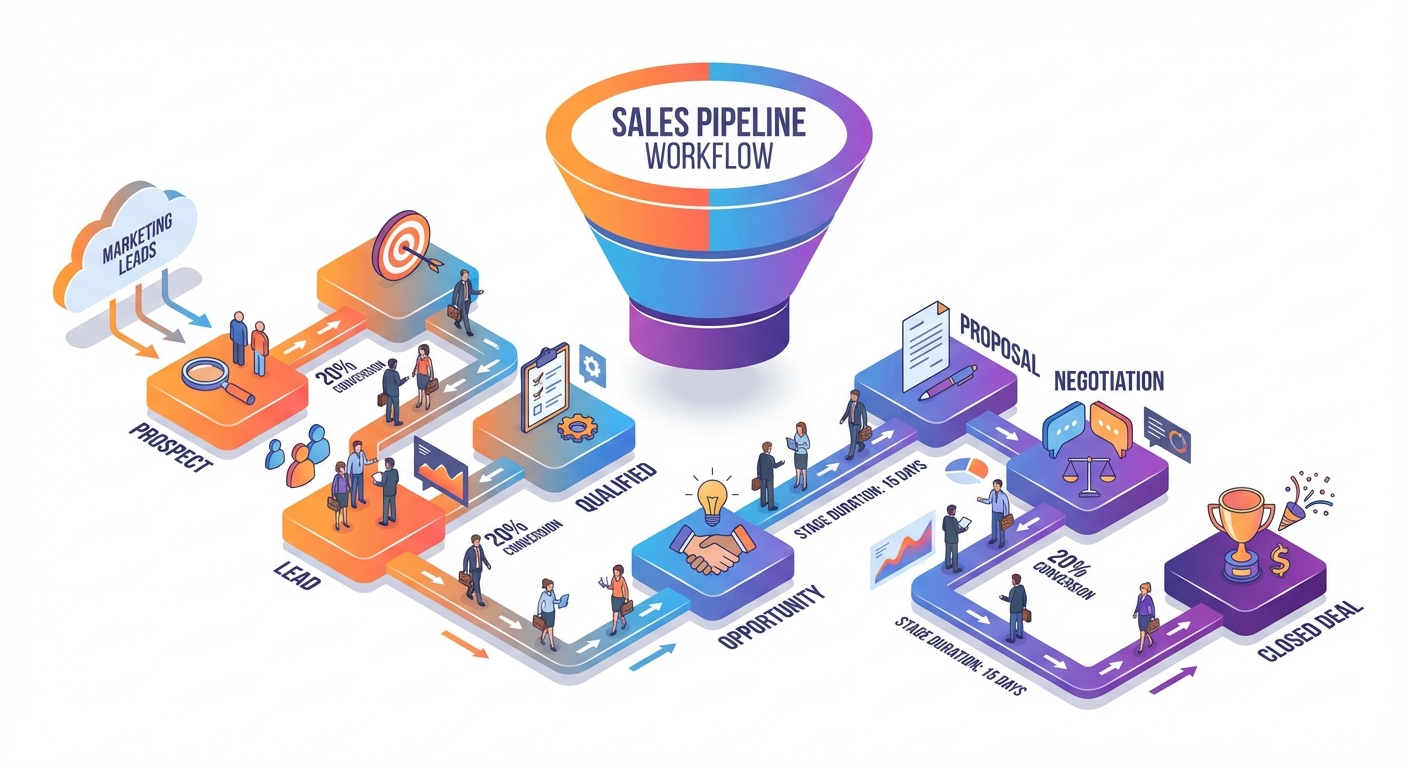
Pipedrive takes a different approach to CRM, focusing intensely on sales pipeline management with a visual, intuitive interface. The platform was built by salespeople for salespeople, emphasizing simplicity and usability over feature complexity.
The platform’s signature feature is its visual pipeline view, which displays deals as cards that move through customizable stages. This visual approach makes it immediately clear where each opportunity stands, what actions are needed, and which deals require attention. For sales teams that think visually, Pipedrive’s interface is intuitive and requires minimal training.
Pipedrive includes activity-based selling features that prompt sales representatives to take specific actions (calls, emails, meetings) and track completion. The platform emphasizes consistent sales activities as the driver of results, helping teams maintain discipline in their sales process.
The platform offers email integration, workflow automation, and reporting capabilities. You can track email opens, schedule follow-ups, and generate reports on sales performance. Mobile apps for iOS and Android enable field sales work, though the mobile experience is more limited than desktop functionality.
For solar businesses, Pipedrive’s limitations become apparent. The platform lacks solar-specific features like proposal generation, system design tools, or industry-specific templates. You’d need to use external tools for creating solar proposals and manually link them to Pipedrive opportunities. The platform also doesn’t offer native WhatsApp integration, which is significant for Indian solar companies.
Pricing is mid-range, with several tiers based on feature requirements. While more affordable than Salesforce, Pipedrive’s pricing is higher than specialized solar CRMs when you consider that you’ll need additional tools for proposal generation and other solar-specific functions.
Pros and Cons of Pipedrive
Advantages:
- Intuitive interface: Visual pipeline design is easy to understand and use
- Quick implementation: Simple setup means teams can start using it quickly
- Sales-focused: Emphasizes activities and pipeline management that drive results
- Good mobile apps: Enables field sales work effectively
- Activity tracking: Helps maintain sales discipline and consistency
- Reasonable pricing: Mid-range pricing for core CRM functionality
Limitations:
- No solar-specific features: Generic sales CRM without industry-specific capabilities
- Limited proposal tools: Lacks built-in proposal generation for solar projects
- No WhatsApp integration: Missing critical communication channel for Indian market
- Requires additional tools: Need external solutions for solar-specific functions
- Basic customization: Less flexible than platforms like Salesforce or Zoho
Ideal for: Sales-driven teams that prioritize pipeline visualization and activity management, and are willing to use separate tools for solar-specific functions like proposal generation.
OpenSolar: Design-First Solar Platform
OpenSolar approaches the solar software market from a different angle—it’s primarily a solar design and engineering platform that includes CRM functionality, rather than a CRM with solar features. This distinction is important when evaluating whether it’s the right fit for your business.
OpenSolar’s core strength is its sophisticated solar design capabilities. The platform offers advanced tools for system design, shading analysis, energy production modeling, and financial calculations. Engineers and designers can create detailed, accurate solar proposals with precise technical specifications. The design tools integrate satellite imagery, 3D modeling, and comprehensive component databases.
The platform includes CRM functionality for managing leads, tracking opportunities, and organizing customer information. However, these CRM features are secondary to the design capabilities. The CRM component is functional but less comprehensive than dedicated CRM platforms. You can track leads through your pipeline, but you won’t find the advanced automation, team collaboration, or sales analytics features that specialized CRMs offer.
OpenSolar’s proposal generation produces highly detailed, technical documents that showcase system design, energy production projections, and financial analysis. These proposals are excellent for customers who want comprehensive technical information, though they may be more complex than necessary for residential customers who prefer simpler presentations.
The platform’s pricing model differs from traditional CRMs. OpenSolar charges based on usage or project volume rather than per-user subscriptions. For companies that close many deals, this can become expensive. The pricing structure makes sense if you’re primarily using the platform for design and engineering, but may be less attractive if you’re mainly seeking CRM functionality.
Implementation requires training on both the design tools and CRM features. The design capabilities have a steeper learning curve than simple CRM platforms, which may slow adoption if your sales team doesn’t need advanced design functionality.
Pros and Cons of OpenSolar
Advantages:
- Excellent design tools: Industry-leading solar system design and engineering capabilities
- Technical accuracy: Produces highly detailed, accurate proposals with precise calculations
- Integrated workflow: Combines design and CRM in single platform
- Professional proposals: Generates comprehensive technical documentation
- Component database: Extensive library of solar equipment specifications
Limitations:
- CRM features secondary: CRM functionality less comprehensive than dedicated CRM platforms
- Complex for simple needs: Overkill if you don’t require advanced design capabilities
- Pricing structure: Usage-based pricing can become expensive for high-volume businesses
- Learning curve: Design tools require significant training
- Limited sales automation: Fewer automation features than specialized CRMs
Ideal for: Solar companies that prioritize engineering and design accuracy, handle complex commercial projects requiring detailed technical proposals, and need integrated design-to-CRM workflow.
Side-by-Side Comparison: Features & Pricing
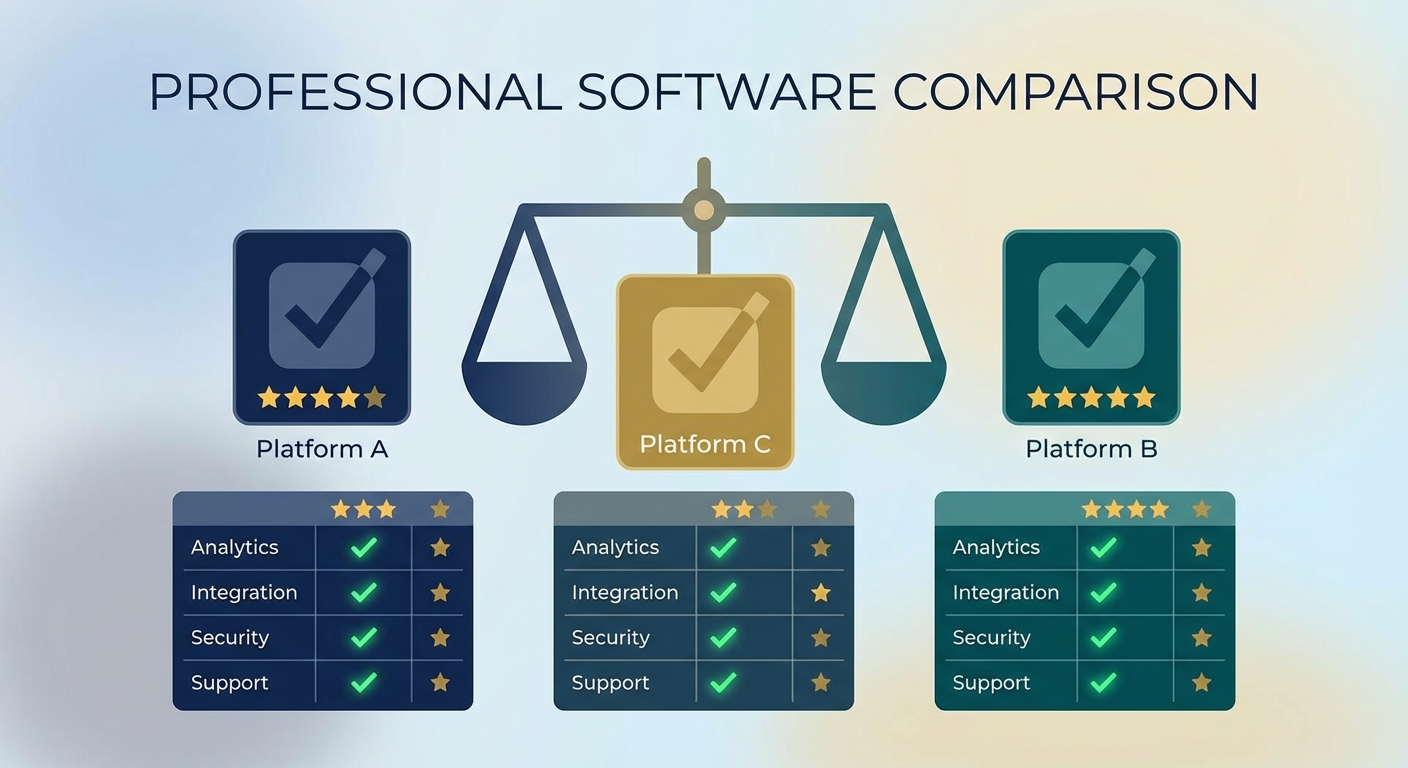
To help you evaluate these CRM alternatives India effectively, here’s a comprehensive comparison of key features and pricing considerations:
Proposal Generation Speed:
- QuickEst: 60 seconds with solar-specific templates and mobile capability
- Salesforce: Requires customization or third-party apps, typically 15-30 minutes
- Zoho CRM: Requires integration with Zoho Writer or external tools, 10-20 minutes
- Pipedrive: No native proposal generation, requires external tools
- OpenSolar: 10-20 minutes with detailed technical design
Solar-Specific Features:
- QuickEst: Purpose-built for solar with industry-specific templates, workflows, and terminology
- Salesforce: Requires extensive customization to add solar-specific functionality
- Zoho CRM: Generic platform requiring configuration for solar workflows
- Pipedrive: No solar-specific features, generic sales CRM
- OpenSolar: Excellent solar design tools, basic CRM features
WhatsApp Integration:
- QuickEst: Native WhatsApp integration for proposal delivery and communication
- Salesforce: Requires third-party apps or custom integration
- Zoho CRM: Available through third-party integrations
- Pipedrive: Requires third-party tools
- OpenSolar: Limited communication features
Mobile Capability:
- QuickEst: Full-featured iOS and Android apps with complete proposal generation
- Salesforce: Comprehensive mobile apps with most desktop features
- Zoho CRM: Good mobile apps with core CRM functionality
- Pipedrive: Solid mobile apps for pipeline management
- OpenSolar: Mobile access available but design features work best on desktop
Implementation Time:
- QuickEst: 1-2 weeks for full deployment and team training
- Salesforce: 3-6 months for mid-sized companies, longer for enterprises
- Zoho CRM: 4-8 weeks including configuration and training
- Pipedrive: 2-4 weeks for setup and adoption
- OpenSolar: 4-6 weeks including design tool training
Pricing for Indian Market (Approximate Annual Cost for 5-User Team):
- QuickEst: ₹34,995 per year (PRO plan) or free plan available for basic needs
- Salesforce: ₹3,00,000 – ₹6,00,000+ per year depending on edition and features
- Zoho CRM: ₹60,000 – ₹1,80,000 per year depending on plan tier
- Pipedrive: ₹1,20,000 – ₹2,40,000 per year depending on plan
- OpenSolar: Variable based on usage, typically ₹1,50,000 – ₹3,00,000+ per year
Best For:
- QuickEst: Small to mid-sized solar installers prioritizing speed, affordability, and solar-specific features
- Salesforce: Large enterprises with complex requirements and substantial IT budgets
- Zoho CRM: Mid-sized companies with diverse needs beyond solar sales
- Pipedrive: Sales teams prioritizing visual pipeline management
- OpenSolar: Companies prioritizing engineering and design accuracy
This solar CRM comparison reveals significant differences in approach, capabilities, and value proposition. Your choice should align with your business priorities, budget constraints, and operational requirements.
Which CRM Alternative is Right for Your Solar Business?
Selecting the right CRM alternatives India requires honest assessment of your business situation, priorities, and resources. Here’s a decision framework to guide your CRM selection:
For Small Solar Installation Companies (1-10 employees):
If you’re a small solar installer with limited budget and technical resources, prioritize simplicity, affordability, and solar-specific features. You need a CRM that your team can start using immediately without extensive training or customization.
Best choice: QuickEst offers the fastest path to value with solar-specific features, rapid proposal generation, and pricing designed for small businesses. The FREE PLAN – ₹0 lets you start without financial risk, and the PRO PLAN – ₹6999 Per User / Year provides advanced features as you grow.
Alternative: Zoho CRM’s free or low-tier plans if you need a general-purpose CRM and are willing to invest time in configuration.
For Mid-Sized Solar Companies (10-50 employees):
Mid-sized companies need scalable solutions that can grow with the business while maintaining reasonable costs. You likely have some technical resources but want to minimize customization complexity.
Best choice: QuickEst if solar sales efficiency is your priority, offering solar-specific workflows without enterprise complexity. The platform scales effectively as your team grows.
Alternative: Zoho CRM if you need integration with other business functions (accounting, marketing, support) and have resources for configuration. Pipedrive if visual pipeline management is critical and you’re willing to use separate proposal tools.
For Large Solar Enterprises (50+ employees):
Large enterprises with dedicated IT teams, complex requirements, and substantial budgets can justify investment in comprehensive platforms that require customization.
Best choice: Salesforce if you need extensive customization, advanced analytics, and integration with complex business systems. The investment makes sense at enterprise scale.
Alternative: QuickEst for solar-specific sales operations combined with Salesforce or other enterprise systems for broader business management.
For Design-Focused Solar Companies:
If your business emphasizes engineering accuracy, handles complex commercial projects, and needs sophisticated design tools integrated with CRM, your priorities differ from sales-focused companies.
Best choice: OpenSolar provides industry-leading design capabilities with integrated CRM functionality.
Alternative: QuickEst for CRM and sales automation combined with specialized design software for complex projects.
Budget Considerations and ROI Timeline:
Consider not just subscription costs but total cost of ownership including implementation, customization, training, and ongoing administration. A platform with lower subscription fees but high implementation costs may be more expensive than a purpose-built solution with higher subscriptions but minimal setup requirements.
For CRM ROI calculation, consider these factors:
- Time savings: How much time will the CRM save in proposal generation, lead management, and administrative tasks?
- Conversion improvement: Will faster proposals and better follow-ups increase your close rate?
- Opportunity capture: Will better lead management prevent missed opportunities?
- Team productivity: Will automation free your team to focus on selling rather than administration?
Most solar companies see positive ROI within 3-6 months with purpose-built solar CRMs, 6-12 months with well-implemented general CRMs, and 12-18 months with enterprise platforms requiring extensive customization.

Making the Switch: Implementation Considerations
Once you’ve selected your CRM alternatives India, successful implementation requires careful planning. Here’s what to consider for smooth CRM implementation India:
Data Migration Planning:
If you’re switching from spreadsheets or another CRM, plan your data migration carefully. Identify which data needs to transfer (contacts, companies, opportunities, historical interactions), clean your data before migration (remove duplicates, correct errors, standardize formats), and test the migration with a small dataset before full deployment.
QuickEst supports bulk lead import from Excel, making migration from spreadsheets straightforward. For migrations from other CRMs, export your data to CSV format and map fields appropriately during import.
Team Training Requirements:
Training investment varies significantly across platforms. Purpose-built solar CRMs like QuickEst require minimal training—most teams are productive within days. Generic platforms like Zoho CRM need 1-2 weeks of training for effective use. Enterprise platforms like Salesforce require extensive training programs spanning weeks or months.
Plan for initial training sessions, ongoing support during the adoption phase, and refresher training as needed. Identify power users within your team who can become internal experts and help colleagues.
Integration with Existing Tools:
Consider how the CRM will integrate with tools you already use. Common integration needs include:
- Communication tools: Email, WhatsApp, phone systems
- Marketing platforms: Facebook Ads, Google Ads, website forms
- Accounting software: For invoicing and financial tracking
- Design tools: If using separate solar design software
- Document storage: Google Drive, Dropbox, or other cloud storage
QuickEst offers integrations with Facebook Ads, Pabbly Connect (for connecting to hundreds of other apps), and phonebook import. Salesforce and Zoho CRM offer extensive integration marketplaces with thousands of options.
Timeline Expectations:
Set realistic expectations for implementation timelines:
- QuickEst: 1-2 weeks from signup to full team adoption
- Zoho CRM: 4-8 weeks including configuration, data migration, and training
- Pipedrive: 2-4 weeks for setup and team adoption
- Salesforce: 3-6 months for mid-sized companies, longer for complex enterprises
- OpenSolar: 4-6 weeks including design tool training
During implementation, maintain your existing processes while gradually transitioning to the new CRM. Running parallel systems temporarily reduces risk and allows your team to build confidence with the new platform.
Frequently Asked Questions About Solar CRM Alternatives in India
Which CRM is most affordable for small solar companies in India?
QuickEst offers the most affordable solar-specific CRM with a FREE PLAN – ₹0 for basic needs and a PRO PLAN – ₹6999 Per User / Year for advanced features. This pricing is specifically designed for the Indian market and includes solar-specific features that would require expensive customization in generic CRMs. Zoho CRM also offers affordable plans, though you’ll need to invest time in configuration for solar-specific workflows.
Do I need a solar-specific CRM or can I use generic platforms?
The answer depends on your priorities. If rapid proposal generation, solar-specific workflows, and quick implementation are important, solar-specific CRMs like QuickEst deliver better value. Generic platforms like Salesforce or Zoho CRM offer more flexibility for diverse business needs but require customization for solar-specific functions. Most small to mid-sized solar companies find purpose-built solar CRMs more cost-effective when considering total cost of ownership including customization and implementation time.
How long does CRM implementation typically take?
Implementation time varies dramatically by platform. Purpose-built solar CRMs like QuickEst can be deployed in 1-2 weeks with minimal training required. Generic CRMs like Zoho typically need 4-8 weeks for configuration and training. Enterprise platforms like Salesforce require 3-6 months or longer for mid-sized to large companies. The complexity of your requirements, quality of your existing data, and team’s technical proficiency all affect implementation timelines.
Can these CRMs integrate with WhatsApp for the Indian market?
WhatsApp integration capability varies significantly. QuickEst offers native WhatsApp integration for sending proposals and communicating with customers—critical for the Indian market where WhatsApp dominates business communication. Salesforce and Zoho CRM can integrate with WhatsApp through third-party apps or custom integrations, adding complexity and cost. Pipedrive and OpenSolar have limited WhatsApp capabilities. For Indian solar businesses, native WhatsApp integration is a significant advantage.
What’s the typical ROI timeline for CRM investment?
Most solar companies achieve positive CRM ROI within 3-6 months with purpose-built solar CRMs that require minimal implementation investment and deliver immediate productivity gains. Generic CRMs typically show ROI in 6-12 months after accounting for configuration time and learning curves. Enterprise platforms like Salesforce may take 12-18 months to achieve positive ROI due to higher costs and longer implementation periods. ROI depends on factors like deal volume, average deal size, current conversion rates, and how effectively you implement the CRM.
Can I switch CRMs later if my needs change?
Yes, though switching CRMs involves effort in data migration and team retraining. Most CRMs allow data export in standard formats (CSV, Excel), making migration possible. However, switching is disruptive to your sales operations, so choosing the right CRM initially is preferable. Many companies start with purpose-built solar CRMs like QuickEst for immediate productivity gains, then evaluate whether they need more complex platforms as they scale. Starting with a free or low-cost plan reduces risk if you need to switch later.
Do these CRMs work on mobile devices for field sales?
Mobile capability varies significantly. QuickEst offers full-featured iOS and Android apps with complete proposal generation capability—critical for creating proposals during customer site visits. Salesforce, Zoho CRM, and Pipedrive offer good mobile apps with core CRM functionality, though proposal generation may be limited on mobile. OpenSolar’s design features work best on desktop, with limited mobile functionality. For Indian solar sales teams that conduct significant field sales, robust mobile capability with proposal generation is essential.
Conclusion: Choose the CRM That Accelerates Your Solar Business
Selecting the right CRM alternatives India is one of the most important technology decisions your solar business will make. The right platform accelerates your sales process, improves conversion rates, and frees your team to focus on selling rather than administration. The wrong choice leads to wasted investment, poor adoption, and missed opportunities.
For most small to mid-sized solar installation companies in India, QuickEst delivers the optimal combination of solar-specific features, rapid implementation, and affordable pricing. The 60-second proposal generation capability gives you a competitive edge in fast-moving sales situations, while WhatsApp integration aligns with how Indian businesses communicate. The FREE PLAN – ₹0 lets you experience the platform without financial risk, and the PRO PLAN – ₹6999 Per User / Year provides comprehensive capabilities as your business grows.
Large enterprises with complex requirements and substantial IT resources may find Salesforce worth the investment, particularly if they need extensive customization and integration with other enterprise systems. Mid-sized companies with diverse business needs beyond solar sales might prefer Zoho CRM for its versatility and Indian market presence. Companies prioritizing engineering accuracy over sales efficiency should consider OpenSolar for its superior design capabilities.
The solar market in India is growing rapidly, and competition is intensifying. The companies that win are those that respond fastest to customer inquiries, deliver professional proposals quickly, and maintain consistent follow-up. Your CRM is the foundation that enables this sales excellence.
Don’t let analysis paralysis delay your decision. Most CRMs offer free trials or free plans—start testing your top choices with real sales scenarios. Involve your sales team in the evaluation, as their adoption is critical to success. Focus on platforms that solve your most pressing pain points rather than those with the longest feature lists.
Ready to accelerate your solar sales with a purpose-built CRM? Explore QuickEst’s FREE PLAN – ₹0 to experience solar-specific CRM designed for Indian businesses, or Contact Us to discuss which plan best fits your business requirements. The right CRM investment today drives your sales growth for years to come.
Your competitors are already using CRM to close deals faster. The question isn’t whether to implement CRM—it’s which platform will give you the competitive advantage in India’s booming solar market.